What looks like a rustic decoration is, for many households, a symbolic ritual rooted in folk customs and Feng Shui. Across social media, people are sewing small fabric pouches, filling them with oats and herbs, and hanging them on the inside handle of their front door.
Supporters say this simple gesture represents protection, financial steadiness and emotional calm — all anchored at the home’s main entrance.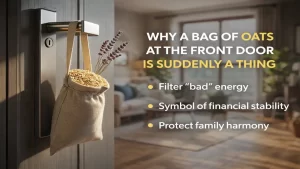
Why Hanging Oats on Your Door Is Recommended — Key Reason
Why Oats Are Being Used as a Doorway Symbol
Oats are normally associated with breakfast, not home rituals. But in recent months, this everyday grain has been reframed as a symbol of stability and growth.
In Feng Shui, the front door is often described as the “mouth” of the home — the place where energy, opportunities and visitors enter. What is placed at this threshold is believed, symbolically, to influence the atmosphere inside.
Unlike rice, which is often linked to celebration or quick prosperity rituals, oats grow slowly and are known for their resilience. That slow, steady growth has made them a modern symbol of long-term security rather than sudden financial gain.
For many people, the oat bag is not about magic. It is about intention.
Three Symbolic Meanings Behind the Oat Bag
1. A “Filter” at the Entrance
In Feng Shui thinking, the doorway is where qi (life energy) flows into the home. A small pouch filled with natural grains and herbs is viewed as a soft symbolic filter.
Believers describe it as an “energetic doormat” — a reminder to leave stress, tension or negativity outside before stepping in.
Even for sceptics, the visual cue can serve as a pause point: a small signal to reset your mood before entering.
2. A Sign of Financial Stability
Historically, a full grain store meant safety. Oats, hardy and affordable, were associated with nourishment through difficult seasons.
Today, people connect the oat bag to practical goals such as:
Maintaining stable income
Managing bills with less stress
Building small savings consistently
Rather than promising sudden wealth, the ritual focuses on steadiness and planning.
3. A Reminder of Family Harmony
Many households hang the pouch after a major life change:
Moving house
Starting a new relationship
Welcoming a baby
Navigating frequent disagreements
The doorway becomes a symbolic checkpoint. The message is simple: this home is a space for calm conversations, not outside conflict.
Each time someone touches the door handle, the pouch acts as a subtle reminder of that intention.
How to Make and Hang an Oat Bag
The ritual is intentionally low-cost and accessible.
You’ll need:
A small cotton or linen pouch (or fabric from an old napkin)
A handful of oat flakes or whole oat kernels
A sprig of lavender or another mild herb
Thread, ribbon or string
Steps:
Fill the fabric pouch with oats.
Add a small amount of dried lavender (or preferred herb).
Tie it securely.
Hang it on the inside door handle or on a nearby hook.
Some people hold the pouch for a few seconds before hanging it and focus on a specific goal, such as paying bills on time or creating a calmer routine at home.
Clear, practical intentions are encouraged — not vague wishes, but concrete outcomes.
Why Refreshing the Oats Matters
Because oats are organic, they can absorb moisture over time.
Experts in home care advise:
Replacing oats every 1–2 months
Checking for dampness or discoloration
Washing or replacing worn fabric pouches
Keeping the pouch out of reach of pets
Refreshing the contents becomes part of the ritual — a moment to reassess goals and household atmosphere.
Why This Trend Is Growing Now
The oat bag blends elements of Feng Shui and European folk traditions, where grains and herbs were once hung above doors for protection.
Its rise today reflects broader social patterns:
Increased financial pressure
Rising living costs
A search for affordable, comforting rituals
Interest in “soft spirituality” that doesn’t require expensive tools
For some, the pouch is deeply meaningful. For others, it is simply a comforting habit made from kitchen staples.
Does It Actually Work?
There is no scientific evidence that hanging oats by your door changes your income or protects your home.
However, psychologists often note that small rituals can reduce anxiety and reinforce intention. When people feel they have taken a step — even symbolic — they may think more clearly and act more deliberately.
In that sense, the oat bag may function as:
A visual reminder of goals
A mood-reset cue
A daily mindfulness trigger
Critics argue it should never replace practical action such as budgeting, communication or financial planning. Most practitioners agree: the ritual supports effort — it does not replace it.
Keeping Perspective
The physical risks are minimal but real:
In humid homes, mould may form
People with grain allergies should avoid loose exposure
Pets may try to chew the pouch
Most importantly, the oat bag should not substitute for addressing serious financial or relationship challenges.
It is best understood as a symbolic object — one that encourages reflection and intention at the threshold of the home.
Frequently Asked Questions (FAQs)
1. Does hanging oats by the door bring money?
There is no scientific proof that it increases income. Supporters view it as a symbolic reminder of financial stability and responsible planning.
2. How often should I replace the oats?
Most practitioners recommend refreshing them every one to two months, especially in humid environments.
3. Can I use something other than lavender?
Yes. Some people use rosemary for protection or chamomile for calm. Choose a scent you find pleasant and safe.
4. Is this linked specifically to Feng Shui?
The idea draws from Feng Shui principles about the entrance being important, but it also reflects broader folk traditions involving grains and herbs.
5. Is it safe for homes with pets?
It can be, as long as the pouch is securely placed out of reach and checked regularly for damage.
6. Should I rely on this instead of practical action?
No. The oat bag is best seen as a symbolic or mindfulness tool. Budgeting, communication and practical planning remain essential.