Across hard-water areas, many steam irons lose performance long before they actually stop working. The culprit is usually limescale buildup—slow, silent, and damaging. The good news is that a simple, low-cost routine can restore your iron and prevent stains from ruining your clothes.
Early signs your iron is clogged with limescale
Limescale doesn’t appear overnight. It gradually accumulates inside the tank, steam chamber, and narrow internal pipes.
At first, the changes are subtle:
Steam output becomes weaker or inconsistent
You hear unusual crackling or whistling sounds
White flakes appear on dark fabrics
These flakes are mineral deposits breaking loose from inside the iron—a clear warning sign.
If ignored, the problem worsens. Burnt fibers can mix with scale, leading to brown or rusty droplets that stain clothes. At this stage, marks on delicate fabrics like cotton or silk can be difficult—or impossible—to remove.
You may also notice the iron dragging instead of gliding smoothly, increasing the risk of fabric damage.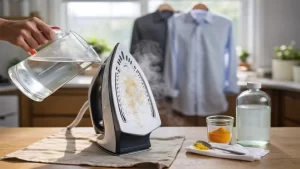
Warning: Iron Tank Scaling — Causes Stains and Breakdowns If Ignored
Why hard water damages steam irons
Tap water in many regions contains minerals like calcium and magnesium. When heated repeatedly, these minerals form limescale.
Over time:
Deposits coat heating elements
The iron requires more energy to heat up
Internal pressure increases due to blockages
Components like seals and pumps wear out faster
Eventually, leaks or sudden failure can occur. Many people discard their iron at this stage, even though the issue began months earlier with scale buildup.
How to descale your iron using vinegar
You don’t need expensive cleaners. A simple vinegar solution can effectively remove limescale.
Step-by-step method:
Unplug the iron and let it cool completely
Mix equal parts white vinegar and water
Fill the tank to the maximum level
Leave it for 30 minutes (do not heat)
Empty and rinse thoroughly عدة times
Refill with clean water
Heat the iron and activate steam over a sink or towel
During the steam purge, flakes and cloudy water may come out—this is normal and shows the cleaning is working.
Citric acid: a smell-free alternative
If you prefer an odorless option, citric acid works just as well.
How to use it:
Mix 1 tablespoon of citric acid with 250 ml warm water
Pour into the iron and leave for 30 minutes
Rinse thoroughly
Perform a steam purge with clean water
Citric acid is especially useful in small spaces where vinegar smell may be unpleasant.
How often should you descale your iron?
Regular maintenance is key. Instead of waiting for problems, clean your iron routinely.
Recommended schedule:
Very hard water + frequent use: every 4–6 weeks
Medium water + moderate use: every 2 months
Soft water + occasional use: every 3–4 months
Consistent care keeps steam strong and prevents staining.
Daily habits to reduce limescale buildup
Small changes can make a big difference:
Empty the tank after each use
Use a mix of tap and demineralised water in hard-water areas
Avoid adding perfumes or softeners to the tank
Wipe the soleplate after cooling
Even irons with anti-calc features still need manual cleaning to stay effective.
Why descaling works
Limescale is mainly calcium carbonate. Mild acids like vinegar or citric acid break it down into soluble compounds, making it easy to flush out.
When used properly at low concentrations and without heat, these solutions target deposits without damaging the appliance.
Why regular cleaning matters
Imagine preparing for an important meeting, only for your iron to leave brown streaks on your shirt. That’s often when people realize they should have descaled earlier.
Routine maintenance ensures:
Faster heating
Strong, consistent steam
Smooth gliding on fabrics
Fewer stains and fabric damage
It also extends the lifespan of your iron, reducing waste and saving money over time.
FAQs
1. Can I use vinegar in any steam iron?
Most irons support vinegar cleaning, but always check the manufacturer’s instructions first.
2. Why shouldn’t I heat vinegar inside the iron?
Heating vinegar can produce irritating vapors and may damage internal components over time.
3. Is citric acid safer than vinegar?
Both are safe when used correctly, but citric acid is odorless and often preferred indoors.
4. How do I know if my iron needs descaling?
Look for weak steam, white flakes, unusual noises, or brown stains on clothes.
5. Can limescale permanently damage an iron?
Yes, if left untreated, it can cause blockages, leaks, and eventual failure.