The rain had just ended, leaving roads slick and visibility poor. My windshield wipers squeaked as they struggled to push away a cloudy film, smearing the glass more than cleaning it. Streetlights turned into fuzzy halos, and every passing headlight looked brighter than it should.
Later that evening, I noticed my neighbor casually spraying her windshield with something from a simple plastic bottle. The smell gave it away immediately — vinegar. Within minutes, her car’s glass looked crystal clear, almost like it had just come out of a dealership showroom.
That moment revealed something surprising: a common kitchen ingredient might outperform many specialized car glass cleaners.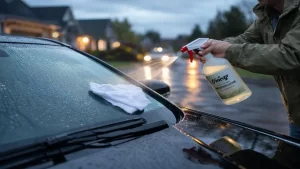
Cleaning Experts Confirm Vinegar Works on Car Windshields — Here’s Why It’s So Effective
Why Cleaning Experts Recommend Vinegar for Car Glass
Professional car detailers often rely on diluted white vinegar when cleaning automotive glass. While it may not come in a flashy bottle, it is remarkably effective at removing the stubborn film that builds up on windshields.
Unlike some commercial cleaners that contain silicone, fragrance oils, or polishing agents, vinegar is simple and predictable. For professionals, the goal isn’t extra shine — it’s maximum clarity and safe visibility.
Over time, windshields accumulate more than dust. Drivers face a combination of road pollution, dried washer fluid, wax residue from car washes, and even vapor from interior plastics. This buildup forms a thin, cloudy layer on the glass.
During the day it may barely be noticeable. But at night or in rain, it causes headlights to scatter into starbursts, making driving more difficult.
Detailers say removing that film dramatically improves visibility.
The Science Behind Vinegar’s Cleaning Power
White distilled vinegar typically contains about 5% acetic acid, which is mild but effective.
This acidity helps break down:
Hard water mineral deposits
Road salt residue
Oily grime from traffic pollution
Residue left by washer fluid and wax
Because automotive glass is chemically stable, vinegar doesn’t damage the surface when used correctly. Instead, it loosens contaminants so they can be wiped away with a microfiber cloth.
The result isn’t just moving dirt around — it actually removes it.
How to Clean Your Windshield With Vinegar
Cleaning experts say the process is simple and inexpensive.
Step-by-Step Method
Mix the solution
Combine equal parts white distilled vinegar and clean water in a spray bottle.Spray lightly
Apply the mixture to a cool windshield, preferably in the shade.Use a microfiber cloth
Wipe in straight lines using a clean microfiber towel dedicated only to glass.Use different directions
Clean vertically outside the windshield and horizontally inside. This helps you quickly identify any streaks.Rinse heavy dirt first
If your windshield is covered in bugs, mud, or road grime, rinse it with water before applying the vinegar solution.
This method removes film efficiently while avoiding streaks.
Important Tips Experts Emphasize
Professionals recommend following a few simple guidelines to avoid problems.
Use white distilled vinegar only
Start with a 50/50 vinegar and water mixture
Always use a clean microfiber cloth for glass
Clean cool glass in shaded conditions
Avoid soaking rubber trim, window tint, or electronics
Light overspray is generally harmless, but excessive soaking should be avoided.
Why Clear Glass Matters for Driving Safety
A properly cleaned windshield can noticeably improve how drivers see the road.
With the thin film removed:
Headlights from other cars appear less blinding
Road signs become clearer
Brake lights ahead are easier to distinguish
Eye strain during night driving is reduced
Many drivers assume glare or haze is caused by aging eyes or poor lighting conditions. In reality, a dirty windshield is often the real cause.
A simple cleaning routine can make a surprising difference.
Key Benefits of Using Vinegar on Windshields
| Key Point | Detail | Benefit for Drivers |
|---|---|---|
| Removes stubborn film | Mild acidity breaks down mineral and oil residue | Clearer visibility in rain and at night |
| Simple DIY mixture | Equal parts vinegar and water | Low-cost alternative to specialty cleaners |
| Proper wiping technique | Microfiber cloth and straight strokes | Streak-free, professional-looking glass |
Conclusion
Sometimes the most effective solutions are also the simplest. White vinegar, a common household item, can help remove stubborn windshield film that regular cleaners often leave behind.
When used with the right technique and a microfiber cloth, this inexpensive method can restore clear visibility and improve driving comfort — especially during night or rainy conditions.
Keeping your windshield clean isn’t just about appearance. It’s about seeing the road clearly and driving safely.
FAQs
1. Can vinegar damage a car windshield?
No. Standard automotive glass is not affected by diluted white vinegar. However, prolonged contact with rubber trim, tint film, or bare metal should be avoided.
2. Can I add vinegar to my windshield washer fluid reservoir?
Experts generally do not recommend filling the reservoir with vinegar. Small amounts may help with light film, but strong mixtures could affect rubber seals over time.
3. Will vinegar remove hard water spots from glass?
Yes. Vinegar is effective at dissolving mineral deposits that cause hard water spots, though it cannot repair scratches etched into the glass.
4. What type of vinegar should be used?
Always use plain white distilled vinegar with around 5% acidity. Colored or flavored vinegars can leave stains or sticky residue.
5. How often should I clean my windshield with vinegar?
For daily drivers, a deep clean every few weeks is usually enough. It’s also helpful before long trips or during seasons with heavy rain or road salt.