The realization often happens in the most unexpected places. Imagine standing in a grocery store aisle when a small conversation changes the way you look at vegetables forever.
A young father once tried to convince his toddler to pick a vegetable for dinner. The child excitedly pointed at broccoli. Laughing, the dad said it wasn’t the same as cauliflower. A nearby shopper gently corrected him, explaining that broccoli and cauliflower are actually the same species of plant.
At first, the idea sounds unbelievable. After all, these vegetables look and taste very different. Yet once you learn the truth, it becomes difficult to see them the same way again.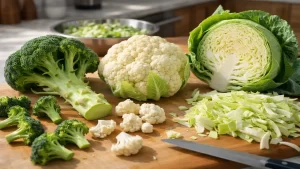
Surprising Plant Fact — Broccoli, Cauliflower and Cabbage Are the Same Species
One Plant Behind Many Familiar Vegetables
Most people assume broccoli, cauliflower, and cabbage are only loosely related. They vary in color, texture, and flavor, and many families have strong preferences about which ones belong on the dinner table.
However, botanists explain that all three vegetables belong to the same species: Brassica oleracea.
This single plant species has been cultivated for centuries and selectively bred into many different forms. What we see today—broccoli heads, cabbage leaves, and cauliflower curds—are simply different parts of the same plant emphasized through farming practices.
Even more vegetables come from this species, including:
Kale
Kohlrabi
Brussels sprouts
Collard greens
Over thousands of years, farmers saved seeds from plants with desirable traits such as larger leaves or tighter flower buds. Those small choices slowly transformed one wild coastal plant into several of the vegetables we commonly eat today.
How History Shaped These Vegetables
Long before modern science and gene editing, farmers relied on simple observation and patience. If a plant grew thicker stems or fuller leaves, its seeds were saved for the next growing season.
Gradually, these traits became more pronounced:
Broccoli developed large flowering heads
Cauliflower evolved dense white curds
Cabbage formed compact leafy balls
From nature’s perspective, they remain one species. For humans, however, these changes created a variety of vegetables that appear entirely different.
What This Means for Everyday Cooking
Understanding that these vegetables share the same species can make cooking much easier.
Because broccoli, cauliflower, and cabbage have similar structures, they respond to cooking in nearly identical ways. Heat, salt, and fat transform them using the same basic processes.
That means many recipes allow easy substitutions. For example:
Roasted cauliflower can replace cabbage wedges
Broccoli stems can be shredded like cabbage in slaws
Mixed brassicas can roast together on one pan
This flexibility helps reduce food waste and makes weeknight cooking simpler.
Imagine opening the refrigerator after a long day and finding half a cabbage, a yellowing broccoli crown, and a small cauliflower. Instead of seeing three separate problems, you can treat them as one versatile ingredient family.
Cut them into pieces, toss with olive oil and salt, and roast them together. The result becomes a single flavorful dish.
The Science Behind Their Flavor
These vegetables share similar internal chemistry. Because they belong to the same species, they contain comparable amounts of:
Fiber
Natural sugars
Sulfur compounds
When overcooked, sulfur compounds create the strong smell many people dislike. But when cooked properly—especially at high heat—the natural sugars caramelize and produce a rich, slightly sweet flavor.
This is why roasting or stir-frying often produces better results than long boiling.
Understanding this science turns recipes from strict instructions into flexible cooking guides.
Simple Techniques That Improve Flavor
Many people dislike broccoli or cabbage because they were traditionally boiled for long periods. That method softens texture and intensifies unpleasant aromas.
A better approach is high heat and short cooking times.
Here are simple techniques that improve flavor:
Roast vegetables at about 220°C (430°F)
Cut pieces evenly so they cook at the same rate
Add salt early in cooking
Finish with acid such as lemon juice or vinegar
Use enough fat like olive oil or butter to balance bitterness
Allowing the edges to caramelize slightly creates deeper flavor and a nutty taste.
Even a small change—like roasting for five extra minutes—can transform broccoli from a disliked vegetable into a weekly favorite.
Seeing the Produce Aisle Differently
Once you recognize the connection between broccoli, cauliflower, and cabbage, the grocery store looks different.
You may notice their shared characteristics:
Strong stalks
Similar leaf veins
Distinct floral aromas
What appears to be a diverse group of vegetables is really a record of centuries of careful farming.
Each variety reflects the patience of generations who gradually shaped the plant to produce different edible forms.
Why This Knowledge Matters
Understanding the shared origin of these vegetables offers several practical benefits:
More flexibility in cooking
Recipes become adaptable rather than rigid.
Less food waste
Different brassicas can substitute for one another.
Better appreciation of agriculture
These vegetables show how human cultivation can transform a single species into many foods.
Instead of seeing separate ingredients, you begin to recognize one remarkably adaptable plant.
Conclusion
Broccoli, cauliflower, and cabbage may appear unrelated at first glance, but they are all varieties of the same species: Brassica oleracea. Centuries of farming shaped this single plant into multiple vegetables with unique textures and flavors.
Understanding this connection changes how we cook and shop. It allows greater flexibility in recipes, reduces food waste, and highlights the fascinating history behind everyday foods.
The next time you stand in the produce aisle, you might notice something new: what looks like three different vegetables is actually one plant with many forms—a small reminder of how agriculture and nature work together.
Frequently Asked Questions (FAQs)
Are broccoli, cauliflower, and cabbage really the same plant?
Yes. All three vegetables are varieties of the same species called Brassica oleracea. Farmers selectively bred them over centuries to emphasize different plant parts.
Why do these vegetables look so different?
Selective breeding focused on different traits. Broccoli emphasizes flower buds, cabbage develops dense leaves, and cauliflower forms compact curds.
Can broccoli, cabbage, and cauliflower be used in the same recipes?
Often yes. Because they share similar structures and flavors, many cooking methods—such as roasting, steaming, or stir-frying—work well for all three.
Why do these vegetables sometimes smell strong when cooked?
They contain sulfur compounds that release strong odors when overcooked. Cooking them quickly at high heat helps reduce this smell and improves flavor.
What is the best way to cook brassica vegetables?
Roasting at high temperatures, stir-frying, or sautéing usually produces the best flavor because it caramelizes natural sugars and reduces bitterness.