Late afternoon sunlight has a way of revealing every flaw in the kitchen. Fingerprints around cabinet handles, sticky spots where hands pushed doors open, and a faint gray film above the stove suddenly become impossible to ignore. You wipe the surface, but instead of disappearing, the marks just spread around.
Many people respond the same way: they reach for stronger cleaning products. Degreasers, specialty kitchen sprays, or lemon-scented cleaners pile up under the sink. Each promises spotless results, yet the cabinet doors still look dull and sticky.
Surprisingly, the solution is often already sitting beside the sink: dishwashing liquid.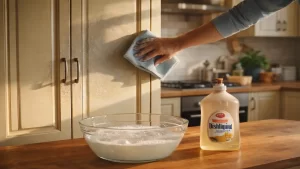
Simple Kitchen Liquid — For Busy Cleaners — Restores Greasy Cabinets With Minimal Effort
Why Kitchen Cabinets Get So Greasy
Kitchen cabinets collect grease gradually. Every time you cook—especially frying or sautéing—tiny droplets of oil spread through the air. Over time, these droplets settle on surfaces like cabinet doors and mix with dust.
This combination creates the familiar tacky gray film many households struggle to remove. Standard wipes may smear it rather than lift it completely, which is why cabinets often appear dull even after cleaning.
Dishwashing liquid works differently. It’s designed to remove stubborn grease from dishes, pans, and cookware. The same properties that break down oily residue on plates also work effectively on cabinets.
The Simple Science Behind Dish Soap
Dishwashing liquid contains surfactants, special molecules that attract both water and grease.
One end of the molecule bonds with oil.
The other end mixes with water.
When combined with warm water, these molecules surround grease particles and lift them away from the surface, allowing them to rinse off easily instead of spreading across the cabinet.
This is why a small amount of dish soap in warm water can sometimes outperform expensive cleaning sprays.
How to Clean Cabinets Using Dish Soap
You don’t need complicated tools or harsh chemicals. A gentle method is usually the most effective.
Step-by-step method
Prepare warm water
Fill a bowl or bucket with comfortably warm water.Add a small amount of dish soap
About one teaspoon is enough. Too much soap creates excess residue.Use a soft cloth
Dip a microfiber cloth or soft cotton cloth into the solution and wring it out until damp.Clean one cabinet at a time
Wipe from top to bottom, paying attention to handles and edges where grease builds up.Rinse the cloth frequently
Dirty water spreads grease, so refresh the water when it becomes cloudy.Remove soap residue
Wipe again with a clean cloth dampened with plain water.Dry and buff
Use a towel to gently dry the cabinet surface. This step restores shine.
Common Cleaning Mistakes to Avoid
Many cabinet surfaces are painted, laminated, or coated with protective finishes. Certain cleaning habits can damage them over time.
Using harsh chemical cleaners
Strong degreasers may remove grease but can slowly dull or scratch cabinet finishes.
Adding too much dish soap
Thick suds leave residue that attracts dust and makes cabinets sticky again.
Skipping the rinse step
Soap left behind creates a dull film. Always wipe once more with clean water.
Scrubbing aggressively
Grease buildup usually comes off with repeated gentle wipes rather than heavy scrubbing.
Small Habits That Keep Cabinets Looking New
Once cabinets are cleaned properly, maintaining them becomes easier.
Wipe around handles every few weeks.
Clean cabinet doors monthly in busy kitchens.
Use mild cleaners to protect finishes.
This quick routine can make the entire kitchen feel brighter and cleaner without buying specialized products.
Often, the most effective cleaning solutions are the simplest ones already in the home.
Key Takeaways
| Key Point | Explanation | Benefit |
|---|---|---|
| Dish soap removes grease | Surfactants lift oily residue from cabinet surfaces | Restores cabinet shine easily |
| Gentle cleaning protects finishes | Warm water and mild soap prevent scratches | Cabinets last longer |
| Simple routine works best | Monthly cleaning prevents buildup | Kitchen stays fresh and bright |
Frequently Asked Questions (FAQs)
1. Can dishwashing liquid be used on real wood cabinets?
Yes. Use a well-diluted solution and avoid soaking the wood. Wipe quickly, rinse with a damp cloth, and dry immediately to prevent moisture from entering the wood grain.
2. Can dish soap remove old grease stains?
Dish soap can significantly reduce old grease buildup. Stubborn stains may require two or three gentle cleanings, but the surface usually becomes noticeably cleaner without damaging the finish.
3. How often should kitchen cabinets be cleaned this way?
In most households, once a month is sufficient. If you cook frequently or have children, wiping around handles every two weeks can prevent heavy buildup.
4. Does the type of dishwashing liquid matter?
Most standard dish soaps work well. Concentrated formulas require only a small amount. Choose a product that cuts grease effectively and is comfortable for your hands.
5. Should dish soap be mixed with vinegar or other cleaners?
It’s best to use dish soap alone for cabinet cleaning. Mixing cleaning products can reduce effectiveness and sometimes cause unwanted reactions. If using vinegar, apply it separately for glass or metal surfaces.