On an ordinary street, something unusual started happening. Neighbors slowed their walk, delivery drivers paused for a second look, and passersby quietly took photos.
The house itself had not changed. The architecture remained exactly the same. Yet the entrance suddenly looked curated and welcoming—even in the coldest weeks of winter.
The transformation came from a surprisingly simple choice: placing a single winter-blooming plant by the front door.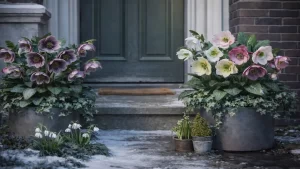
Simple Garden Choice — Home Entrances — Creates the Most Eye-Catching Front Step
From Boring Front Step to Unexpected Winter Attraction
The story begins with a typical front step—plain concrete, a worn doormat, and two empty flower pots left behind after autumn.
Like many homeowners, the resident wanted something more appealing to see every day when leaving for work. But winter isn’t usually the season for vibrant plants. Most flowers are dormant, and garden centers often display only bare branches or fading seasonal décor.
However, tucked among the quiet shelves was a group of plants already in full bloom despite the cold: Lenten roses, known botanically as Helleborus orientalis.
Their flowers—cupped and slightly drooping—appeared in shades of plum and creamy white, often marked with dark freckles near the center. Even better, their glossy evergreen leaves remained attractive throughout the year.
Two plants were placed in the empty pots beside the door. That simple change turned an overlooked entrance into a small neighborhood talking point within days.
Why Helleborus Orientalis Thrives in Winter
Unlike many bedding plants that wait for spring warmth, hellebores flourish in late winter.
From January through March, strong stems push up through the soil, producing blooms that tolerate frost, rain, and low light.
Several qualities make them ideal for doorways and entrances:
Evergreen foliage keeps the pots looking full even after flowering ends
Long-lasting blooms remain decorative for weeks
Cold tolerance allows them to thrive during winter weather
Low maintenance makes them suitable for busy households
Even after the colors fade slightly, the flowers maintain their shape, developing a delicate, antique texture that still looks intentional and attractive.
A Wide Range of Colors for Every Entrance
Modern breeding has dramatically expanded the variety of hellebores available.
While older varieties featured simple greenish-white blooms, today’s plants come in a wide palette:
Deep plum and near-black tones
Soft pink and creamy white
Lime green and chartreuse
Apricot and pale yellow
These shades make it easier to coordinate plants with existing architectural details.
Examples:
Dark flowers contrast beautifully with white walls or pale brick
Soft pinks pair well with traditional red brick homes
Lime green blooms brighten darker porches or shaded entryways
Because hellebores stay relatively compact, they fit comfortably in many containers—from terracotta pots to metal buckets or rustic wooden planters.
A Low-Maintenance Favorite for Busy Homeowners
Many people hesitate to decorate their entrances with plants because they worry about maintenance. Hellebores, however, require surprisingly little care.
Once planted properly, they tolerate:
Frosty temperatures
Wind exposure near streets
Occasional missed watering
Instead of delicate houseplants, hellebores behave like hardy garden perennials.
Basic Care Checklist
| Task | When and Why |
|---|---|
| Add drainage material | During planting to prevent soggy soil |
| Plant at correct depth | Keeps the crown from rotting |
| Water lightly in dry periods | Helps roots establish in the first season |
| Remove old leaves | Late winter cleanup improves airflow and highlights blooms |
The most important step is ensuring good drainage. Hellebores dislike standing water, so adding gravel or clay pebbles at the bottom of a pot helps keep roots healthy.
Pairing Hellebores With Other Plants
Although a single hellebore can look striking, combining it with complementary plants creates a more designed appearance.
Garden designers often pair hellebores with shade-tolerant companions such as:
Heucheras, which add colorful foliage in caramel, burgundy, or silver
Snowdrops, whose delicate white blooms soften the display
Evergreen ferns, bringing a woodland texture
Trailing ivy, which drapes over containers and frames the main plant
This layered planting can turn one pot into a miniature winter garden that stays attractive for months.
Important Tips for New Gardeners
While hellebores are beginner-friendly, there are a few things to keep in mind.
1. Toxicity
Like many plants in the buttercup family, hellebores are toxic if ingested. Pets and small children should not chew the leaves. Placing the plant in a heavy container away from play areas reduces risk.
2. Skin Sensitivity
When pruning old leaves, wear gloves. The sap can irritate sensitive skin.
3. Light Conditions
Hellebores prefer partial shade, meaning filtered or indirect light rather than deep darkness. A typical shaded doorstep or north-facing entrance usually works well.
A Small Upgrade With a Big Visual Impact
Real estate professionals often emphasize “curb appeal,” and entrances play a major role in first impressions.
A healthy winter plant beside the door signals care and attention without requiring major landscaping work.
Beyond aesthetics, there is also a subtle emotional benefit. Seeing fresh blooms at eye level on cold winter mornings can brighten the start of the day. It creates a small seasonal marker, signaling that spring is slowly approaching.
For renters or homeowners who want a flexible solution, hellebores are ideal. They can live in a container by the door for years and move easily to another garden later.
Sometimes, a single thoughtful plant is all it takes to turn an ordinary entrance into something people quietly admire.
Conclusion
A well-placed hellebore proves that small design choices can have a powerful effect. With winter blooms, evergreen foliage, and minimal care requirements, this hardy plant can transform a plain doorway into a welcoming focal point. Whether you live in a house or apartment, adding one thoughtfully chosen plant may be the easiest way to upgrade your home’s entrance during the colder months.
Frequently Asked Questions (FAQs)
1. What is a hellebore plant?
A hellebore is a hardy perennial known for blooming in late winter or early spring. One popular variety, Helleborus orientalis, is often called the Lenten rose.
2. Can hellebores survive frost?
Yes. Hellebores are cold-tolerant plants that can bloom even during frost or light snow.
3. Do hellebores need full sun?
No. They prefer partial shade and perform best with indirect light rather than strong midday sun.
4. How often should hellebores be watered?
During their first season, water them lightly during dry periods. After they establish roots, natural rainfall is often enough.
5. Are hellebores safe for pets?
Hellebores are toxic if eaten. While most pets avoid them, it’s best to keep the plant out of reach of curious animals or young children.