The first time someone suggested rubbing a potato on a rusty kitchen knife, it sounded like a joke. Yet this surprisingly simple trick has helped many home cooks restore lightly rusted blades without expensive products.
Imagine opening a kitchen drawer on a rainy afternoon and finding a once-trusted chef’s knife covered with small orange-brown rust spots. Instead of throwing it away, some people turn to a basic ingredient already sitting in the kitchen: a potato.
With just a few minutes of gentle rubbing, the rust often fades and the metal begins to look clean again. It may not return the knife to a brand-new shine, but the blade can quickly become safer and more usable.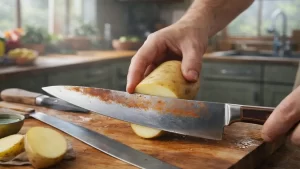
Rusty Kitchen Knives? — This Potato Trick Can Help Remove Surface Rust Quickly
Why a Potato Can Remove Rust
Rust forms when iron reacts with moisture and oxygen, creating iron oxide on the surface of metal. Kitchen knives are especially vulnerable if they are left wet or stored in humid conditions.
Potatoes contain two helpful components that can assist in removing light rust:
Oxalic acid – a mild natural acid that helps break down rust.
Starch – which acts as a gentle polishing agent during rubbing.
When the cut surface of a potato is rubbed against rusted steel, the oxalic acid helps loosen the rust while the starch provides mild abrasion. After rinsing, the rust particles can wash away, leaving the blade cleaner.
This method works best for light surface rust, not for deep corrosion or pitted metal.
How to Remove Rust From a Knife Using a Potato
Follow these simple steps to try the method safely:
Choose a firm potato and cut it in half to expose a fresh surface.
Place the knife on a stable cutting board with the rusted side facing up.
Rub the cut side of the potato directly over the rust spots.
Move gently along the blade, from the spine toward the edge, avoiding sideways pressure across the blade.
Continue rubbing for 1–2 minutes.
Let the potato juice sit on the blade briefly (about a minute) to allow the acid to work.
Rinse the knife with warm water and a small amount of dish soap.
Dry the knife thoroughly with a soft cloth.
If rust remains, the process can be repeated. Some people add a pinch of salt or baking soda to the potato surface to increase the scrubbing effect, but this should be done carefully to avoid scratching the metal.
Common Mistakes to Avoid
Although the potato trick is simple, a few mistakes can reduce its effectiveness:
Scrubbing too aggressively, which may scratch the blade
Skipping the drying step, allowing rust to return quickly
Ignoring long-term care, such as proper storage
Once rust is removed, the metal surface becomes more exposed. Proper care helps prevent rust from forming again.
Simple Habits That Help Prevent Knife Rust
Maintaining kitchen knives doesn’t require special tools—just a few consistent habits:
Dry knives immediately after washing
Avoid leaving knives soaking in water
Never place quality knives in the dishwasher
Store them in a dry environment
Apply a small amount of food-safe mineral oil occasionally
These small steps can extend the life of your kitchen tools and keep them safer to use.
Why This Old Kitchen Trick Still Matters
The potato rust-removal trick highlights how simple knowledge passed through kitchens over generations can still be useful today. Instead of replacing tools immediately, small repairs can help extend their lifespan.
In a time when many household items are quickly discarded, restoring a kitchen tool with something as simple as a potato offers a practical and sustainable solution.
It also reminds cooks that caring for kitchen tools—drying them, storing them properly, and addressing rust early—can keep them performing well for years.
Key Takeaways
| Key Point | Detail | Benefit |
|---|---|---|
| Natural chemistry | Potatoes contain oxalic acid and starch | Helps loosen light surface rust |
| Gentle cleaning | Soft rubbing avoids damaging blades | Safe for most kitchen knives |
| Preventive care | Drying and light oiling reduce moisture exposure | Helps prevent future rust |
FAQs
Can any type of potato remove rust from a knife?
Yes. Most common potato varieties contain starch and oxalic acid, which help remove light surface rust.
Does this method work for severe rust?
No. The potato method works best for small rust spots or light surface corrosion. Deep rust may require professional sharpening or specialized rust removers.
Is it safe to use the knife on food afterward?
Yes. After cleaning, rinse the knife thoroughly with warm soapy water and dry it completely before using it again.
Can this trick be used on other kitchen tools?
Yes. Lightly rusted items such as peelers, baking trays, or metal spatulas may also benefit from this method. Avoid using it on coated or delicate finishes.
How often should I use this method?
Only when rust spots appear. Daily knife care should focus on washing, drying immediately, and storing knives in a dry place.