The first time many people open a bottle of conventional cleaner, the smell can be overwhelming. Strong artificial fragrances and sharp chemicals quickly fill the air. For some, it stings the eyes or irritates the throat.
It’s a strange contrast. Outside, nature filters water slowly through soil and roots. Inside our homes, however, cleaning products often rely on synthetic chemicals packaged in plastic bottles. That moment can lead to an important question: Does a home really need harsh chemicals to be truly clean?
More people are realizing that the answer may be no.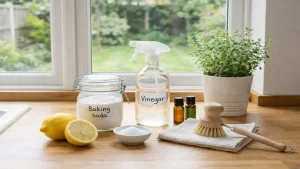
Natural Cleaning Methods — Households — Turn Everyday Ingredients into Effective Cleaners
When You Realize Your Home Is Part of an Ecosystem
Once you begin thinking about it, everyday cleaning habits look different.
When you pour a cleaner down the sink, it doesn’t simply disappear. That liquid travels through pipes, treatment systems, and eventually into rivers and oceans already under environmental pressure.
The same goes for sprays floating briefly in the air before being inhaled, or plastic bottles piling up in recycling bins.
Many people think of “the environment” as something far away—forests, oceans, or distant landscapes. In reality, your home is already part of that ecosystem.
Air flows in and out through windows and vents. Water travels through pipes. Dust moves on clothing and shoes. Everything used in your home becomes connected to the world outside it.
Even the cleaning products under the sink affect the environment you live in every day.
A Simpler Way to Clean Your Home
Opening a cupboard filled with simple ingredients can feel surprisingly refreshing. Instead of a shelf full of brightly colored bottles, you may only see a few familiar items:
Baking soda
White vinegar
A bar of plain soap
Lemons or citrus fruit
A small bottle of essential oil
These ingredients have been used for generations. When combined thoughtfully, they clean surfaces effectively while reducing unnecessary chemicals and packaging.
The Cleaning Power of Everyday Ingredients
Many natural cleaning ingredients already exist in your kitchen. Understanding how they work can make cleaning both easier and more sustainable.
Baking Soda
Baking soda works as a gentle scrub and odor absorber. It removes grime without scratching surfaces and neutralizes unpleasant smells instead of masking them.
White Vinegar
Vinegar contains mild acidity that helps dissolve grease, mineral buildup, and soap residue. It’s especially useful for kitchen and bathroom cleaning.
Citrus Fruits
Lemon juice and citrus oils help break down grease while adding a fresh scent. The natural oils in citrus peels also provide mild antibacterial properties.
Plain Soap
Basic soaps lift dirt and oils from surfaces so they can be rinsed away with water. This makes them effective for dishes, floors, and general cleaning.
Salt
Salt provides extra scrubbing power for stubborn stains on cookware or cutting boards.
Essential Oils
A few drops of essential oil can add fragrance and mild antibacterial properties to natural cleaners. Use them sparingly for best results.
Easy Eco-Friendly Cleaning Recipes
These simple recipes require only common ingredients and minimal preparation.
All-Purpose Surface Cleaner
This spray works well for counters, tables, and household surfaces.
How to make it:
Mix equal parts white vinegar and water in a spray bottle
Add a few drops of essential oil if desired
Shake gently before use
Spray onto surfaces and wipe with a cloth. Avoid using vinegar on natural stone surfaces such as marble or granite.
Gentle Scrub for Sinks and Tubs
When surfaces need deeper cleaning, a simple scrub works well.
How to make it:
Mix baking soda with a small amount of water to form a paste
Add a drop of liquid soap if needed
Apply with a sponge, scrub lightly, and rinse thoroughly.
Natural Glass Cleaner
For streak-free mirrors and windows:
Combine equal parts vinegar and water
Add a small splash of rubbing alcohol if desired
Spray lightly and wipe with a lint-free cloth.
Natural Wood Polish
Wood furniture can be polished using simple ingredients.
Mix:
Two parts olive oil
One part lemon juice or vinegar
Apply with a soft cloth and buff along the grain of the wood.
Carpet and Mattress Deodorizer
To remove odors from fabric surfaces:
Mix baking soda with a few drops of essential oil
Sprinkle lightly over the surface
Let sit for 15–30 minutes
Vacuum thoroughly
Quick Eco-Cleaning Starter Kit
| Ingredient | Main Use | Notes |
|---|---|---|
| Baking Soda | Scrubbing and deodorizing | Great for sinks, fridges, and tubs |
| White Vinegar | Degreasing and descaling | Avoid natural stone |
| Plain Soap | Everyday cleaning | Works on dishes and floors |
| Lemon or Citrus | Grease removal and fresh scent | Juice or peels can be used |
| Salt | Extra scrubbing | Good for pans and boards |
| Essential Oils | Natural fragrance | Use sparingly |
Why Eco-Friendly Cleaning Feels Different
Switching to natural cleaning methods often changes the way people experience household care.
Cleaning becomes less about harsh chemicals and more about maintaining a comfortable living space. Simple routines—scrubbing a sink with baking soda or wiping a table with citrus cleaner—feel less aggressive and more intentional.
Many people also notice benefits such as:
Reduced chemical odors indoors
Fewer plastic bottles in the trash
A calmer and simpler cleaning routine
Safety Tips for Natural Cleaning
While natural ingredients are generally safer, basic precautions are still important.
Never mix vinegar with bleach
Clearly label homemade cleaning solutions
Test cleaners on small areas first
Keep good ventilation when cleaning
Eco-friendly cleaning is about improving everyday habits, not eliminating all commercial products entirely.
How Small Changes Protect the Environment
Every product rinsed down a drain eventually enters a larger system of waterways and ecosystems. Simpler ingredients like vinegar, soap, and baking soda break down more easily than many synthetic chemicals.
Over time, using fewer packaged cleaners can lead to:
Less plastic waste
Reduced chemical exposure indoors
A smaller environmental footprint
Small changes inside the home can quietly make a difference outside it.
FAQs About Eco-Friendly Cleaning
What are eco-friendly cleaning products?
Eco-friendly cleaning products use ingredients that are safer for the environment and human health. They typically avoid harsh chemicals and rely on biodegradable substances like vinegar, baking soda, or plant-based soaps.
Are natural cleaners as effective as chemical cleaners?
Yes, many natural cleaners are effective for everyday household tasks. Ingredients like vinegar and baking soda can remove grease, stains, and odors when used correctly.
Is vinegar safe for all surfaces?
No. Vinegar should not be used on natural stone surfaces such as marble or granite because its acidity can damage the material.
How can I start eco-friendly cleaning at home?
Begin by replacing one or two cleaning products with simple alternatives. For example, use a vinegar and water solution for general surfaces or baking soda for scrubbing sinks and tubs.
Do natural cleaning products disinfect surfaces?
Some natural ingredients provide mild antibacterial effects, but they may not replace medical-grade disinfectants. For high-risk situations, stronger disinfecting products may still be necessary.
Can eco-friendly cleaning reduce household waste?
Yes. Using basic ingredients often reduces plastic packaging and allows people to reuse spray bottles, helping lower overall household waste.