At first glance, combining hydrogen peroxide with baking soda might seem like a household myth. When someone pours hydrogen peroxide into a bowl and adds a spoonful of baking soda, the mixture begins to fizz and turn slightly cloudy. The scent becomes sharp and clean, and within minutes stubborn stains can begin to fade.
This simple reaction isn’t just for show. The bubbling mixture can penetrate tiny grooves on surfaces that are difficult to clean with a typical scrubber. For example, turmeric stains on a cutting board or discoloration in grout lines often lighten significantly after just a few minutes of contact.
Scenes like this have quietly played out in kitchens, bathrooms, garages, and even dental clinics around the world. What once seemed like a basic household trick is now being recognized by many professionals as a practical, low-cost cleaning solution.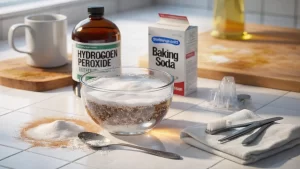
Mixing Baking Soda with Hydrogen Peroxide — Home Cleaning Fans — Surprising Benefits Revealed
Why Experts Trust This Affordable Combination
Chemists and dental professionals often point out that baking soda and hydrogen peroxide are not new inventions. Both are inexpensive products widely available in pharmacies and grocery stores.
Each ingredient plays a different role:
Baking soda acts as a gentle abrasive and natural deodorizer.
Hydrogen peroxide (3%) functions as a disinfectant and oxidizing agent.
When mixed together, they create a reaction that releases oxygen. This oxygen helps loosen dirt, break down stains, and reduce microbes on surfaces. The fizzing effect you see is the release of these oxygen bubbles working to lift particles away.
Because of this mechanism, specialists sometimes recommend the mixture for specific cleaning or hygiene tasks.
Why It Can Help Remove Stains
The effectiveness comes from the chemistry of the two ingredients.
Baking soda slightly increases the pH level and provides fine particles that gently scrub away buildup. Hydrogen peroxide then oxidizes pigments and bacteria, breaking them apart so they can be rinsed away more easily.
Together, they function like a mild scrub combined with a stain-lifting cleaner. This balance is why the mixture is often used in homes to tackle stubborn grime without the strong smell of harsher chemicals.
A Common Use: Teeth Whitening
Many whitening toothpastes include either baking soda, peroxide, or both.
Dental professionals sometimes recommend a carefully controlled routine using these ingredients to reduce stains caused by coffee, tea, wine, or tobacco. A simple paste can be made by mixing a teaspoon of baking soda with enough 3% hydrogen peroxide to create a thin paste.
When used correctly:
Brush gently for 30 seconds to one minute
Use once or twice per week only
Rinse thoroughly afterward
Experts emphasize that this should not replace regular toothpaste. Instead, it’s best used occasionally to help manage surface stains.
Cleaning Applications Around the House
The same bubbling mixture can also be useful for various cleaning tasks.
A common method involves sprinkling baking soda onto a surface and then applying a small amount of 3% hydrogen peroxide on top. The mixture begins to fizz immediately.
Allow the reaction to sit for 5–10 minutes, then scrub lightly with a sponge or old toothbrush and rinse with warm water.
This approach is often used for:
Bathroom tile grout
Sinks and bathtubs
Stained mugs
Cutting boards
Refrigerator shelves
Trash cans
Many people notice that grout lines regain their original color and surfaces appear brighter after cleaning.
Removing Fabric Stains
The mixture can also help treat certain stains on fabrics, though caution is required.
To use it safely:
Apply a small amount of baking soda paste to the stain.
Add a few drops of hydrogen peroxide.
Gently blot the area.
Wash the fabric afterward.
Because hydrogen peroxide can lighten colors, experts recommend testing a hidden section of the fabric first.
Disinfecting Small Tools
Another practical use is disinfecting small metal tools used regularly.
Items such as nail clippers, tweezers, and metal nail files can be placed in a bowl with:
3% hydrogen peroxide
A pinch of baking soda
After 10 minutes of soaking, the tools can be rinsed and dried. This process may reduce microbes on items that frequently come into contact with skin.
Toothbrush heads can also be briefly soaked in the mixture as part of regular hygiene routines.
Important Safety Guidelines
Despite its usefulness, experts stress that this combination must be used carefully.
Key precautions include:
Use only 3% hydrogen peroxide unless directed by a medical professional.
Avoid contact with skin or teeth for longer than 1–2 minutes.
Always rinse thoroughly after use.
Keep the mixture away from children and pets.
Perform a patch test on surfaces or fabrics before applying widely.
Dermatologists also caution against using the mixture directly on skin or scalp for cosmetic purposes, as prolonged exposure can irritate or damage the skin barrier.
The Power of Simple Chemistry
In a market full of specialty cleaning products, it can be refreshing to see two simple ingredients handle many everyday tasks.
Baking soda from the pantry and hydrogen peroxide from the medicine cabinet may not have flashy branding, but they are supported by decades of scientific understanding. When used responsibly, they can help clean, deodorize, whiten, and disinfect various items in the home.
Experts do not claim that this mixture replaces every cleaning product. Certain situations—such as heavy contamination—may still require stronger disinfectants.
However, for many daily tasks, this affordable combination can offer a practical and effective solution.
Frequently Asked Questions (FAQs)
1. Can I use baking soda and hydrogen peroxide on my teeth every day?
No. Most dentists recommend using the mixture only once or twice a week. Daily use could irritate gums or gradually wear enamel.
2. Is the mixture safe for colored fabrics?
Hydrogen peroxide may lighten dyes. Always test a small hidden area before applying it to colored materials.
3. Can I safely clean cutting boards with this mixture?
Yes, as long as you use 3% hydrogen peroxide and rinse the board thoroughly with water afterward. Allow it to air dry before using it again for food preparation.
4. Does it disinfect as well as bleach?
Hydrogen peroxide can reduce many microbes, but bleach may still be recommended for heavy contamination or specific pathogens.
5. What surfaces should not be cleaned with this mixture?
Avoid using it on delicate materials such as marble, granite, unfinished wood, silk, or certain leathers, as it may cause discoloration or surface damage.