At first glance, it looks ordinary. A small glass jar sits on the kitchen counter, filled with coarse salt and a few sprigs of rosemary. It doesn’t look expensive or impressive. In fact, many people might overlook it entirely.
But in some kitchens, that simple jar quietly becomes one of the most useful tools around.
A pinch seasons roasted vegetables. A handful cleans a cutting board. A quick rub removes stubborn food smells from your hands.
One jar, several practical uses—and suddenly everyday cooking feels a little more intentional.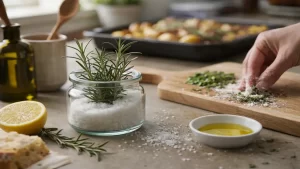
Home Hack — Store Coarse Salt With Rosemary — Unexpected Everyday Uses
Why Small Kitchen Habits Make a Big Difference
Many home cooks rely on small habits that simplify daily routines. A favorite pan left within reach, a knife that’s always ready, or a seasoning mix kept on the counter can save time and effort.
A jar of coarse salt mixed with rosemary works the same way.
It’s always ready to add flavor, clean surfaces, or refresh the kitchen. And because it stays visible on the counter, it becomes part of the cooking routine without much effort.
The sound of salt crystals against glass and the subtle pine-like scent of rosemary can even make the kitchen feel calmer and more welcoming.
How This Simple Blend Improves Flavor
Coarse salt behaves differently from fine table salt.
Large crystals dissolve more slowly and cling better to food surfaces, which helps distribute seasoning evenly. This creates small bursts of flavor rather than a flat salty taste.
Rosemary adds a fragrant herbal note that pairs especially well with roasted foods.
Together, they create a simple seasoning that elevates everyday meals like:
Roasted potatoes
Chicken and vegetables
Bread or focaccia
Grilled vegetables
Homemade pizza
Even a small pinch can make basic dishes feel more flavorful and satisfying.
How to Make a Rosemary Salt Jar at Home
Preparing the jar takes only a few minutes.
What You Need
A clean glass jar with a lid
Coarse sea salt or kosher salt
Fresh or dried rosemary sprigs
Steps
Fill the jar about three-quarters full with coarse salt.
Lightly crush rosemary between your fingers to release the oils.
Add the rosemary into the salt.
Close the lid and gently shake the jar.
Leave it for 24–48 hours so the salt absorbs the aroma.
After that, the jar is ready to use.
Some people prefer whole rosemary sprigs, while others mix in the leaves. Both methods work well.
Four Practical Ways to Use Rosemary Salt
1. Seasoning Food
Sprinkle a pinch over roasted potatoes, chicken, grilled vegetables, or bread before cooking. The coarse salt creates texture while rosemary adds aroma.
2. Natural Kitchen Cleaning
A small handful of coarse salt works as a gentle scrub. Combined with lemon juice, it can help clean:
Wooden cutting boards
Stained mugs
Wooden spoons
Cooking surfaces
The salt lifts residue while rosemary leaves a pleasant scent.
3. Removing Food Odors
Garlic, onions, and fish can leave strong smells on hands.
Mixing a small amount of the salt with olive oil creates a quick hand scrub that removes odors and softens skin.
4. Freshening the Kitchen
Leaving the jar open for a short time can help spread a subtle herbal aroma while cooking. Some people even keep small bowls of salt in refrigerators to absorb unpleasant odors.
A Small Habit That Makes Cooking Feel Better
Once the jar becomes part of your kitchen routine, it often changes how you approach everyday meals.
Salt becomes more than a simple seasoning. Rosemary becomes more than a recipe ingredient. Together, they turn into a tool that supports cooking, cleaning, and even small moments of relaxation.
You don’t need expensive gadgets or a perfectly organized kitchen.
Sometimes all it takes is a glass jar, coarse salt, and a few rosemary sprigs to make cooking feel a little more thoughtful and enjoyable.
Frequently Asked Questions (FAQs)
1. Can I use fine salt instead of coarse salt?
Yes, but coarse salt works better. Its larger crystals provide better texture for seasoning and are more effective for gentle scrubbing.
2. Should I use fresh or dried rosemary?
Both work well. Fresh rosemary releases aroma more quickly, while dried rosemary lasts longer and mixes evenly with the salt.
3. How long can the rosemary salt jar last?
If stored in a dry place, the jar can last several months. If using fresh rosemary, replacing it every 4–6 weeks helps maintain the aroma.
4. Is rosemary salt suitable for all dishes?
It works best for savory foods like roasted vegetables, meats, bread, and potatoes. Plain salt is usually better for desserts and delicate recipes.
5. Is it safe to use rosemary salt on wooden boards?
Yes, when used gently. The coarse salt helps remove residue without damaging the wood. Always rinse and dry the board thoroughly after cleaning.