The first thing many people notice during deep cleaning is the dull ring inside the toilet bowl. What once looked like bright porcelain slowly turns cloudy over the years. Mineral stains settle along the water line, rust streaks appear, and even repeated scrubbing seems to have little effect.
Instead of reaching immediately for strong chemical cleaners, many cleaning experts recommend starting with something far simpler: half a glass of a mild acidic solution, often ordinary white vinegar.
This gentle method can gradually dissolve mineral deposits and restore some of the porcelain’s original shine—without harsh scrubbing.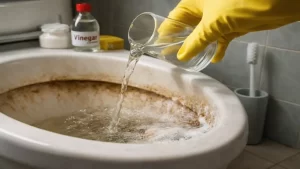
Half a Glass Cleaning Trick — Homeowners — Restore Toilet Bowl Shine Fast
Why Old Toilet Bowls Develop Stubborn Stains
Bathroom fixtures quietly endure years of daily use. Over time, mineral-rich water leaves behind deposits that cling to the porcelain surface.
Common causes of stains include:
Hard water minerals such as calcium and magnesium
Iron from aging pipes, which can create rust streaks
Soap residue and organic buildup that forms a dull film
What looks like permanent damage is often just layers of accumulated residue.
Repeated scrubbing with rough tools can actually make things worse by creating microscopic scratches. These tiny marks give new deposits places to cling, making stains return even faster.
The Half-Glass Vinegar Method
A gentle cleaning routine can often remove much of the buildup.
Step-by-step method
Flush the toilet to lower the water level slightly.
Pour half a glass of white vinegar around the inside rim of the bowl.
Allow the liquid to sit for 30–60 minutes.
Use a soft toilet brush to scrub gently.
Flush to rinse the bowl.
The key difference in this method is patience. Instead of aggressive scrubbing, the mild acid is given time to dissolve mineral deposits naturally.
Why Vinegar and Citric Acid Are Effective
Most toilet bowl stains caused by hard water are made of mineral compounds such as calcium carbonate or iron oxide.
Mild acids—including the acetic acid found in vinegar and the citric acid found in lemons—can gradually break down these minerals.
This reaction loosens buildup without damaging the porcelain glaze.
Stronger cleaners often contain powerful chemicals that may strip the protective surface over time, making the fixture more vulnerable to future stains.
Other Gentle Cleaning Mixtures That Work
Several simple household solutions can help remove stubborn marks.
1. Citric Acid Solution
Ingredients:
1–2 tablespoons citric acid
Half a glass of warm water
Method:
Pour the mixture on stained areas, wait up to an hour, then scrub lightly.
2. Baking Soda and Vinegar Paste
Ingredients:
2–3 tablespoons baking soda
Small splash of vinegar
Method:
Spread over darker stains, wait about 20 minutes, then brush and rinse.
3. Rust-Removal Mix
Ingredients:
Half a glass vinegar
Small pinch of salt
Method:
Apply briefly to rust stains before scrubbing gently.
Understanding Different Types of Stains
Learning to recognize the cause of stains can make cleaning easier.
| Stain Type | Likely Cause | Best Solution |
|---|---|---|
| Chalky white ring | Hard water scale | Vinegar or citric acid soak |
| Rust streaks | Iron in pipes or bolts | Vinegar with salt |
| Yellow-brown ring | Mineral and organic buildup | Vinegar and baking soda |
Lowering the water level slightly can also expose hidden stain areas, allowing cleaning solutions to work more effectively.
Cleaning Mistakes That Can Damage Porcelain
Some common cleaning habits may actually harm the surface.
Avoid these mistakes:
Using steel wool or metal scrubbers
Leaving strong chlorine cleaners sitting too long
Mixing bleach with vinegar or other acids
Scrubbing aggressively with abrasive tools
Porcelain has a protective glaze. Once scratched or damaged, stains tend to return more quickly.
Turning Cleaning Into a Simple Weekly Habit
Once heavy mineral buildup is removed, maintaining a clean toilet becomes much easier.
A simple routine can prevent stains from returning:
Pour half a glass of vinegar into the bowl once a week
Let it sit for a few minutes
Give the bowl a quick brush and flush
These small steps help stop mineral deposits before they harden.
Keeping a diluted vinegar spray under the sink can also make it easier to wipe down nearby surfaces regularly.
When Cleaning Isn’t Enough
Sometimes an old fixture simply cannot be restored.
Replacement may be necessary if:
The porcelain has deep cracks or chips
Large areas of the glaze have worn away
Internal mechanisms inside the toilet no longer work properly
In these cases, installing a new fixture may be the safest and most practical solution.
Conclusion
Toilet bowl stains often look permanent, but many are simply the result of years of mineral buildup. A gentle method using half a glass of vinegar or a mild citric acid solution can gradually dissolve these deposits without damaging the porcelain.
With patience and regular maintenance, even older bathroom fixtures can regain much of their original brightness. Sometimes the most effective cleaning solution isn’t the strongest product on the shelf—it’s a simple routine and a little time.
Frequently Asked Questions (FAQs)
How often should vinegar be used to clean the toilet?
In most homes, using half a glass of vinegar once a week helps prevent mineral buildup. In areas with very hard water, cleaning twice a week may be helpful.
Can vinegar damage toilet parts?
Occasional use inside the bowl is generally safe. However, soaking internal tank components in strong vinegar solutions for long periods may damage rubber parts.
Is it safe to mix vinegar and bleach?
No. Mixing vinegar with bleach produces chlorine gas, which can be harmful to breathe.
What removes very stubborn mineral rings?
Lower the water level and apply a concentrated vinegar or citric acid soak directly to the stain. Let it sit for up to an hour before gently scrubbing.
Do baking soda and vinegar actually clean stains?
Yes. Vinegar dissolves mineral deposits while baking soda provides mild abrasion, helping loosen stubborn grime.
Can these cleaning methods be used on sinks or bathtubs?
Yes. Porcelain sinks and enamel bathtubs usually respond well to mild acidic cleaners. Always test a small hidden area first.
When should a toilet be replaced instead of cleaned?
If the porcelain has deep cracks, heavy chipping, or the glaze has worn away, cleaning may no longer restore the surface and replacement is often recommended.