The first thing you notice is the quiet.
No sharp chemical smell, no fizzing blue granules—just damp soil, bees drifting above the roses, and a robin pecking through mulch like it belongs there. In one small suburban garden, that silence marks a turning point.
Claire used to rely on quick-fix products—weed killers, synthetic fertilizers, and sprays promising instant results. Her lawn looked green on the surface, but underneath, the soil had hardened and lifeless. This season, she chose a different approach: she stopped.
Gradually, the ground changed. Fine white fungal threads reappeared. Beetles returned. Earthworms began working the soil again. What looked like a small decision—putting aside synthetic fertilizer—sparked a deeper transformation.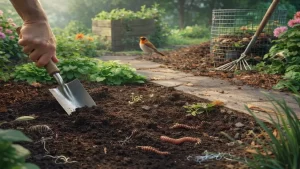
Garden Change — Home Growers — Notice Healthier Soil Without This Product
The hidden cost of “instant green”
Synthetic fertilizers are everywhere, marketed as the fastest way to achieve lush growth. And to be fair, they deliver—at least initially. Leaves grow quickly, lawns brighten, and flowers bloom faster.
But beneath the surface, the impact can be very different.
Take Mark, a homeowner who used a high-nitrogen lawn feed left behind by the previous owner. Within weeks, his grass turned a vivid green. By mid-season, though, the soil had started to crack. Earthworms disappeared. His plants became dependent on constant feeding, with roots staying shallow instead of growing deeper.
These fertilizers act like a quick energy boost. They flood plants with nutrients, reducing the need for natural partnerships with soil organisms like fungi and bacteria. Over time, this weakens the soil ecosystem—microbial life declines, worm activity drops, and the soil loses its natural structure.
The result? Growth above ground, but gradual decline below it.
What changes when you stop
Many gardeners don’t make dramatic changes overnight. Instead, they begin with one simple step: they stop buying synthetic fertilizers.
Then they shift their focus—from feeding plants directly to feeding the soil.
Claire started adding compost, leaving chopped leaves under shrubs, and using natural mulches. At first, she expected her plants to struggle. Instead, subtle improvements appeared.
Water began soaking into the soil rather than pooling on the surface. Earthworms became more visible. In one small bed treated only with compost, she noticed significantly more soil life than in areas previously treated with chemicals.
These changes follow a natural pattern. Without repeated chemical inputs, soil organisms recover. Microbes rebuild their networks, worms return to feed on organic matter, and the soil gradually becomes more structured and breathable.
Over time, roots grow deeper, plants become more resilient, and watering needs decrease.
A realistic way to transition
Switching away from synthetic fertilizers doesn’t have to be extreme.
Many gardeners find success by gradually reducing use—cutting doses, spacing out applications, and reserving them only for high-need plants. Meanwhile, they introduce organic practices like:
Adding compost in thin layers twice a year
Using grass clippings or shredded leaves as mulch
Recycling garden waste into soil-building material
The key is patience. Soil recovery doesn’t happen overnight. Some gardens show improvement within months, while others may take a few years.
During that time, plants may not look perfect—and that’s normal. Health below the surface often improves before visible growth catches up.
Signs your soil is recovering
Instead of relying on appearance alone, experienced gardeners look for deeper indicators:
More earthworms and insects
Soil that’s easier to dig and crumbly in texture
Better water absorption
Fewer dry, crusted surfaces
These are the real signs of long-term soil health.
A different kind of success
At some point, the change becomes unmistakable.
You push a trowel into the soil and feel resistance replaced by softness. The scent shifts to something rich and earthy. Roots spread naturally through a structure that supports them.
This kind of gardening isn’t about perfection—it’s about balance.
Stepping away from synthetic fertilizers doesn’t mean rejecting them entirely. Some gardeners still use them in small, targeted ways. But the broader shift is clear: from controlling growth to supporting a living system.
And once that system comes back to life, it changes how you see your garden.
FAQs
1. Can I ever use synthetic fertilizer again once I stop?
Yes. Many gardeners use it occasionally for specific needs, but rely mostly on organic methods for long-term soil health.
2. How long before I see improvements in soil life?
Some changes appear within a few months, but meaningful transformation often takes 1–3 years depending on soil condition.
3. Will my garden look worse if I quit chemical feeds?
It may look less “perfect” at first, but resilience and stability usually improve over time.
4. What’s the easiest first step for a busy gardener?
Start by adding compost or mulch regularly and reducing fertilizer use gradually.
5. Is compost alone enough for a productive garden?
In many cases, yes—especially when combined with good soil practices like mulching and crop rotation.