The first time many gardeners encounter sarcococca in mid-winter, the reaction is almost disbelief. The air is cold, trees are bare, and yet a warm, creamy perfume floats through the street, as if someone had uncorked an expensive bottle of scent outdoors. The source is rarely obvious.
The flowers are tiny, discreet, almost invisible. But once you notice them, you never forget them.
Hidden beneath hedges or tucked into forgotten corners, this modest evergreen shrub quietly rewrites what a winter garden can feel like.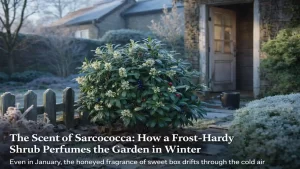
One Shrub That Perfumes Your Garden — Even in Winter
The evergreen that changes winter entirely
Often known as sweet box or Christmas box, sarcococca doesn’t look dramatic at first glance. Its dark, glossy leaves form a neat, compact shape that blends easily into the background. Then winter arrives, most plants retreat, and this small shrub takes center stage—without ever asking for attention.
Along its stems appear clusters of white or cream flowers so small you might miss them entirely. What you can’t miss is the scent. Notes of honey, vanilla, and warm spice seem to defy the frost in the air. Garden designers value sarcococca precisely because it performs when nearly everything else stops.
Unlike many ornamental shrubs, it thrives in shade. Cold winds don’t bother it. Frost barely registers. While other plants look tired or skeletal, sarcococca stays green, calm, and dependable.
Later in the season, glossy berries—black or deep red depending on the variety—add subtle visual interest and provide food for birds. For a shrub that rarely grows taller than a meter, its year-round contribution is remarkable.
Why gardeners keep falling for sarcococca
This shrub belongs to the same botanical family as boxwood, which explains its tidy structure and evergreen leaves. But unlike box, sarcococca is far more forgiving. It tolerates deep shade, urban pollution, and short dry spells once established.
Its true strength, though, is emotional rather than technical. A plant that smells this good in January changes how you experience your garden. Suddenly, winter isn’t just something to endure. It becomes a season with its own quiet reward.
Visitors pause. Neighbors ask questions. Even people who usually rush past notice something different in the air.
How to plant and care for it successfully
Sarcococca thrives when you respect its personality. Think of it as the introvert of the garden.
Best placement
Shade or partial shade
Sheltered from strong, drying winds
North-facing entrances, side passages, or areas where grass refuses to grow
Prepare the soil well. Dig a hole wider than the root ball and enrich it with compost or leaf mold. Water regularly during the first year so roots establish deeply. After that, maintenance drops dramatically.
One common mistake is planting it too far from daily life. If the shrub sits at the back of the garden, you’ll rarely enjoy its fragrance. Place it near doors, paths, driveways, or terraces—anywhere you pass often in winter.
Smart planting ideas:
Three shrubs near the front door to create a winter “scent welcome”
A small group under deciduous trees
A low line along a shaded walkway
Paired with hellebores and ferns for a woodland feel
One planted close to a balcony or patio door
Minimal pruning is needed—usually just to maintain shape or remove dead wood.
A garden that never truly switches off
A frost-hardy evergreen that perfumes the air when almost nothing else blooms subtly reshapes your relationship with outdoor space. January no longer feels empty. Even a brief step outside can deliver comfort, warmth, and a reminder that the garden is still alive.
You may not stop every day to notice it. But when you do—on a rushed morning or a heavy afternoon—that single unexpected scent can lift the entire mood.
Choosing plants like sarcococca isn’t about perfection. It’s about reliability, generosity, and small daily pleasures that arrive without effort.
Key benefits at a glance
| Feature | What it means | Why it matters |
|---|---|---|
| Evergreen foliage | Stays green all year | Visual structure even in winter |
| Winter fragrance | Strong scent in cold months | Sensory joy when gardens are bare |
| Shade tolerance | Thrives where others fail | Ideal for difficult spots |
| Low maintenance | Minimal care once established | Beauty without constant work |
Frequently Asked Questions (FAQs)
Which sarcococca variety works best in a small garden?
Compact varieties with slower growth are ideal for limited spaces, offering the same fragrance without spreading too wide.
Does sarcococca really grow well in deep shade?
Yes. It is one of the most reliable shrubs for low-light areas, including north-facing locations.
Can it handle regular frost and cold winters?
Absolutely. Sarcococca is very frost-hardy and remains evergreen even in consistently cold climates.
How often should it be pruned?
Very rarely. Light shaping after flowering is usually enough, and some plants need no pruning at all.
Is sarcococca suitable for pots or balconies?
Yes, provided the container is large enough, well-drained, and placed in shade. Potted plants may need slightly more watering.
Quiet, resilient, and unexpectedly generous, sarcococca proves that the most memorable garden moments often arrive when you least expect them—right in the heart of winter.