The old stovetop pressure cooker still sits in many cupboards, heavy and reliable. But in countless kitchens, it’s no longer the first choice. In its place stands a quieter device: the smart multi-cooker, designed to automate dinner and lower stress at the end of long days.
This shift isn’t just about new technology. It reflects how families now define safety, time, and control in the kitchen.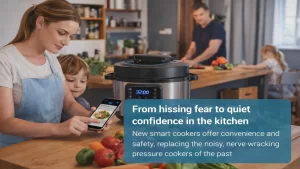
Families Replace Pressure Cookers — Smart Cooking Made Easy
From Hissing Steam to Guided Cooking
Traditional pressure cookers earned their reputation for speed, but they also demanded attention. You had to monitor the flame, count whistles, and manage steam carefully. For many younger parents, that combination of noise and pressure feels intimidating rather than empowering.
Smart multi-cookers approach cooking differently. Instead of constant supervision, they rely on sensors, preset programs, and automatic temperature control. You select a dish—rice, lentils, stew—close the lid, and let the machine handle the timing. Many models switch to “keep warm” mode automatically once cooking finishes.
The result? Dinner moves forward even when your attention is divided between work messages, homework, and household tasks.
Across Europe and North America, ownership of classic stovetop pressure cookers remains common among older generations. However, daily use is gradually declining, while electric pressure cookers and multi-cookers continue to gain popularity—particularly among busy households seeking predictability and lower mental load.
This isn’t about eliminating risk entirely. It’s about replacing active vigilance with structured automation.
Why Smart Cookers Appeal to Modern Families
1. Reduced Anxiety Around Safety
Modern smart cookers typically include:
Multiple pressure release systems
Lid-locking mechanisms
Automatic shut-off functions
Overheat protection sensors
These features significantly reduce the likelihood of classic over-pressure accidents when used correctly. For families with young children, this reassurance matters.
2. Lower Mental Load
Weeknight cooking often competes with emails, school schedules, and fatigue. “Set and forget” programs allow meals to cook in the background, freeing attention for other priorities.
Instead of timing and adjusting heat manually, users press a preset and walk away.
3. Easier Learning Curve
Traditional pressure cooking often required experience passed down informally. Smart cookers flatten that curve. Preset programs guide beginners toward consistent results, even without years of kitchen practice.
A partner who rarely cooked before can now follow clear digital prompts rather than relying on inherited technique.
How Real Families Use Them
Marketing videos show flawless meal prep routines. Real kitchens are different.
Most families rely on a small set of dependable recipes:
Basic rice
Lentil or bean soups
Tomato-based pasta sauces
Simple stews or curries
Instead of experimenting daily, users create a short “default dinner” list. On stressful evenings, they repeat what works.
Common beginner mistakes still happen:
Overfilling beyond the maximum line
Using incorrect liquid ratios
Underestimating preheat time
Skipping proper cleaning of the lid and sealing ring
Successful long-term users follow a few practical habits:
Start with soups, grains, and stews before advanced recipes.
Respect fill limits, especially for starchy foods.
Allow natural pressure release for thick dishes to prevent splatter.
Clean the lid and gasket regularly to maintain safety features.
Use one trusted recipe source until you understand your model well.
When treated as a dependable assistant—not a miracle solution—the smart cooker becomes part of a stable routine.
A Quiet Cultural Shift
The move toward smart multi-cookers also reflects broader lifestyle changes.
In many cultures, the sound of steam releasing from a stovetop cooker once symbolized comfort and tradition. Today, comfort increasingly means calm, not spectacle. Families value devices that don’t wake a baby, frighten a pet, or demand constant monitoring.
There’s also a shift in shared responsibility. Automated presets allow more household members to participate in cooking without specialized knowledge. What once depended on memorized timing and experience can now be guided step by step.
Like smart thermostats and robotic vacuums, these cookers fit into a larger trend: delegating repetitive tasks to technology in order to reclaim mental space.
They don’t eliminate effort—ingredients still need preparation, and cleaning still matters. But they reduce the number of decisions required during already demanding evenings.
Key Takeaways
| Key Point | Detail | Why It Matters |
|---|---|---|
| Safer Automation | Sensors, auto shut-off, guided programs | Reduces fear of pressure accidents |
| Time Management | Background cooking with keep-warm modes | Frees attention for family or rest |
| Accessible Results | Presets flatten learning curve | Helps beginners achieve consistent dishes |
The traditional pressure cooker isn’t disappearing. It remains important for large gatherings and time-honored recipes. But each time a household chooses a quieter, sensor-guided appliance, they’re prioritizing predictability and calm over drama and vigilance.
The real transformation isn’t the machine itself—it’s how families experience their evenings.
FAQs
Are smart cookers really safer than traditional pressure cookers?
Most modern smart cookers include multiple safety mechanisms such as pressure valves, lid locks, temperature sensors, and automatic shut-off systems. When used according to instructions, they significantly reduce the risk of classic over-pressure incidents.
Can a smart cooker completely replace a stovetop pressure cooker?
For everyday meals like rice, beans, soups, and stews, many families find that it can. However, very large batches or specialized high-pressure recipes may still suit traditional stovetop models better.
Does food taste different in a smart cooker?
The cooking principles remain similar. Flavors are generally comparable, though small adjustments to liquid amounts, salt, or timing may be needed to match personal preferences.
Is a smart cooker worth buying if I cook only occasionally?
Many occasional cooks appreciate the added reliability. On busy or tiring days, preset programs reduce the risk of undercooked or burnt meals.
What should I consider before buying my first smart multi-cooker?
Look for a clear interface, reliable safety certifications, an appropriate size for your household, and a recipe ecosystem that matches your cooking habits.