Smudges, foggy patches, and streaks are everyday frustrations for people who wear glasses. While many rely on disposable wipes or microfiber cloths, optical professionals often recommend a much simpler solution that starts at the sink.
Instead of wiping lenses repeatedly, specialists say the best way to clean glasses uses three basic things: water, a drop of mild dish soap, and your fingertips.
This easy routine can remove oils, dust, and residue more effectively while reducing streaks that often appear under bright light.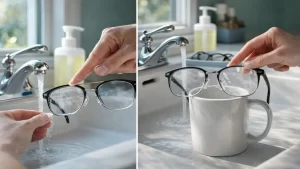
Eye Care Specialists Share Simple Method — Glasses Clean Without Microfiber Cloths
A Quick Cleaning Routine Used by Optical Professionals
In many optical shops, the process is surprisingly straightforward. An optician may take cloudy glasses and place them under a gentle stream of cool water. Using clean fingertips, they lightly rub the lenses to loosen oils and grime.
The motion is soft and controlled, similar to smoothing a surface rather than scrubbing it.
After rinsing away the soap, the optician performs a simple trick: using the thumb and forefinger like a small squeegee, sliding from the bridge of the glasses outward toward the edge of the lens. This motion removes most of the water instantly.
Finally, the glasses are placed upright on a mug or flat surface and left to air-dry. Within moments, the lenses appear noticeably clearer.
Experts say the process works because fingertips are gentle, precise, and surprisingly effective at removing residue.
Why Lens Wipes Sometimes Leave Streaks
Disposable lens wipes promise quick cleaning, but they can occasionally leave faint streaks or haze.
This often happens because wipes may contain:
Fragrances
Fast-evaporating alcohol
Tiny lint fibers
Even microfiber cloths can become less effective over time. Once they collect skin oils or small particles, they may simply spread residue across the lens rather than removing it.
These streaks can become more noticeable outdoors, especially on lenses with anti-reflective coatings. Under sunlight, what looked clean indoors may appear slightly cloudy.
The issue usually comes down to oil residue that needs to be lifted and rinsed away, not just wiped.
Why Soap and Water Work So Well
A small amount of mild dish soap can break down the bond between oils and the lens surface.
When soap mixes with water, it lowers the surface tension, allowing water to spread evenly across the lens instead of forming droplets. This helps loosen oil and carry away dust.
Clean fingertips also offer an advantage:
They are soft enough to avoid scratches
They can detect grit before rubbing it across the lens
They allow gentle control over pressure
The fingertip “squeegee” motion then removes remaining water, preventing mineral spots from forming as the lenses dry.
The Bubble Rinse and Fingertip Method
Optical professionals often suggest the following routine:
Wash your hands first. Clean hands prevent transferring oils to the lenses.
Rinse glasses under cool or lukewarm water. This removes dust particles before touching the lens.
Add one drop of plain dish soap. Use fragrance-free soap without moisturizers.
Gently rub the lenses with fingertips. Use light circular motions on both sides.
Rinse thoroughly. Make sure no soap bubbles remain.
Use the fingertip squeegee motion. Slide thumb and forefinger from the bridge toward the rim.
Let the glasses air-dry upright. Rest them on a mug or hold them by the temple tips.
Avoid hot water, as it may damage delicate coatings or warp frames.
Simple Habits That Help Keep Lenses Clear
Maintaining clear lenses often comes down to everyday habits.
A few helpful tips include:
Use both hands when putting on or removing glasses to keep frames aligned.
Rinse lenses after activities like workouts, cooking, or beach visits.
Avoid rubbing lenses when they are dry or dusty.
Keep a small bottle of basic dish soap near the sink for quick cleaning.
These simple steps can reduce scratches, prevent buildup, and extend the life of your glasses.
An added bonus is that using soap and water instead of disposable wipes can also reduce unnecessary waste.
Key Points at a Glance
| Cleaning Step | What to Do | Benefit |
|---|---|---|
| Rinse First | Wash lenses under water before touching | Removes dust and reduces scratches |
| Fingertip Squeegee | Slide fingers from bridge to rim | Removes water quickly |
| Mild Dish Soap | Use a small fragrance-free drop | Breaks down oil without residue |
| Lukewarm Water | Avoid hot temperatures | Protects coatings and frames |
| Air Dry Upright | Let gravity remove droplets | Prevents streaks and spots |
Conclusion
Keeping glasses clean does not require special tools or expensive products. According to optical experts, a drop of mild dish soap, gentle water, and your fingertips can provide one of the most effective cleaning methods.
By rinsing away dust first, softly cleaning the lenses, and letting them air-dry, wearers can reduce streaks and maintain clearer vision throughout the day.
Over time, this simple habit may also help preserve lens coatings and extend the lifespan of your frames.
Frequently Asked Questions (FAQs)
1. Is it safe to use dish soap on eyeglasses?
Yes, as long as the soap is mild and free from fragrances or moisturizers. Harsh or scented soaps may leave residue.
2. Should I avoid hot water when cleaning glasses?
Yes. Hot water can weaken lens coatings or adhesives in the frame. Cool or lukewarm water is recommended.
3. Are microfiber cloths bad for glasses?
Not necessarily. Microfiber cloths work well when clean, but they can spread oils if they become dirty or contaminated.
4. Why do my glasses look clean indoors but streaky outside?
Bright sunlight highlights residue and streaks that may not be visible under indoor lighting.
5. How often should glasses be cleaned?
Many people benefit from cleaning their glasses once daily or whenever smudges appear, especially after activities that cause oil or dust buildup.