Slow drains in the kitchen or bathroom are a common household problem. Many people reach for strong chemical cleaners or rely on mixtures like vinegar and baking soda. However, a much simpler solution may already be sitting in your kitchen cabinet: ordinary table salt.
When used correctly, salt combined with hot water can help clear mild blockages and restore water flow without damaging your pipes.
Why Drains Suddenly Start Running Slowly
Clogs rarely appear overnight. Instead, they build up gradually as everyday debris collects inside pipes.
Bathroom Drains: Hair, Soap, and Limescale
Bathroom sinks and showers often clog because of three main factors:
Hair and body hair that tangles together
Soap residue that sticks to pipe walls
Limescale deposits that slowly narrow the pipe
Over time, these materials combine into a sticky layer. Water can still pass through at first, but the flow becomes slower until the pipe eventually becomes blocked.
Kitchen Drains: Grease and Food Waste
Kitchen sinks face different types of buildup. Common causes include:
Food scraps
Coffee grounds
Cooking oils and grease
When grease goes down the drain while hot, it appears harmless. But as it cools inside the pipes, it hardens and traps other debris. Gradually, this mixture forms a blockage that restricts water flow.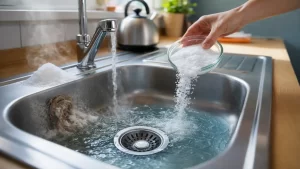
Experts Confirm — This Everyday Ingredient Clears Clogged Drains Without Vinegar or Baking Soda
How Table Salt Can Help Clear a Drain
Many natural cleaning tricks involve vinegar or baking soda, but plain table salt can also help remove mild clogs.
Salt works well against buildup caused by grease, soap residue, and small debris.
Step-by-Step Method
Follow these steps to try the salt method:
Remove visible debris from the sink strainer or drain opening.
Measure 5–7 tablespoons of table salt.
Pour the salt directly into the dry drain.
Wait about 30 minutes without running water.
Boil roughly 2 liters of water.
Slowly pour the boiling water down the drain.
After about 10 minutes, run hot tap water to test the flow.
If the drain is still slow, you can repeat the process once or twice. For severe clogs, tools such as a plunger or drain snake may still be required.
Why Salt Works for Minor Clogs
Salt is not a miracle cure, but it has several properties that make it effective for mild drain buildup.
Slightly Abrasive
Salt crystals are naturally rough. As they move through pipes, they can help loosen greasy buildup along the pipe walls.
Absorbs Moisture
Salt also pulls moisture out of sludge and organic residue. This drying effect makes greasy deposits less sticky and easier to flush away.
Boiling Water Completes the Process
Hot water softens grease and helps dissolve some salt while pushing loosened debris further down the pipe.
Salt vs. Other Drain Cleaning Methods
| Method | Cost | Safety for Pipes | Environmental Impact |
|---|---|---|---|
| Chemical drain cleaners | High | Can damage pipes | Strong chemicals |
| Baking soda + vinegar | Moderate | Generally safe | Mild impact |
| Salt + hot water | Very low | Safe when used occasionally | Minimal impact |
Compared with chemical cleaners, salt is inexpensive, widely available, and does not release harmful fumes.
When the Salt Method May Not Work
While helpful for mild clogs, salt cannot solve every plumbing issue.
It may not work if:
The pipe is completely blocked
Foreign objects are stuck inside
Pipes are damaged or misaligned
There is heavy limescale buildup
Multiple drains clog at the same time
If several drains back up or you hear gurgling sounds, the issue may lie deeper in the plumbing system. In these cases, professional inspection is usually the safest option.
Simple Habits That Prevent Drain Clogs
Preventive habits can reduce the chances of future blockages:
Use drain strainers in sinks and showers
Avoid pouring oil, grease, or fat into the sink
Scrape food scraps before washing dishes
Flush bathroom drains weekly with hot water
Use the salt and boiling water method occasionally for maintenance
Regular care can keep pipes flowing smoothly and prevent larger plumbing problems.
FAQs
1. Can salt damage household pipes?
No. When used in small amounts and followed by hot water, table salt is generally safe for most household plumbing systems.
2. How often should the salt drain method be used?
For maintenance, using the method once every few weeks can help reduce grease and soap buildup.
3. Does salt work for completely blocked drains?
No. Salt works best for slow or partially clogged drains. Severe blockages usually require tools or professional plumbing help.
4. Is salt better than chemical drain cleaners?
Salt is cheaper, safer for pipes, and more environmentally friendly, but chemical cleaners may be stronger for stubborn clogs.
5. What are the main causes of slow drains?
Common causes include hair, soap scum, grease, food waste, and limescale buildup inside pipes.