The first clue was the silence.
No bees circling the rosemary. No ladybirds warming themselves on balcony rails. No lazy hoverflies drifting above the raised beds. After a brutal December freeze, a small community garden wedged between apartment blocks looked abandoned overnight. Kale leaves were scorched at the edges. Soil had hardened like refrigerated chocolate. A thin glaze of ice clung to terracotta pots.
Then someone lifted a brick — and found a single lacewing, motionless.
Days later, urban ecology specialist Élise Martin delivered the unsettling verdict: the deep freeze had likely killed many beneficial insects, while some of the most destructive plant-eating pests may have survived.
That’s when the debate began.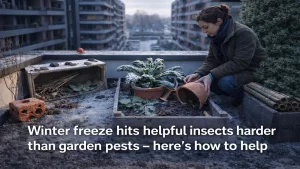
Expert Alert — Cold May Spare Invasive Pests
When Winter Doesn’t “Reset” the Garden
Across cities, gardeners shared the same shock. The cold snap arrived suddenly, plunged temperatures, then vanished just as quickly. Balconies shifted from green to grey in a weekend. Social feeds filled with photos of frozen geraniums and blackened basil.
A hopeful theory circulated: surely such intense cold wiped out pests for good?
Unfortunately, it’s not that simple.
In rooftop planters monitored over several years in Lyon, Martin found something troubling. Winter surveys typically reveal overwintering ladybirds, lacewing larvae beneath dried leaves, and ground beetles resting under tiles. This year, predator numbers were dramatically lower.
Meanwhile, eggs and larvae of invasive pests such as box tree moths and aphids were still present — tucked safely into sheltered corners.
The reason comes down to urban design.
Beneficial insects often depend on messy, semi-wild spaces to survive winter: piles of leaves, cracks in brickwork, dense hedges. But in cities, those habitats are disappearing under concrete, aggressive pruning, and hyper-tidy balconies.
When sudden freezes strike, these exposed allies suffer.
Some invasive pests, however, hide deeper — inside evergreen shrubs, wall crevices, or even heated building gaps that act like miniature greenhouses. The cold weakens them, but not enough to eliminate them.
A hard winter does not create a clean slate. It shifts the balance.
Why “Over-Tidying” Makes Things Worse
The instinct after winter is understandable. The first mild day arrives and out come the brooms, pruning shears, and trash bags. Dead stems disappear. Leaves are swept. Pots are scrubbed spotless.
It feels like renewal.
But this is often when the remaining beneficial insects are removed with the debris.
Ladybirds cluster in dry stems. Lacewing cocoons cling to twigs. Ground beetles shelter beneath leaf litter. Clearing everything too early can eliminate the very predators that keep spring pest outbreaks in check.
As Martin warns: cold winters reward resilient species. If shelters disappear, natural allies disappear too.
Small Winter Changes That Protect Beneficial Insects
You don’t need expensive tools or gadgets. Small design tweaks can dramatically improve survival rates for helpful insects.
Leave Some Stems and Leaves
Keep dry perennial stems and a portion of leaf litter until late spring. These serve as natural overwintering sites.
Protect the Soil Surface
Apply light mulch — straw, shredded leaves, or fine bark — to buffer temperature swings and protect ground-dwelling predators.
Create Tiny Refuges
Broken terracotta pots placed sideways, bricks with holes, or hollow bamboo canes provide affordable micro-shelters.
Avoid Harsh Chemicals
Broad-spectrum sprays can eliminate already-stressed predators while hardy pests survive.
Adjust Cleanup Timing
Delay major pruning and deep cleaning until you consistently see mild weather and active insect movement.
Even one square meter of intentional “mess” can support a small army of natural pest controllers.
A Freeze That Divides Gardeners
Online gardening communities are split.
Some believe a cold winter guarantees fewer pests. Others worry that predators have been hit harder than invaders. Many just want reliable tomato harvests and clearer guidance.
The reality is nuanced.
Urban ecosystems are shaped less by weather alone and more by structure. A bare, clipped balcony may lose nearly all beneficial insects during a freeze. A scruffy courtyard filled with ivy, compost, and brick piles might become a refuge that repopulates an entire block in spring.
The difference isn’t temperature — it’s habitat.
Cold tests the architecture we create for nature. In many cities, that architecture is failing.
What Happens Next?
Some gardeners will turn to stronger sprays and traps, trying to manually “reset” pest populations. Others see this winter as a warning: climate instability is making seasons less predictable, and resilient invasive species may gain the upper hand.
Between those reactions lies a quieter shift — balconies left slightly untidy, shared courtyards preserving wild corners, residents advocating for habitat instead of perfection.
Those small choices could determine who thrives after the next strange winter: the invaders — or the tiny helpers we barely notice until they’re gone.
Frequently Asked Questions (FAQs)
1. Are beneficial insects always more sensitive to cold than pests?
Not always. However, in dense urban environments, many native predators rely on exposed or fragmented habitats, making sudden freezes more damaging to them than to well-sheltered invasive pests.
2. Does a very cold winter reduce mosquito populations?
Some species decline after prolonged deep freezes. But others lay cold-resistant eggs or shelter in drains, basements, and protected structures where temperatures remain stable.
3. What can I do if my balcony is already completely cleaned up?
Add quick shelters now: a shallow container of dry leaves, small stick bundles, or a sideways broken pot. Avoid chemical treatments to allow surviving predators to recover.
4. Are commercial insect hotels worth buying?
They can help, especially if placed out of heavy rain and extreme sun. However, combining them with natural debris and simple homemade refuges often provides better ecological balance.
5. Will climate change reduce pests over time because of extreme weather?
Current research suggests the opposite. Extreme and unpredictable weather tends to favor adaptable, invasive species while stressing complex ecological communities — including the insects that naturally control pests.
Understanding how winter affects urban insect life helps gardeners make smarter, more resilient choices — and avoid costly disappointments in spring.