Every spring, cleaning guides repeat the same advice: grab a new microfibre cloth and a bottle of glass spray. But the clearest windows often come from something already in your home — a simple sheet of newspaper. This old-school method isn’t just tradition; it’s backed by how glass, fibers, and residue interact.
Why newspaper works better than you think
Glass doesn’t just get dirty — it shows residue. Most streaks come from thin films left behind, not the dirt itself.
Newspaper is made of tightly packed cellulose fibers that:
Absorb liquid quickly through tiny channels
Spread moisture evenly across the surface
Leave very little residue behind
Microfibre cloths can clean well too, but they often trap detergent and fabric softener. These leftover chemicals smear across the glass, especially when light hits at an angle — that’s where those annoying streaks come from.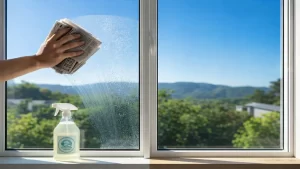
Cleaning Hack Update — Everyday Users — Newspaper Proven Better Than Microfiber
The science behind the streak-free finish
When you wipe with newspaper:
Capillary action pulls liquid and dirt into the paper
Compression increases contact with the glass, improving cleaning power
Mineral fillers (like calcium carbonate) gently polish without scratching
The result? A clean surface with minimal leftover film.
Microfibre, on the other hand, can build static electricity, attracting dust while you clean. Newspaper releases static more easily, helping keep the surface clearer for longer.
How to clean windows like a pro
You don’t need special tools — just a simple method:
1. Mix your cleaner
50% water
50% white vinegar
Optional: a splash of isopropyl alcohol for greasy marks
2. Apply lightly
Mist the glass — avoid soaking it.
3. Wipe with newspaper
Crumple a sheet into a ball
Clean using vertical strokes
Use a fresh sheet when it feels damp
4. Finish dry
Switch to a clean, dry sheet and polish with horizontal strokes.
This final buffing step is key to removing any remaining film.
Common mistakes to avoid
Using too much liquid
Cleaning in direct sunlight (dries too fast and leaves marks)
Reusing damp newspaper
Using glossy magazine pages instead of matte newsprint
Why this method still matters
Newspaper offers a simple, effective solution:
No added cost
No chemical buildup
No microplastic shedding from synthetic cloths
Sometimes, better results don’t come from buying more — they come from using smarter techniques. When residue is gone, glass becomes nearly invisible, and your space instantly feels brighter.
Key takeaways
| Key Point | Detail | Why It Matters |
|---|---|---|
| Better absorption | Cellulose fibers pull in liquid efficiently | Fewer streaks |
| Less residue | No detergent buildup | Clearer finish |
| Gentle polishing | Soft minerals smooth the surface | No scratches |
| Low cost | Uses recycled newspaper | Budget-friendly |
FAQs
Does newspaper ink stain window frames?
On sealed surfaces like metal or painted frames, it won’t. For raw wood or porous finishes, test a small area first.
Can I use magazine pages instead?
No. Glossy pages contain coatings that can leave streaks or residue.
What’s the best cleaner to use?
A 50:50 mix of water and white vinegar works well. Add a little alcohol for fingerprints.
Is this safe for tinted windows?
Yes for factory glass. For aftermarket films, use gentle pressure and avoid strong chemicals.
Why does my microfibre cloth leave streaks?
It may contain detergent residue or fabric softener. Washing it without additives can help, but newspaper often delivers a clearer finish.