The bus doors open, and the cold hits instantly. Not a gentle chill, but a sharp, biting wave that cuts through fabric and settles into your legs. You glance down at your jeans — your usual go-to pair — and suddenly realize they were a mistake.
At -15°C with wind slicing sideways, denim doesn’t protect. It punishes.
Many people discover this the hard way during winter commutes. What feels sturdy in mild autumn weather turns into an ice trap when temperatures plunge.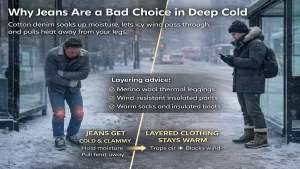
Cold Weather Alert — Denim Fans — Stay Warm Safely
Why Jeans Fail in Deep Winter
Denim looks thick and durable. That’s what makes it misleading.
Most jeans are made from cotton. Cotton breathes — but in freezing weather, that’s not a strength. It absorbs moisture from sweat, snow, and humidity. Once damp, cotton conducts heat away from your body quickly.
Add wind to the equation and things get worse:
Denim weave allows cold air to pass through
Moisture trapped in cotton accelerates heat loss
Fabric stiffens in extreme temperatures
Legs feel numb after short exposure
Instead of insulating you, jeans become a bridge between warm skin and freezing air.
Even layering thick socks or standard leggings under tight jeans often fails. Cotton still holds moisture, and compression limits the warm air your body needs to stay insulated.
What Actually Keeps Legs Warm in Severe Cold
The solution isn’t thicker denim. It’s smarter layering.
Effective winter protection follows three principles:
Wick moisture away from skin
Trap warm air close to the body
Block wind from penetrating
Start with a Base Layer
Choose thin, fitted thermal leggings made from:
Merino wool
Polyester technical blends
Synthetic performance fabrics
These materials pull sweat away from the skin and maintain insulation — even when slightly damp.
Add a Protective Outer Layer
On top, wear slightly looser winter pants such as:
Softshell pants
Lined hiking trousers
Insulated work pants
Wool-blend winter trousers
Roomier outerwear preserves a layer of warm air instead of compressing it flat.
Wind-resistant fabrics are especially important. Wind chill can make -15°C feel much colder, and blocking airflow is critical for maintaining body heat.
Common Winter Dressing Mistakes
Many people fall into these traps:
Wearing skinny jeans that compress base layers
Doubling up on cotton layers
Choosing “fashion insulation” instead of real thermal lining
Ignoring wind protection
Bulk doesn’t equal warmth. Smart materials outperform heavy fabrics every time.
A Practical Winter Lower-Body Formula
For harsh, extended outdoor exposure:
Base layer: Thin merino or technical thermal leggings
Outer layer: Wind-resistant, slightly loose winter pants
Extras: Long coat covering thighs, insulated boots, thermal socks
This system keeps moisture away, maintains insulation, and shields against wind — three factors that denim alone cannot handle.
Why Rethinking Jeans Matters
Cold stress isn’t just uncomfortable. Prolonged exposure can:
Increase muscle tension
Reduce circulation
Drain energy levels
Raise frostbite risk in extreme conditions
Switching from jeans to proper winter layering often changes daily comfort dramatically. Instead of counting minutes until you get indoors, you move freely and stay focused.
When temperatures drop sharply, the real goal isn’t style endurance. It’s protecting your body effectively.
Your wardrobe won’t change the weather. But choosing materials designed for winter can change how your body experiences it.
Key Takeaways
| Key Point | Detail | Why It Matters |
|---|---|---|
| Why jeans fail | Cotton absorbs moisture and allows wind penetration | Explains rapid heat loss in cold weather |
| Better fabrics | Merino wool and synthetics retain warmth and wick sweat | Keeps legs insulated and dry |
| Layering strategy | Thermal base + wind-resistant outer pants | Provides reliable protection in extreme cold |
FAQs
Can I wear jeans over thermal leggings?
Yes, for short exposure and milder cold. However, in extreme wind or prolonged outdoor time, cotton denim still limits insulation and may hold moisture.
Are skinny jeans worse in winter?
Often yes. Tight denim compresses base layers and traps cold fabric directly against the skin, reducing warmth.
What fabric is best for winter pants?
Merino wool, wool blends, and insulated softshell or technical synthetic fabrics typically provide better warmth than standard cotton denim.
Do I need ski pants for everyday city use?
Not necessarily. Many urban-style insulated or softshell commuter pants offer winter performance without looking overly sporty.
Is it okay to wear jeans for quick trips in freezing weather?
For very short outings, it may be manageable. But if you’ll be outdoors longer than 10–15 minutes in subzero temperatures, switching to proper winter layers significantly improves comfort and protection.