The woman in the salon chair watches closely as each foil is removed. Under bright lights, every trace of grey at her roots has disappeared—replaced by a smooth, uniform color from scalp to ends. No subtle blending, no gradual fade. Just a bold, flawless transformation.
Across many modern salons, this once-rare technique has become the most requested service—quietly replacing low-maintenance balayage with something far more demanding: full grey coverage that delivers instant results but requires constant upkeep.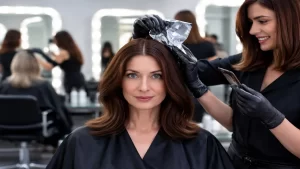
Beauty Industry Change — Stylists — Grey Hair Coverage Method Driving Profits
From balayage to full coverage: a major shift
For years, balayage offered a relaxed approach to grey hair. It blended tones naturally, allowing roots to grow out without urgency. Clients could go months between appointments.
Now, that approach is being replaced by what stylists call:
“Grey camo”
“Glass coverage”
“Youth reset color”
The goal is simple: eliminate every visible grey strand.
But the effect comes with a trade-off. Unlike balayage, full coverage creates a sharp contrast between dyed hair and new growth. Within weeks, regrowth becomes highly visible—prompting frequent salon visits.
Why this method keeps clients coming back
The appeal is immediate. After one appointment, hair looks richer, shinier, and visibly more uniform. But that perfection doesn’t last long.
Here’s why the cycle continues:
Hard regrowth lines appear quickly, often within 3–4 weeks
Frequent maintenance becomes necessary to maintain the look
Add-on treatments like glosses and toners increase the total cost
What used to be two or three appointments a year can turn into monthly visits.
Over time, this transforms from a beauty choice into a routine obligation—similar to other high-maintenance beauty habits.
How the grey-erasing process works
The technique itself is precise and layered:
Root mapping identifies where grey is most visible
Permanent dye is applied evenly for full saturation
Pre-pigmentation may be used for resistant grey strands
Gloss or toner adds shine and dimension
The result is a polished, high-definition finish—but one that requires regular upkeep to maintain.
The hidden impact: cost and mindset
Beyond the financial commitment, this trend can influence how clients see themselves.
Once someone experiences completely grey-free hair, returning to a softer, more natural look can feel like a step backward. Scheduling begins to revolve around root touch-ups, and appearance becomes tied to timing.
Over time, this can create:
Increased spending
More frequent appointments
Emotional reliance on maintaining the look
Are there lower-maintenance alternatives?
Some stylists are encouraging a more balanced approach:
Soft highlights or lowlights to blend greys naturally
Demi-permanent color that fades gradually
Extended appointment cycles (5–6 weeks instead of 4)
Transition plans for those who want to embrace natural silver
These options reduce both cost and pressure, while still enhancing appearance.
What this trend reflects
The popularity of full grey coverage highlights a broader cultural mindset. Youthful appearance is often linked to professionalism and confidence, while grey hair can still carry outdated perceptions.
This method doesn’t just change hair color—it offers a sense of control over aging. But that control comes with ongoing time, money, and commitment.
Key takeaways
| Key Point | Detail | Value for Readers |
|---|---|---|
| Frequent upkeep | Monthly root touch-ups required | Helps plan long-term cost |
| Visible regrowth | Sharp contrast appears quickly | Explains dependency cycle |
| Higher spending | Add-ons increase total price | Avoid unexpected expenses |
| Flexible options exist | Softer color methods reduce maintenance | Offers practical alternatives |
FAQs
Is full grey coverage damaging over time?
Not necessarily, but frequent use of permanent dye can weaken hair if not managed carefully. Ask your stylist about protective treatments and gentle formulas.
How often do I need to maintain this look?
Most clients return every 4–6 weeks, depending on how quickly their hair grows and how visible the greys are.
Can I switch back to balayage later?
Yes, but it may take several sessions to blend the harsh regrowth line into a softer, natural look.
Is there a way to cover grey without constant maintenance?
Yes. Options like demi-permanent color, highlights, or partial coverage allow greys to blend in more naturally.
How can I manage my budget with this trend?
Be upfront with your stylist about how often you can return and your yearly budget. A good stylist will help design a plan that fits your needs.