It often begins in the quiet moments of the morning. You step out of bed, still half asleep, already thinking about coffee. Then your bare feet touch the cold floor. The shock makes you jump for a moment, yet many people simply shrug and continue their day.
Later, a simple moment like this can turn into an unexpected debate. Someone might warn that walking barefoot on cold floors can cause illness, while others argue it is harmless—or even healthy. What begins as a brief encounter with chilly tiles quickly evolves into a discussion about health, habits, and personal responsibility.
In many households, this everyday situation divides people into two camps: those who always wear socks or slippers, and those who prefer walking barefoot. Between old family warnings and modern health advice, the truth can seem surprisingly unclear.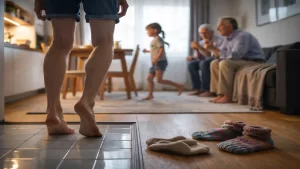
Barefoot at Home — Why Cold Floors Spark Health and Comfort Arguments in Families
Why Cold Floors Feel Like More Than Just Temperature
Walking barefoot on cold floors is rarely a neutral experience. For many people, it triggers memories of childhood—perhaps a parent insisting, “Put something on your feet or you’ll get sick.”
These reactions are not only about comfort. They often reflect deeper ideas about safety, health, and how we care for our bodies.
Even social situations can reveal these differences. When guests arrive, the simple question “Should we take our shoes off?” sometimes carries more meaning than expected. Being barefoot can feel relaxed and personal, while wearing socks or slippers may create a sense of distance or formality.
In this way, the floor beneath our feet becomes more than just a surface—it becomes part of how we express comfort, boundaries, and lifestyle.
The Medical Reality: Are Cold Floors Dangerous?
From a medical perspective, cold feet are usually just that—cold feet.
When your feet touch a chilly surface, blood vessels temporarily constrict to help the body preserve warmth in vital organs. This reaction can feel uncomfortable, but it is generally not harmful on its own.
A widely repeated belief is that cold feet directly cause bladder infections. However, medical experts note that this connection is largely a myth. Infections are caused by bacteria, not simply by temperature.
That said, constant exposure to cold while the body is already weakened could slightly lower resistance to illness. People with existing health issues—such as joint pain, arthritis, or poor circulation—may also feel more discomfort on cold floors.
At the same time, research suggests that walking barefoot can strengthen foot muscles, improve balance, and increase body awareness. Like many health topics, the truth lies somewhere between extremes.
Why Our Feet Feel More Sensitive Today
One reason people react strongly to cold floors is simple: modern lifestyles rarely expose our feet to different surfaces.
Most of the time, our feet are protected by cushioned shoes, thick socks, or soft carpets. As a result, they are less accustomed to hard or cool surfaces.
When we suddenly step onto cold tiles, the sensation feels intense—not necessarily because it is dangerous, but because our feet are no longer used to it.
How to Safely Get Used to Barefoot Walking
For people interested in trying barefoot walking at home, gradual adaptation works best.
Start with short periods—perhaps a few minutes each day. Begin on warmer surfaces like wood or laminate flooring before moving to colder areas such as tile.
Timing also matters. If you are already cold and shivering, it is not the best moment to train your body to tolerate cooler floors. Instead, try it after a shower, light exercise, or climbing stairs—when your body is naturally warm.
Small daily habits often work better than drastic changes. For example:
Stand barefoot for a couple of minutes while brushing your teeth
Walk barefoot briefly around the bedroom or hallway
Use thin socks instead of heavy slippers
These simple adjustments help your feet gradually adapt without discomfort.
Common Mistakes People Make
Some people believe they should ignore the cold to “toughen up.” However, numbness or strong discomfort is not a sign of resilience—it is a signal from your body to warm up.
Another mistake is assuming everyone should tolerate cold floors the same way. Sensitivity to temperature varies greatly from person to person.
Your comfort level is not a measure of strength or discipline—it is simply part of your body’s natural response.
When Household Opinions Collide
Disagreements about barefoot walking often arise within families.
One partner may feel comfortable walking barefoot year-round, while another prefers thick socks even indoors. Children who constantly remove their socks can also spark arguments among parents or grandparents.
These debates often become emotional because they involve ideas about health, responsibility, and habits learned over generations.
In reality, finding simple household agreements—such as designated barefoot areas or using light indoor socks—usually resolves most conflicts.
Finding a Balanced Approach
Walking barefoot at home is rarely a strict health rule. Instead, it reflects how comfortable people feel listening to their bodies and adjusting to their environment.
A few helpful principles can guide the decision:
Personal comfort matters more than strict rules
Short exposure to cold can be refreshing, but prolonged chilling is not ideal
Household agreements prevent unnecessary conflict
Long-held myths should be compared with modern medical knowledge
Convenience and comfort are normal parts of daily life
Ultimately, a cold floor is sometimes just a cold floor. Yet the discussions surrounding it often reveal how we think about health, discipline, and self-care.
Trusting your own physical signals may be more important than following rigid advice from family traditions or internet debates.
Frequently Asked Questions (FAQs)
1. Can walking barefoot on cold floors make you sick?
Not directly. Cold feet alone do not cause infections. However, prolonged exposure to cold while your body is already weakened may slightly reduce your resistance to illness.
2. Is walking barefoot at home healthy?
For many people, yes. It can strengthen foot muscles, improve balance, and increase awareness of body posture. People with circulation problems or certain medical conditions should consult a doctor first.
3. How can I safely get used to cold floors?
Start with short barefoot periods on warmer surfaces and gradually increase exposure. Good times include after exercise or a warm shower when your body temperature is higher.
4. What should I do if family members disagree with my barefoot habits?
Discuss concerns openly and find practical compromises, such as barefoot zones or wearing thin indoor socks.
5. Are slippers better than going barefoot?
Neither option is universally better. Slippers protect against extreme cold and dirt, while barefoot walking can strengthen the feet. Many people benefit from a balance of both.