At 10:15 a.m. on a Tuesday, a community center room fills with the soft scent of coffee and sawdust. Around a long table, a dozen adults over 60 lean forward in concentration. One sands a wooden birdhouse. Another debates whether cobalt blue or warm yellow suits a tiny window frame. No one checks the time.
The conversation drifts between grandchildren, knee surgeries, and new recipes. A radio hums. Every so often, someone looks up with that unmistakable smile that appears when hands are busy and the mind is quietly engaged.
This isn’t just a craft session. Something deeper is happening.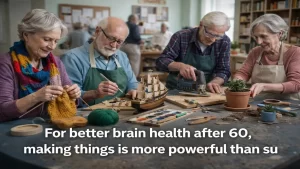
A Simple Activity for 60+ — Mental Boost Today
Why Hands-On Making Stimulates the Aging Brain
For decades, brain health advice for older adults centered on crosswords, sudoku, and reading. While valuable, these activities mainly exercise verbal memory and logic.
Creative, hands-on hobbies — woodworking, knitting, pottery, sewing, model building, mosaics, DIY gardening — activate far more of the brain at once.
Every small decision matters:
Which color works best?
How tight should this stitch be?
How much pressure should shape the clay?
These constant micro-decisions stimulate motor coordination, spatial reasoning, visual imagination, and planning — areas that remain underused during passive screen time.
Neurological research increasingly links regular creative hobbies to:
Slower cognitive decline
Lower depression rates
Improved sleep
Greater sense of purpose
It may not look “academic,” but it’s powerful brain training.
Real-Life Changes That Go Beyond the Craft Table
Take Marie, 72, who insisted she was “not creative.” After reluctantly joining a beginner pottery class, she found herself sleeping better, misplacing her keys less often, and feeling calmer about routine memory checks.
Or Jean, 69, who joined a woodworking club and noticed something unexpected: “My hands ache in the evening,” he said, “but my brain feels awake. I even remember phone numbers again.”
The benefit isn’t perfection. It’s engagement.
Unlike puzzles, which challenge specific circuits, hands-on making requires the brain to:
Predict outcomes
Adjust mistakes in real time
Coordinate fine motor movements
Visualize finished results
That mix of focus and manageable challenge hits a “sweet spot” for cognitive stimulation.
How to Start a Brain-Boosting Hobby After 60
You don’t need expensive equipment or artistic talent. Start small and practical.
1. Choose a Simple Project
A bird feeder, painted flowerpot, basic scarf, miniature ship, or small herb planter.
2. Keep Sessions Short
Twenty minutes, two to four times per week, is enough to build momentum.
3. Focus on Process, Not Perfection
Early clumsiness is normal — and neurologically useful. The brain grows most when slightly challenged.
4. Add a Social Element
Join a local workshop, library class, or invite a grandchild to participate. Social interaction enhances motivation and emotional well-being.
5. Track Visible Progress
Keep photos or dedicate a “creative shelf.” Seeing progress reinforces consistency.
The goal isn’t artistic mastery. It’s steady neural stimulation.
Why Small Projects Work Better Than Big Goals
Ambitious, months-long projects often stall. Short, finishable creations provide clear beginnings and endings — which the brain finds rewarding.
Each completed project reinforces confidence:
“I can still learn. I can still adapt.”
That psychological shift may be just as valuable as the cognitive gains.
A New Narrative About Aging
The conversation around aging is changing. It’s less about “fighting decline” and more about staying engaged with the abilities we still have.
When you sand wood, stitch fabric, repot plants, or shape clay, you’re sending your brain a repeated message:
We’re still learning.
Over time, that mindset influences how you approach memory lapses, doctor visits, and even future planning.
Creative hands-on hobbies aren’t just time-fillers. They’re quiet tools for resilience.
Key Takeaways
| Key Point | Detail | Value for You |
|---|---|---|
| Hands-on hobbies activate multiple brain areas | Movement, planning, touch, and imagination work together | Rich stimulation without feeling like “exercise” |
| Small, regular sessions matter most | 20-minute blocks a few times weekly | Easy to maintain long term |
| Social elements enhance results | Clubs or shared projects boost motivation | Supports mood and reduces loneliness |
Frequently Asked Questions (FAQs)
1. What if I’ve never considered myself creative?
Start with structured, beginner-friendly kits like paint-by-number, basic knitting, or simple woodworking sets. Creativity develops through repetition, not talent.
2. Is this better than sudoku or crosswords?
Not better — complementary. Puzzles focus on logic and memory, while hands-on hobbies also stimulate motor skills and spatial reasoning.
3. How often should I practice?
Research suggests two to four short sessions per week provide consistent cognitive engagement without burnout.
4. What if I have arthritis or limited mobility?
Choose low-strain options such as soft yarn crafts, lightweight clay, collage, digital drawing, or table-height container gardening.
5. Can I start alone, or do I need a group?
You can absolutely begin at home with books or online tutorials. However, group settings often improve motivation and add social benefits.
Creative making after 60 isn’t about producing masterpieces. It’s about keeping your brain active, adaptable, and curious — one small project at a time.