The first time you see someone spray vinegar and hydrogen peroxide onto a cutting board, it can feel alarming. The fizz, the sharp mixed scent—it looks like a chemistry experiment gone wrong. Yet this simple routine has quietly become a popular home-cleaning trick, praised for its ability to disinfect without expensive products.
But there’s one critical detail many people miss—and it makes all the difference between safe cleaning and a potential health risk.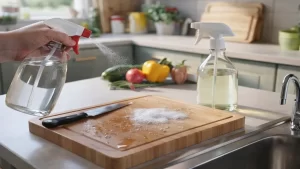
3 Reasons to Mix Vinegar and Hydrogen Peroxide — What It Does — Today
Why This Cleaning Combo Became Popular
Across social media and home-cleaning communities, vinegar and hydrogen peroxide are often promoted as a powerful, low-cost disinfecting pair. People use them on:
Cutting boards after raw meat prep
Refrigerator shelves and drawers
Reusable grocery bags
Lunch boxes and food containers
Some fruits and vegetables
The appeal is clear: both are affordable, easy to find, and backed by basic science.
Vinegar (acidic) helps break down grime and disrupt certain microbes
Hydrogen peroxide (oxidizer) damages bacteria and viruses
Used correctly, they can complement each other—targeting germs in different ways.
The Critical Warning Most People Overlook
While these two ingredients work well together, they should never be mixed in the same container.
When combined directly, vinegar and hydrogen peroxide can form peracetic acid—a substance that can:
Irritate eyes and skin
Cause throat and lung discomfort
Create unsafe indoor air, especially in small spaces
This is where many DIY cleaning hacks go wrong. Mixing them may seem efficient, but it introduces unnecessary risk.
Simple rule: two bottles, two steps—never one mixture.
How to Use Them Safely (Step-by-Step)
The correct method is straightforward and effective:
1. Clean First
Wash the surface with soap and water to remove dirt and grease.
2. Apply Hydrogen Peroxide
Use standard 3% hydrogen peroxide
Spray generously
Let sit for 1–5 minutes
Wipe clean
3. Follow with Vinegar
Spray white vinegar on the same surface
Let sit briefly
Wipe or rinse if needed
This sequential approach avoids harmful reactions while improving cleaning effectiveness.
Where This Method Works Best
This technique is most useful in high-risk food areas, including:
Cutting boards (especially plastic or glass)
Fridge shelves after spills
Reusable bags carrying raw meat or fish
Containers with lingering odors
It’s not necessary for everyday cleaning—but it’s helpful when hygiene matters most.
What This Method Can—and Can’t—Do
This vinegar–peroxide routine is effective, but it’s not a miracle solution.
It reduces bacteria and odors, but doesn’t sterilize everything
It works best on non-porous surfaces
It won’t fix deeply damaged or cracked cutting boards
In some cases, replacing worn items is still the safest option.
A Smarter Way to Think About “Clean”
This method highlights an important shift: cleaning isn’t just about appearance or scent. A surface can look spotless but still carry invisible residue.
Using vinegar and hydrogen peroxide properly encourages a more intentional approach—focused on hygiene, not just shine or fragrance.
It’s not about turning your home into a lab. It’s about making small, practical improvements where they matter most.
FAQs
1. Can I mix vinegar and hydrogen peroxide in one spray bottle?
No. Mixing them creates peracetic acid, which can irritate your eyes, skin, and lungs. Always use them separately.
2. Which should I use first?
Most experts recommend hydrogen peroxide first, followed by vinegar. The order matters less than keeping them separate and allowing contact time.
3. Is this better than bleach?
Bleach is stronger and more effective in some situations, but harsher. Vinegar and hydrogen peroxide offer a gentler alternative for many household uses.
4. Can I use this on all surfaces?
No. Avoid natural stone (like marble or granite), certain metals, and delicate finishes. Test on a small area first.
5. Is it safe for fruits and vegetables?
For firm produce, some people use this method followed by a thorough rinse. For soft fruits, plain water is usually safer.