The first time you see a fried egg glide across a well-seasoned cast iron pan, it changes how you think about cooking. Then you look at your own skillet—dull, uneven, slightly sticky—and wonder what went wrong.
Many people assume they need more scrubbing, more oil, or more effort. But often, the real solution is simpler: a small shift in how you clean it.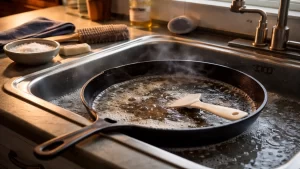
1 Simple Soaking Trick — Bring Back Smooth Black Cast Iron — With Minimal Effort
The overlooked method that restores cast iron
For years, cast iron care has come with strict rules—especially one: never let it soak. But in practice, a short, controlled soak can help bring a tired pan back to life.
Instead of aggressive scrubbing or long re-seasoning sessions, this method uses:
Hot water
A small amount of mild soap or salt
Time (just 20–40 minutes)
This combination softens stubborn, baked-on residue that regular cleaning can’t remove.
Why your pan feels rough and sticky
A healthy cast iron surface isn’t built from burnt food layers. It comes from a thin, smooth layer of polymerized oil.
When you skip proper cleaning:
Residue builds up unevenly
The surface becomes bumpy and dull
Moisture gets trapped, increasing rust risk
Over time, your pan loses that smooth, nonstick feel—not because it’s damaged, but because it’s covered in buildup.
A short soak helps loosen only the unwanted layers, while leaving the strong seasoning intact.
How to use the soaking method correctly
This technique works best when done with care—not extremes.
Step-by-step:
Let the pan cool slightly (still warm, not hot)
Fill a sink or basin with very hot water
Add a small amount of mild dish soap or coarse salt
Submerge the pan and soak for 20–40 minutes
Gently scrape with a plastic scraper or stiff brush
Rinse thoroughly with hot water
Dry on low heat for a few minutes
Apply a very thin layer of oil and heat until lightly glossy
The result: a smoother, darker surface with far less effort.
What to avoid
Mistakes usually come from going too far:
Soaking overnight → increases rust risk
Using harsh abrasives → strips all seasoning
Applying too much oil → creates sticky buildup
The key is balance: short soak, gentle cleaning, quick drying, light oil.
Why this method works long-term
Once you try this approach, cast iron becomes less intimidating. Instead of following rigid rules, you learn how to maintain it with simple habits.
Small resets like this can:
Extend the life of your cookware
Restore natural nonstick performance
Reduce the need for heavy scrubbing or full re-seasoning
Over time, your pan doesn’t just survive—it improves.
Key takeaways
A short hot soak can safely remove stubborn buildup
Proper seasoning is smooth and thin, not thick and flaky
Gentle cleaning protects the pan while restoring performance
Simple habits keep cast iron usable for years
FAQs
Is it really safe to soak cast iron?
Yes—if it’s short and done in hot water. A 20–40 minute soak loosens residue without damaging bonded seasoning. Avoid long or overnight soaking.
Does dish soap ruin seasoning?
No. Mild dish soap removes grease and debris but doesn’t strip properly cured seasoning layers.
What if rust appears after soaking?
Light rust can be fixed easily. Scrub the area with oil and salt, dry thoroughly, then apply a thin layer of oil and heat.
How often should I use this method?
Only when needed—such as after heavy cooking or when the surface feels rough. For most people, occasional use is enough.
Can this fix old or thrifted pans?
Yes. As long as the pan is structurally sound, repeated soak-and-clean cycles can restore a smooth, dark finish.