The pan had long lost its shine. Layers of burnt grease and stubborn stains clung to the surface, resisting every “miracle” cleaner you’d tried. Under bright kitchen lights, it looked permanent—like damage you couldn’t undo.
Then one evening, with nothing left to lose, you reach for a simple lemon and a box of baking soda. No chemicals, no promises—just two everyday ingredients. You squeeze, sprinkle, and wait.
Moments later, something shifts.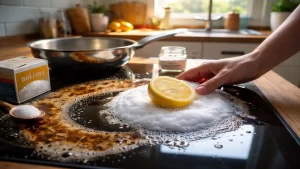
2 Simple Ingredients — What Clean Homes Use — To Remove Kitchen Stains Today
A simple reaction that lifts stubborn grime
What happens next feels surprisingly effective. The dull surface begins to fizz gently as lemon juice meets baking soda. That bubbling action isn’t just visual—it’s working deep into grease and residue.
First, you notice the scent: fresh, clean, almost like resetting the entire kitchen. Then, as you wipe, the grime loosens. What once clung stubbornly begins to lift with less effort.
This isn’t magic—it’s basic chemistry.
Lemon provides natural acidity, helping break down grease and mineral buildup
Baking soda adds mild abrasion, helping scrub without heavy scratching
Together, they create a reaction that loosens dirt from surfaces
Instead of spreading grease around, you’re actually breaking its grip.
How to clean burnt pans and surfaces effectively
This method works best with a little patience. Here’s how to use it:
For burnt pans and oven trays
Sprinkle a thick layer of baking soda over the surface
Squeeze fresh lemon juice until it forms a foamy paste
Let it sit for 10–30 minutes
Scrub gently with a sponge, then rinse with hot water
For greasy stovetops
Apply baking soda to cooled grease spots
Add lemon juice and wait 10 minutes
Wipe clean with a damp cloth
For stained cutting boards
Sprinkle baking soda
Rub with half a lemon directly
Let sit briefly, then rinse and dry
For mugs with tea or coffee stains
Add baking soda and a squeeze of lemon
Scrub lightly, rinse thoroughly
For sinks and drains
Sprinkle baking soda into the sink or drain
Add lemon juice and let it fizz
Rinse with warm water for a cleaner finish
Why this method still works today
Many cleaning products promise instant results, but they often come with strong odors or harsh chemicals. This approach feels different—it’s simple, accessible, and effective without overwhelming your space.
It also saves money and reduces the need for multiple products. Everything you need is already in your kitchen.
More importantly, it changes how cleaning feels. Instead of fighting stubborn messes, you’re gradually loosening them—step by step.
When to be careful
While effective, this method isn’t for every surface:
Avoid using it on marble or natural stone, as acid can damage them
Be gentle with nonstick pans to prevent scratching
Always test a small area first if unsure
A small habit that makes a big difference
Sometimes, the simplest solutions are the ones we overlook. A lemon and a bit of baking soda can bring old cookware back to life—not instantly, but reliably.
With a little time and patience, even the most stubborn stains can fade, leaving your kitchen cleaner and calmer.
FAQ
Can I use bottled lemon juice instead of fresh?
Yes, bottled lemon juice works, but fresh lemons provide a stronger scent and can double as a scrubbing tool.
Will this damage my cookware?
It’s generally safe for stainless steel and most surfaces, but avoid aggressive scrubbing on nonstick coatings.
Is it safe for stone countertops?
No. Lemon’s acidity can damage marble and similar materials over time.
Can I store the mixture for later use?
No. The reaction is most effective immediately after mixing, so prepare it fresh each time.
Does this method disinfect surfaces?
It helps remove grime and odors, but it’s not a substitute for a dedicated disinfectant when deep sanitization is needed.