It often starts subtly. One ant appears, then a few more, until a steady line forms along your favorite flower pot. Before long, your plants look disturbed—soil shifted, tiny debris scattered, and ants moving in like they belong there.
Many gardeners try sprays, cleaning, or moving pots, only to find the ants returning within days. But an increasing number of plant lovers are turning to a surprisingly simple solution—something inexpensive, odorless, and already sitting in most kitchens.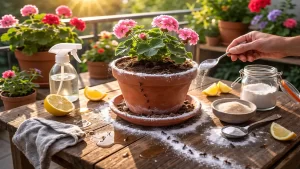
1 Simple Kitchen Ingredient — Stop Ants in Flower Pots — This Season
When Ants Take Over Your Balcony
A peaceful morning with your plants can quickly turn frustrating when ants establish a clear trail into your pots. They often enter through drainage holes and settle into the soil, building hidden networks.
Common DIY tricks like water barriers or chalk lines rarely solve the issue for long. Ants are highly organized—they follow scent trails, communicate efficiently, and sometimes farm aphids for food, making them persistent visitors.
That’s why a simple tip shared among gardeners has gained attention: using baking soda.
Why Baking Soda Works Against Ants
Baking soda (sodium bicarbonate) disrupts how ants function. It interferes with their scent trails and, when combined with sugar, can eliminate them at the source.
Unlike chemical insecticides, it doesn’t damage the overall ecosystem in your pots. Beneficial insects like bees or ladybugs are typically unaffected, making it a preferred option for eco-conscious gardeners.
How to Use Baking Soda Effectively
There are two main ways to apply this method: as a barrier and as bait.
1. Create a Protective Barrier
Lightly sprinkle a thin ring of baking soda on the soil surface
Keep it 2–3 cm away from the plant stem
Apply around the base of the pot or saucer where ants enter
The goal is to create a subtle boundary—not to cover the entire pot.
2. Set Up Ant Bait
Mix equal parts baking soda and powdered sugar
Place small amounts on bottle caps or lids
Position near ant trails, but outside the pot
The sugar attracts ants, while the baking soda helps eliminate them.
Tips for Best Results
Avoid overusing—too much can affect soil quality
Refresh after watering or rain
Keep powder away from roots and young plants
Clean plant areas (remove sticky residue, dead leaves)
Monitor results over 2–3 days before reapplying
Patience and moderation are key. A light, consistent approach works better than heavy application.
A Smarter Way to Care for Your Plants
Using baking soda doesn’t just solve an ant problem—it changes how you observe your plants. Ants often signal underlying issues like aphids or dry soil.
By paying closer attention, gardeners can maintain healthier plants without relying on harsh chemicals. This method supports a more balanced, natural gardening approach.
In the end, it’s not just about removing ants—it’s about creating a sustainable environment where your plants can thrive.
Key Takeaways
| Key Point | Detail | Value for Readers |
|---|---|---|
| Simple Ingredient | Baking soda used as barrier and bait | Affordable and easy solution |
| Easy Method | Light application + sugar mixture | Beginner-friendly approach |
| Smart Gardening | Observe and adjust gradually | Protects plants and ecosystem |
FAQs
1. Does baking soda kill ants or just repel them?
It does both. As a barrier, it repels ants. When mixed with sugar, it can help eliminate them.
2. Is baking soda safe for potted plants?
Yes, when used in small amounts. Avoid heavy application near roots to prevent soil imbalance.
3. How long before I see results?
Most gardeners notice reduced ant activity within 48–72 hours.
4. Can I use baking powder instead of baking soda?
No. Baking powder contains additional ingredients and is less effective for this purpose.
5. Will it harm pets or beneficial insects?
Used correctly, it’s generally safe. Place bait carefully and avoid exposing pets directly.