Your hand glides across the cabinet… then suddenly stops.
That slightly sticky, dull film is something most people don’t notice—until the light hits just right and reveals every fingerprint and splash.
You spray, scrub, and wipe. The cloth turns grey.
But the surface still feels off. Not truly clean—just worked over.
In one ordinary kitchen, a simple method changed everything in minutes—using a liquid almost everyone already has at the sink.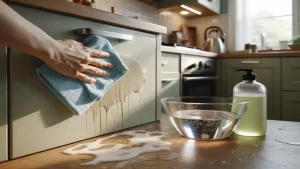
1 Overlooked Cleaner — Makes Cabinets Smooth and Shiny — In Minutes
The Invisible Film Taking Over Your Cabinets
Run your hand along the cabinets near your stove. That faint stickiness?
It’s a mix of airborne grease, steam, and dust that slowly builds up over time.
At first, it’s invisible. Then gradually:
Wood loses its natural shine
Surfaces feel tacky
Corners and handles darken with residue
Many people clean regularly—but still miss this buildup. Quick wipe-downs often just spread grease instead of removing it.
Why Regular Cleaning Doesn’t Work
Grease isn’t like dust—it’s chemical.
When you cook, tiny oil particles rise with steam, settle on surfaces, and bond with dust. Water alone can’t break this bond, which is why scrubbing often feels ineffective.
Some strong cleaners can remove it—but they come with downsides:
Strip protective finishes
Leave streaks or dull patches
Release harsh fumes
The result? Cabinets may look cleaner—but feel worse over time.
The Simple Solution Hiding in Your Kitchen
The surprisingly effective cleaner is dishwashing liquid.
Used correctly, it breaks down grease without damaging surfaces. Its key strength lies in surfactants—compounds that lift grease instead of smearing it.
How to Clean Cabinets Properly (Step-by-Step)
Follow this simple method for better results:
Mix the solution
Add 1–2 teaspoons of dish soap to warm water
Stir gently to create light suds
Use the right cloth
Choose a soft microfiber or cotton cloth
Wring it out well (damp, not wet)
Clean in sections
Wipe in long strokes
Follow the grain on wooden surfaces
Focus on problem areas
Apply light pressure around handles and corners
Finish with a dry cloth
Lightly buff the surface to prevent moisture buildup
Common Mistakes That Make It Worse
Many people unknowingly damage their cabinets while cleaning. Avoid these:
Too much soap → Leaves residue and attracts dust
Rough sponges → Causes fine scratches
Too much water → Damages wood and edges
A gentle, controlled approach works far better than aggressive scrubbing.
Keep Cabinets Clean Without Extra Effort
Once the grease is removed, maintenance becomes easy:
Wipe high-use areas weekly with a damp cloth
Deep clean every 2–3 months with the soap solution
Use curtains or proper ventilation to reduce grease buildup
This prevents the return of that sticky film—and avoids heavy cleaning sessions.
Why This Small Change Matters
Clean cabinets don’t just look better—they change how your kitchen feels.
Brighter and more inviting
Smoother to the touch
Easier to maintain over time
Sometimes, the difference isn’t dramatic—but it’s instantly noticeable.
FAQs
1. Can I use any dish soap for cleaning cabinets?
Most standard dish soaps work well. Avoid heavy-duty or highly chemical formulas, as they may be too harsh for delicate finishes.
2. Is dish soap safe for wood or painted cabinets?
Yes, when diluted and used with a damp cloth. Always test a small hidden area first to ensure no damage occurs.
3. How often should I deep-clean cabinets?
Every 2–3 months is enough for most kitchens. If you cook frequently with oil, consider cleaning every 4–6 weeks.
4. What if grease buildup is very stubborn?
Repeat the cleaning process rather than switching to stronger chemicals. For tight spots, use a soft toothbrush with the same solution.
5. Do I need to rinse with clean water afterward?
Usually not. A lightly damp or dry cloth is enough to remove any remaining residue—especially if the soap mixture is mild.