The routine feels simple: open the dishwasher, load the plates, add a tab, press start. Yet somehow, the results can still disappoint—cloudy glasses, stuck-on food, and that faint musty smell that makes “clean” feel questionable.
Recently, a viral trick has been making rounds: pouring a pot of boiling water into the dishwasher before starting it. Many claim it transforms results instantly—cleaner dishes, fresher smells, and machines that seem “like new.”
But does this hack actually work—or could it cause more harm than good?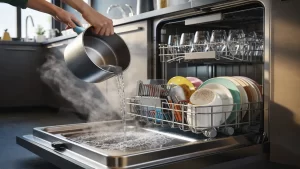
1 Simple Dishwasher Trick — Cleaner Results or Costly Mistakes — What to Know Today
Why People Are Pouring Boiling Water Into Dishwashers
Across social media, users show dramatic before-and-after results. The idea is straightforward: most dishwashers begin cycles with cold water, heating it gradually. By adding boiling water upfront, you give the machine a “head start.”
Hotter conditions help:
Dissolve detergent faster
Break down grease more effectively
Reduce odor-causing residue
For heavily soiled loads—like greasy pans or dried food—this extra heat can noticeably improve cleaning performance.
The Science Behind the Trick
Dishwasher detergents are designed to work best between 45°C and 65°C. If the water starts too cold:
Grease doesn’t dissolve properly
Detergent tablets dissolve slower
Residue may remain on dishes
Adding boiling water raises the starting temperature, helping the cleaning process kick in faster. It can also loosen buildup inside filters and pipes, which may explain why some users notice fresher smells.
Still, the effect isn’t magic—it’s just physics and chemistry working more efficiently.
The Risks Most People Ignore
While the hack can help in certain situations, it’s not meant for daily use.
Frequent exposure to extreme temperature changes can damage:
Thin glassware (risk of cracks or breakage)
Plastic containers (warping or melting)
Coated cups and printed mugs (peeling or fading)
Wooden or bamboo items (splitting or deforming)
Even the dishwasher itself may suffer. Repeated use of very hot water can wear out internal components like seals and plastic parts over time.
In short: heat helps—but too much can backfire.
When This Trick Actually Makes Sense
Used occasionally, the method can be effective in specific situations:
After large meals or parties with heavily soiled dishes
When dealing with greasy trays or baked-on residue
To refresh an older or musty-smelling dishwasher
In areas with very hard water causing buildup
Think of it as a temporary boost, not a permanent habit.
When You Should Avoid It
Skip this trick if your load includes:
Delicate glassware or crystal
Decorative or antique porcelain
High-quality plastics or children’s items
Any material sensitive to sudden temperature changes
The small improvement in cleaning isn’t worth the risk of damage.
A Smarter Approach to Cleaner Dishes
Before relying on viral hacks, check the basics:
Are you using the right wash program?
Is the machine overloaded?
Are salt and rinse aid properly filled?
Are spray arms and filters clean?
Often, fixing these issues leads to better results than any shortcut.
Conclusion
Pouring boiling water into your dishwasher can improve cleaning in certain cases—but it’s far from a miracle solution. Used sparingly, it can help tackle tough loads or refresh an aging machine. Used too often, it may shorten the life of both your dishes and your appliance.
The real key to consistently clean dishes isn’t a viral trick—it’s proper use and maintenance.
FAQs
1. Does boiling water damage a dishwasher immediately?
No, occasional use is generally safe. However, repeated exposure can accelerate wear on seals and internal components.
2. How much boiling water should I use?
About 1.5–2 liters (a kettle or medium pot) is enough. Pour it into the empty base before loading and starting the cycle.
3. Can I add boiling water during a running cycle?
No. This can disrupt sensors and washing programs, potentially causing errors or stopping the cycle.
4. Does this trick remove bad odors?
Partially. Hot water helps dissolve grease and residue, but cleaning filters and using a dishwasher cleaner is more effective.
5. What if dishes are still dirty after trying this?
The issue likely lies elsewhere—such as incorrect settings, overcrowding, poor detergent quality, or lack of rinse aid or salt.