A few weeks ago, standing in a neatly arranged bedroom, one feeling stood out: despite a large wardrobe with sliding doors, the space felt cramped and overwhelming. Every search for clothing turned into a full reorganization. What once symbolized order suddenly felt outdated—like a relic from another era.
That perspective changed after visiting a friend’s home. There was no traditional wardrobe at all. Instead, an open system with shelves, a semi-walk-in nook, and curtains created a surprisingly calm and airy atmosphere. It raised a simple question:
Is the classic wardrobe becoming obsolete?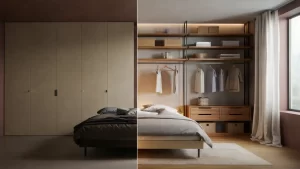
Space-Saving Closet Trend — Modern Homeowners — Comfort Gains but Design Risks
Why Traditional Wardrobes Feel Outdated
For decades, large wardrobes were considered essential. Multi-door units with built-in drawers defined what an “adult bedroom” should look like. But today’s lifestyles are different.
Living spaces are shrinking, especially in urban areas, where average space per person can drop below 40 square meters. At the same time, bedrooms often double as workspaces. In such environments, bulky wardrobes can feel intrusive and limit flexibility.
Modern lifestyles are also more dynamic. People move more frequently, share spaces, and adapt rooms for multiple purposes. Fixed, oversized furniture struggles to keep up.
The Rise of Flexible Storage Solutions
Instead of a single large wardrobe, many are turning to open or modular storage systems. These setups combine:
Clothing racks for hanging items
Shelves for folded clothes
Baskets and boxes for accessories
Curtains or fabric panels to conceal selected areas
Rather than designing around one large piece of furniture, the room is divided into functional zones. This allows the space to adapt as needs change—whether adding a desk, accommodating a partner, or rearranging the layout.
The result is a room that feels more open, breathable, and personalized.
The Key to Making Open Systems Work
A common concern is that open storage leads to clutter. While that can happen, it usually comes down to planning.
Effective systems rely on:
Clear organization zones (hanging, folded, accessories)
Closed storage options like boxes or drawers for smaller items
Textile elements such as curtains to reduce visual noise
Thoughtful lighting to enhance both function and atmosphere
A simple rule helps:
👉 Items you love can be visible. Items you don’t should be stored away.
Without structure, open systems can feel messy. But with the right balance, they offer both functionality and style.
Emotional and Practical Benefits
Traditional wardrobes often represent stability and order. They hide everything behind doors, creating a sense of control.
Open systems, on the other hand, are more transparent. They reveal how much you own and how you organize it. This can encourage more mindful consumption and simplify daily routines.
There’s also a practical advantage: flexibility. Modular systems can be rearranged, expanded, or reduced as life changes—something fixed wardrobes cannot offer.
Impact on Property Value and Space Perception
Large, built-in wardrobes can visually shrink a room and limit its potential for future occupants. In contrast, reversible and adaptable storage solutions allow spaces to feel more open and versatile.
For renters or homeowners thinking long-term, flexibility often adds more value than permanent, space-heavy installations.
How to Transition Without Stress
Switching from a traditional wardrobe doesn’t have to happen all at once. A gradual approach works best:
Start with a decluttering phase — keep only what you use regularly
Create a test zone — add a clothing rack or small shelving unit
Experiment with layout and flow
Incorporate “hidden zones” — drawers or boxes for less organized items
Importantly, the system should match real habits—not idealized ones. Convenience matters more than perfection.
A New Way of Thinking About Bedrooms
This shift isn’t just about furniture—it reflects how people want to live today:
Less rigid
More adaptable
Closer to everyday reality
Some will keep their traditional wardrobes and appreciate their structure. Others will move toward open systems or a mix of both. The best solution lies somewhere in between—where function meets personal lifestyle.
FAQs
1. Do open wardrobe systems reduce property value?
No. As long as they are well-designed and reversible, they can even enhance a space’s appeal by making it feel more flexible.
2. How can I manage dust with open storage?
Using curtains, protective covers for rarely worn items, and regular ventilation helps minimize dust effectively.
3. Won’t an open system look messy?
Not necessarily. With proper organization, storage boxes, and selective covering, you can control what is visible and maintain a clean look.
4. Are modular systems suitable for rental homes?
Yes. Lightweight, removable setups like freestanding racks and curtain dividers are ideal for renters.
5. How do I start without removing my current wardrobe?
Begin with a small experimental area. Try a rack or shelf for a few weeks to see how it fits your routine before making bigger changes.