After a rainstorm, many drivers experience the same frustrating scene: smeared headlights, streaks across the windshield, and visibility that feels far worse than it should. Even with the wipers running, glare from oncoming traffic can turn a normal drive into a stressful one.
What many people don’t realize is that the problem often isn’t the wipers—it’s the invisible film building up on the glass.
Surprisingly, cleaning professionals say one inexpensive kitchen staple may work better than many commercial glass cleaners: white vinegar.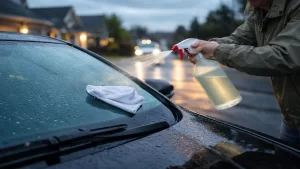
1 Simple Ingredient — Clearer Car Windshields — Experts Explain Why Vinegar Works
Why Cleaning Experts Use Vinegar on Car Windows
Professional car detailers often rely on diluted white vinegar when cleaning automotive glass. The reason is simple: it effectively removes the stubborn residue that traditional glass sprays sometimes leave behind.
Over time, windshields develop a thin layer of grime made from several sources:
Road pollution and exhaust particles
Wiper fluid residue
Hard water mineral deposits
Road salt
Oils released from interior plastics
This buildup can be difficult to see during the day, but at night it becomes obvious. Headlights from other vehicles scatter across the glass, creating distracting glare and starburst effects.
White vinegar contains acetic acid, typically about 5% in household vinegar. That mild acidity helps dissolve mineral deposits and break down oily residues without damaging the glass itself.
Unlike some commercial cleaners, vinegar also avoids ingredients that can leave streaks or shiny films on the surface.
How to Clean Your Windshield with Vinegar
Experts say the process is straightforward and inexpensive.
Basic mixture
50% white distilled vinegar
50% clean water
Combine the two in a spray bottle.
Step-by-step method
Park the car in the shade and allow the windshield to cool.
Lightly spray the vinegar solution on the glass.
Use a clean microfiber cloth designed specifically for glass.
Wipe in straight lines to avoid streaks.
Buff dry with another clean cloth if necessary.
Professional cleaners often recommend wiping vertically on the outside and horizontally on the inside. If streaks appear later, this method helps identify which side needs additional cleaning.
Common Mistakes to Avoid
Although vinegar is effective, experts say proper technique matters.
Do not skip the rinse step.
If the windshield is covered with dirt, mud, or insect residue, rinse it with water first.
Avoid paper towels or old rags.
These materials can leave lint or smear oils on the glass.
Use the correct type of vinegar.
Only white distilled vinegar should be used. Flavored or colored vinegars may leave stains or odors.
Be careful around sensitive surfaces.
Heavy vinegar exposure could affect rubber trim, window tint film, or electronic components if allowed to drip excessively.
Why Clear Glass Improves Driving Safety
Drivers often underestimate how much a clean windshield affects their vision.
Once the film is removed, many people notice immediate improvements:
Reduced glare from headlights
Clearer brake lights from vehicles ahead
Easier visibility during rain
Less eye strain during night driving
The difference can be especially noticeable under streetlights or in heavy traffic, where small visibility improvements may help drivers react faster to changing road conditions.
Key Takeaways
| Key Point | Explanation | Benefit |
|---|---|---|
| Vinegar removes windshield film | Mild acidity dissolves mineral deposits and oily residue | Improved night visibility |
| Simple 50/50 solution | Equal parts vinegar and water | Affordable and easy to make |
| Proper technique prevents streaks | Use microfiber and clean glass in the shade | Professional-looking results |
FAQs
Can vinegar damage a car windshield?
No. Household white vinegar is safe for standard automotive glass when diluted with water. However, avoid letting it sit on rubber trim, paint, or tint film for long periods.
Is it safe to pour vinegar into the windshield washer reservoir?
Experts generally advise against filling the reservoir with vinegar. Strong solutions may damage rubber seals or pumps over time.
Will vinegar remove water spots on glass?
Yes, vinegar can help dissolve mineral deposits from hard water. However, it cannot repair scratches caused by worn wiper blades.
What type of vinegar should be used?
Only white distilled vinegar should be used. Avoid apple cider, balsamic, or flavored varieties, which can leave stains or odors.
How often should a windshield be cleaned this way?
Cleaning experts recommend a deeper vinegar clean every few weeks, especially for vehicles driven daily or during winter and rainy seasons.