The first time I cooked this simple Italian pasta, I managed to ruin both a date night and a good pan in less than twenty minutes. The kitchen filled with the smell of burnt garlic, and the pasta turned into a sticky mess. What should have been a light, silky dish ended up looking like thick paste.
But that cooking disaster taught me something important: perfect pasta isn’t about fancy ingredients—it’s about technique.
A few days later, I tried the same recipe again, this time alone in the kitchen with no pressure. I slowed down, paid attention to the pan, and followed the signals of the food rather than rushing through the steps. The result was completely different: glossy sauce, chewy pasta, and a flavor that felt like it came straight from a cozy Italian restaurant.
That’s when I realized the secret. Great pasta happens in the final minutes inside the pan, not just in the pot of boiling water.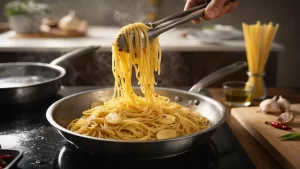
1 Pasta Cooking Secret — Home Cooks Are Changing This Italian Classic — Today
The Cooking Mistake That Changed Everything
The recipe looked simple enough: garlic, olive oil, chili flakes, pasta, and a bit of pasta water.
During my first attempt, though, everything went wrong.
I chopped the garlic too early and tossed it into a pan that was already too hot. Within seconds it went from pale gold to dark brown. Garlic burns quickly, and burnt garlic turns bitter.
Trying to fix the mistake, I poured in cream. Meanwhile, the pasta kept boiling past al dente. By the time everything reached the plate, the sauce had separated and the spaghetti had gone soft.
The dish looked tired before anyone even took a bite.
A Second Attempt With No Pressure
A few nights later I tried again, but this time it was just dinner for me.
Same ingredients. Same kitchen. But this time I slowed down.
Instead of turning the heat up, I watched how the garlic changed color in the oil. I listened to the gentle sizzling sound and waited until it turned light golden and smelled sweet.
Then I followed a small instruction from the recipe that I had ignored the first time: save some pasta water.
When the pasta went into the pan along with the cloudy water, something magical happened. The starch in the water mixed with the oil and garlic to create a smooth, shiny sauce that coated every strand.
No cream needed.
The difference was incredible.
The Simple Pasta Method That Works Every Time
After many attempts, this is the version that consistently works.
Step 1: Salt the Pasta Water
Add enough salt so the water tastes like a mild sea. Properly salted water helps the pasta develop flavor from the start.
Step 2: Undercook the Pasta Slightly
Cook the spaghetti 1–2 minutes less than the package instructions. The pasta will finish cooking in the sauce later.
Step 3: Start the Garlic Oil
In a wide pan, warm olive oil on low heat with:
2–3 sliced garlic cloves
A pinch of chili flakes
Cook slowly until the garlic becomes light golden and fragrant.
Step 4: Add Pasta Water
Before draining the pasta, scoop out one cup of the starchy cooking water.
Add a ladle of this water to the pan with the garlic oil. The liquid will turn cloudy and slightly creamy.
Step 5: Finish Cooking in the Pan
Transfer the slightly undercooked pasta directly into the pan.
Toss continuously so the pasta water, oil, and garlic form a silky coating around each strand.
This final step is where the real transformation happens.
Why Finishing Pasta in the Pan Matters
Many people cook pasta fully in water, drain it, and then add sauce afterward. This separates the two elements.
Finishing pasta in the sauce instead allows the starch from the water to bind everything together, creating a restaurant-quality texture.
| Key Technique | What It Means | Why It Matters |
|---|---|---|
| Finish pasta in the pan | Cook pasta slightly under and complete cooking in sauce | Better texture and deeper flavor |
| Save pasta water | Use the starchy liquid to emulsify sauce | Creates glossy sauce without cream |
| Watch garlic carefully | Cook slowly until pale gold | Prevents bitterness |
Small Cooking Tips That Make a Big Difference
These simple habits can dramatically improve pasta dishes at home:
Salt the water well before cooking pasta
Save at least one cup of pasta water before draining
Keep garlic on low heat to avoid burning
Toss pasta in the sauce instead of stirring gently
Turn off the heat before adding cheese so it melts smoothly
Taste the pasta and sauce as you cook
Remember: technique matters more than expensive ingredients.
Even the best pasta and olive oil can’t fix rushed cooking.
Why This Simple Pasta Changes How You Cook
Since learning this method, cooking pasta feels different.
Instead of rushing, I stay present in the kitchen. I set the table while the water heats, watch the pan as the garlic cooks, and pay attention to the final moments when the sauce comes together.
The base recipe is simple, but it also opens the door to endless variations:
Add lemon zest and parsley
Stir in butter for extra richness
Toss in roasted vegetables
Mix in sausage or mushrooms
No matter what you add, the key remains the same: finish everything together in the pan.
FAQs
Why should pasta finish cooking in the pan with sauce?
Finishing pasta in the pan allows the starch from pasta water to mix with the sauce, creating a smoother texture and helping the sauce cling to every strand.
How salty should pasta water be?
The water should taste like lightly salted seawater. Proper salting ensures the pasta itself has flavor before it even meets the sauce.
Why does garlic burn so quickly?
Garlic contains natural sugars that caramelize fast. Cooking it over low heat helps it turn golden and aromatic without becoming bitter.
Do I really need pasta water for the sauce?
Yes. Pasta water contains starch released during cooking, which helps emulsify oil-based sauces and create a silky consistency.
Can this technique work with other pasta recipes?
Absolutely. The method of finishing pasta in the sauce works for many dishes, including tomato sauces, butter sauces, and vegetable-based pasta recipes.