The realization can happen in the most ordinary place. Imagine standing in a supermarket aisle between bags of lettuce and discounted carrots. A father asks his toddler to choose a vegetable, and the child points excitedly at broccoli.
The father laughs and says, “Not that one—that’s not the same as cauliflower.”
An older shopper nearby casually responds, “Actually, they’re basically the same plant.”
For a moment, everything pauses. The idea sounds unbelievable at first. Broccoli and cauliflower look different, taste different, and even cook differently. Yet the statement contains a surprising truth that many people never hear until adulthood.
Once you learn it, it changes the way you look at the produce aisle forever.
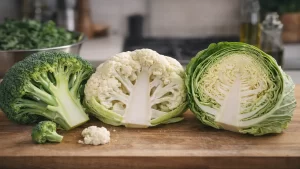
Little-Known Truth — Vegetable Lovers — Cauliflower, Broccoli and Cabbage Come From One Plant
The Hidden Connection Between Common Vegetables
Most people assume broccoli, cauliflower, and cabbage are only loosely related vegetables.
After all:
Broccoli is bright green and known for its nutrition.
Cauliflower is pale and mild in flavor.
Cabbage often reminds people of soups or coleslaw.
Despite their differences, these vegetables are actually varieties of the same plant species: Brassica oleracea.
To many people, this discovery feels like realizing that several classmates who appear completely different are actually siblings.
Cooking schools often use this fact as a lesson for beginners. A teacher may place several vegetables on a table:
Green cabbage
Red cabbage
Kale
Kohlrabi
Cauliflower
Broccoli
Students are asked to guess what they have in common. Few people realize that every one of them comes from the same plant species.
The moment the teacher writes Brassica oleracea on the board, the room usually goes quiet.
How One Wild Plant Became Many Vegetables
Thousands of years ago, farmers began growing a wild coastal plant.
Instead of using modern laboratories or genetic engineering, early farmers simply saved seeds from plants with useful traits. Over generations, they selected plants with:
Thicker stems
Larger leaves
Tighter buds
More compact growth
These gradual choices slowly produced different vegetables.
For example:
Cabbage developed for its dense leaves
Broccoli for its flowering heads
Cauliflower for its tight white curd
Kale for its leafy structure
Kohlrabi for its swollen stem
To us, these vegetables appear completely different. But botanically, they are simply one plant shaped in many directions by human cultivation.
Why This Knowledge Helps in Everyday Cooking
Understanding that these vegetables share the same origin can make cooking much easier.
Because they belong to the same species, they share similar:
fibers
natural sugars
flavor compounds
cooking reactions
This means many recipes can be more flexible than people think.
For example:
Cauliflower steaks can be replaced with thick cabbage wedges.
Broccoli stems can work in coleslaw instead of cabbage.
Kale can substitute for cabbage in soups or stir-fries.
Instead of strict rules, recipes become helpful guides.
Why High Heat Makes Brassica Vegetables Taste Better
One reason people dislike broccoli or cabbage is the way they are often cooked.
Boiling vegetables at low temperatures for long periods can cause them to:
become mushy
develop strong sulfur smells
lose their natural sweetness
A better method is high-heat cooking.
When brassica vegetables are roasted or sautéed at high temperatures, their natural sugars caramelize. This process softens bitter notes and creates a deeper, nutty flavor.
Simple cooking tips include:
Roast vegetables at 220°C (430°F).
Cut pieces evenly so they cook at the same rate.
Add salt early to enhance flavor.
Add acid (lemon or vinegar) at the end for balance.
Use healthy fats like olive oil or butter for richness.
These small changes can transform vegetables that many people once disliked.
Turning Three Vegetables Into One Easy Dinner
Many people experience the same evening routine: opening the refrigerator after a long day and finding half-used vegetables.
Maybe there is:
half a cabbage
one cauliflower
a broccoli that is starting to yellow
At first glance, these seem like three unrelated ingredients.
But if you remember they are all part of the same plant family, dinner becomes simple.
Chop everything into similar pieces, coat them with oil and salt, add spices such as smoked paprika, and roast them together. The result is a balanced dish with varied textures but shared flavor chemistry.
What once looked like three separate problems becomes one easy solution.
A Simple Plant That Continues to Shape Our Food
The next time you walk through the produce aisle, you may notice new details.
Broccoli, cauliflower, and cabbage share:
similar stalk structures
branching veins
subtle floral aromas when cut
These similarities reveal a long history of farming and patient cultivation.
Over centuries, small agricultural choices transformed a single coastal plant into many of the vegetables we eat today.
What appears to be variety is actually a story of human creativity working with nature.
And once you see that connection, everyday cooking becomes a little more interesting.
Key Takeaways
Broccoli, cauliflower, and cabbage all belong to the same species: Brassica oleracea.
Farmers created these vegetables through centuries of selective cultivation.
Because they share similar chemistry, they can often substitute for each other in recipes.
High-heat cooking improves their flavor by caramelizing natural sugars.
Understanding this connection can reduce food waste and simplify home cooking.
Frequently Asked Questions (FAQs)
Are broccoli, cauliflower, and cabbage really the same plant?
Yes. They are different cultivated varieties of the species Brassica oleracea, developed through centuries of selective farming.
Why do these vegetables look so different?
Farmers historically selected plants with different traits—such as large leaves or dense flower buds—over many generations. This created vegetables with very different shapes and textures.
Can broccoli replace cauliflower in recipes?
In many cases, yes. Because they share similar fibers and sugars, they respond to heat in comparable ways, making them interchangeable in many dishes.
What is the best way to cook Brassica vegetables?
High-heat cooking methods such as roasting, grilling, or stir-frying often produce the best flavor because they caramelize the vegetables’ natural sugars.
Why do broccoli and cabbage sometimes smell strong when cooked?
These vegetables contain sulfur compounds. Overcooking can intensify the smell, while quick, high-heat cooking helps maintain a sweeter and milder flavor.