On a quiet windowsill, a small fern stands upright as morning light warms the glass around it. Tiny droplets slide down the inside of the jar and return to the soil below. No watering can. No reminders. Just a miniature ecosystem quietly doing its job.
Many people feel a small sense of guilt when a houseplant dies—like missing an alarm you meant to follow. A sealed terrarium offers something different: a living system that mostly runs itself.
With the right setup, this tiny glass garden can thrive for months or even years with very little attention.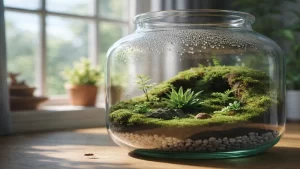
DIY Closed Terrarium System — Indoor Gardeners — Self-Watering Ecosystem That Lasts Years
The Quiet Science Inside a Glass Jar
When sunlight warms the jar, moisture from the soil and plants rises and forms mist on the glass walls. As the jar cools later in the day, the condensation turns into droplets and flows back down to the roots.
This small cycle mirrors the natural water cycle—just on a much smaller scale.
Plants release water through transpiration, microbes break down organic matter into nutrients, and tiny organisms help keep the system balanced. Oxygen and carbon dioxide continuously exchange as plants photosynthesize during the day.
A famous example of this concept comes from David Latimer, who planted a sealed bottle garden in 1960 and resealed it in 1972. The plant inside continued to grow for decades under natural light, recycling its own water and air.
While most terrariums are smaller, the same principles apply.
What Makes a Terrarium Self-Sustaining
A sealed terrarium works best when four key elements are balanced:
Indirect light that gently warms the glass
Moist soil without standing water
Healthy microorganisms to recycle nutrients
A closed container that keeps moisture inside
When these conditions align, the ecosystem maintains its own rhythm.
5 Steps to Build a Self-Watering Terrarium
Creating one takes only an afternoon.
1. Choose the Right Container
Select a clear glass container with a tight lid, such as:
A jam jar
A cookie jar
A demijohn bottle
Wash and dry the jar thoroughly. Any leftover food residue can encourage algae growth.
2. Create a Drainage Layer
Add about 2–3 cm of small pebbles or LECA clay balls at the bottom.
This layer prevents roots from sitting in excess water.
On top of that, add:
A thin layer of horticultural charcoal to absorb odors
A mesh layer to keep soil from falling into the drainage section
3. Add Living Soil
Use a lightweight, moisture-holding substrate.
A common mix includes:
60% coco coir
20% compost or leaf mold
20% perlite
Moisten the soil until it feels like a wrung-out sponge—damp but not dripping.
Add 6–10 cm of this mixture above the mesh.
4. Plant Small Humidity-Loving Species
Choose plants that thrive in moist environments, such as:
Moss
Fittonia (nerve plant)
Small ferns
Peperomia
Pilea
Avoid succulents and cacti, which prefer dry conditions.
Plant roots gently into the soil and keep them away from the glass wall.
Lightly mist the plants once.
Adding springtails—tiny beneficial insects—can help control mold naturally.
5. Seal and Place in Indirect Light
Close the lid and place the terrarium in bright, indirect sunlight, such as near a window but away from harsh midday rays.
Then leave it alone for a few days.
Patience helps the ecosystem stabilize.
Signs Your Terrarium Is Balanced
A healthy terrarium usually shows these signals:
Morning condensation
Light fog appears on the glass early in the day.
Clear glass by midday
Moisture gradually disappears as the jar warms.
Fresh forest smell
The environment should smell earthy, not sour.
Steady plant growth
Leaves grow slowly without sudden yellowing.
Active micro-life
Springtails may occasionally appear on the soil surface.
These are signs that the ecosystem is functioning properly.
Common Mistakes to Avoid
Even simple systems can struggle if conditions are wrong.
Too much water
Excess moisture causes mold or swampy smells.
Direct sunlight
Strong sunlight can overheat the jar and damage plants.
Wrong plant types
Dry-climate plants like succulents rarely survive in sealed terrariums.
Opening the lid too often
Constant changes disturb the internal balance.
A good rule of thumb: observe more than you interfere.
Adjusting During the First Few Weeks
The first month is when the system settles.
If the glass stays wet all day, open the lid for several hours to release moisture.
If the jar dries completely before noon, add a few drops of water using a dropper.
Small adjustments help the ecosystem find its balance.
A Living World in a Jar
Once stable, a sealed terrarium becomes one of the lowest-maintenance plants you can own. Place it somewhere with consistent light—like a bookshelf near a window or a desk that doesn’t receive direct sun.
After that, nature does most of the work.
The best terrarium is often the one you barely touch.
FAQs
1. How long can a sealed terrarium live?
A properly balanced terrarium can last for several years with minimal care. Some large bottle gardens have survived for decades.
2. Do sealed terrariums really water themselves?
Yes. Moisture cycles inside the jar through evaporation and condensation, recreating a small version of the natural water cycle.
3. What plants grow best in a closed terrarium?
Humidity-loving plants work best, including moss, small ferns, fittonia, peperomia, and pilea.
4. Why does my terrarium glass stay foggy all day?
Constant condensation usually means there is too much water or the jar is getting too warm. Opening the lid briefly can help restore balance.
5. Can I open my terrarium after sealing it?
Yes, but only if adjustments are needed. Once the ecosystem stabilizes, it’s best to leave it closed most of the time.