Sometimes the first warning isn’t slow water — it’s the smell. A sour, unpleasant odor rising from the kitchen sink often signals something building up inside the pipes. Leftover food, grease, soap residue, and trapped water can combine into a sticky layer that gradually narrows the drain.
Many people react the same way: run hot water, stir around the drain with a utensil, or try to mask the odor. Others turn to the well-known vinegar and baking soda trick after seeing it online. It bubbles and foams dramatically, which makes it look effective.
But in many kitchens, the drain begins gurgling again within a day or two.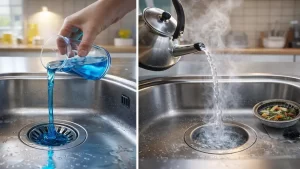
Half a Glass Is Enough — The Simple Drain-Cleaning Trick Without Vinegar or Baking Soda
Why the Popular Vinegar Method Often Fails
The bubbling reaction between vinegar and baking soda can feel satisfying, but it doesn’t always solve the real issue inside the pipe.
Most clogs form from gradual buildup rather than a single blockage. Grease from cooking oils, creamy sauces, and oily pans sticks to the inner pipe walls. Soap residue attaches to that grease, and small particles of food or hair can get caught in the mixture.
Over time, these layers form a narrow passage that slows water flow. The vinegar and baking soda reaction mostly neutralizes itself, creating foam but doing little to remove the stubborn oily film coating the pipe.
That’s why the drain may seem better briefly, only to slow down again shortly afterward.
The Half-Glass Method That Targets Grease
A simpler and quieter method focuses directly on the grease itself.
Instead of vinegar or baking soda, use concentrated dishwashing liquid and very hot water.
Here’s how it works:
Boil water in a kettle or pot. Let it sit for about 30 seconds so it remains very hot but not aggressively boiling.
Pour half a glass of concentrated dish soap directly into the drain. Try to let it coat the sides of the pipe rather than dropping straight through.
Wait two to five minutes. This gives the detergent time to break down grease and oily residue.
Slowly pour the hot water into the drain in a steady stream.
Dish soap is designed to dissolve fats and oils. The detergent loosens the greasy layer, while the hot water helps carry it away through the plumbing system.
When used occasionally, especially after heavy cooking, this method can help keep drains flowing freely.
How to Use the Method Safely and Effectively
For the best results, a few simple steps make a difference:
Remove visible debris first.
Food scraps or hair near the drain opening should be cleared before starting.
Avoid diluting the soap immediately.
If possible, dry the sink slightly so the detergent remains concentrated when it enters the drain.
Use hot water in stages.
Pour the water gradually instead of all at once so the heat can work through the pipe more effectively.
Avoid mixing products.
Do not combine this method with chemical drain cleaners. Mixing products can produce harmful fumes and place unnecessary strain on plumbing.
Be cautious with fragile pipes.
Extremely boiling water may damage older pipes or weakened joints, so allow water to cool slightly first.
Small Habits That Prevent Drain Problems
Preventing buildup is often easier than clearing a clog. A few daily habits can help keep kitchen drains working smoothly:
Avoid pouring cooking oil or grease down the sink.
Use a drain strainer to catch food particles and hair.
Run hot water for about 20–30 seconds after washing greasy dishes.
Seek professional help if multiple drains back up at once, which may indicate a deeper plumbing issue.
Turning a Quick Fix Into a Routine
Once you try this method a few times, it becomes less of a trick and more of a maintenance habit. A clean, smoothly draining sink reduces kitchen odors and prevents the frustration of standing water.
Instead of relying on dramatic chemical reactions or harsh cleaners, a small amount of dish soap and hot water can quietly handle the grease that causes most everyday clogs.
With regular attention, this simple approach can help keep your kitchen sink working efficiently.
Conclusion
Kitchen sink clogs often begin with grease buildup that gradually narrows the pipes. While vinegar and baking soda may create impressive foam, they don’t always remove the oily residue responsible for slow drains. Using a half glass of concentrated dish soap followed by very hot water can help break down grease more effectively. Combined with simple preventive habits, this method offers a practical way to maintain cleaner, better-flowing drains without harsh chemicals.
Frequently Asked Questions (FAQs)
1. How often should I use the dish soap drain method?
Using it once every few weeks or after cooking particularly greasy meals can help prevent buildup.
2. Can this method completely unclog a blocked drain?
It works best for early buildup and slow drains. Severe blockages may require professional plumbing tools.
3. Is dish soap safe for all types of pipes?
Generally yes, but extremely hot water should be used cautiously with older or fragile plumbing.
4. Why does grease cause so many drain problems?
Grease sticks to pipe walls and traps other particles like food and soap residue, gradually forming a sticky blockage.
5. When should I call a plumber?
If water backs up in multiple fixtures, drains remain blocked after several attempts, or you hear persistent gurgling sounds, professional inspection may be necessary.