For decades, the classic blue tin of Nivea cream has been a trusted skincare staple. Many households relied on it for its rich texture and dependable hydration.
However, as skin ages—especially after 50—its needs begin to change. Collagen levels drop, cell turnover slows, and dryness becomes more common. Because of this, many people are now exploring alternatives that do more than simply lock in moisture.
One natural option gaining attention is rosehip oil, a light golden oil derived from the fruit of wild rose plants. Increasingly, people looking for smoother texture, improved tone, and softer fine lines are replacing heavy creams with this nutrient-rich oil.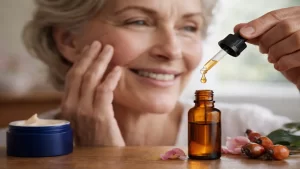
Beauty Shift After 50 — Collagen-Rich Oil Replaces Nivea Cream for Smoother Skin
Why Rosehip Oil Is Gaining Popularity
Unlike thick creams, rosehip oil is lightweight and absorbs quickly into the skin. Instead of leaving a greasy layer, it provides a smooth satin finish.
Many people with mature skin use it:
As a night treatment on its own
Or layered under a simple moisturiser in winter
This oil isn’t a new discovery. Historical records suggest that ancient civilizations—including Egyptian, Mayan, and Native American communities—used cold-pressed plant oils from rosehip seeds to soothe wounds, reduce scars, and keep skin hydrated in harsh environments.
The fruit was also used internally in syrups and tonics because of its high vitamin content.
What Makes Rosehip Oil Effective for Wrinkles?
Rosehip oil works because it contains several compounds that target multiple signs of aging at once.
1. Phytosterols That Strengthen the Skin Barrier
Rosehip oil contains a high concentration of phytosterols, plant compounds structurally similar to natural skin sterols.
These molecules help:
Reinforce the skin barrier
Improve water retention
Support healthy cell renewal
Encourage collagen production
When the skin holds more moisture, fine lines appear softer and less pronounced, especially around delicate areas like the eyes and mouth.
2. Omega Fatty Acids for Texture and Redness
Rosehip oil is naturally rich in:
Omega-3
Omega-6
Omega-9 fatty acids
These lipids help aging skin in several ways:
Restore the skin’s protective lipid layer
Reduce dryness and flaking
Calm redness and irritation
Support healing of scars and blemishes
Over time, this can improve the texture of skin affected by sun exposure, hormonal changes, or past acne.
3. Vitamin C and Natural Retinoids for Collagen
Rosehip fruit naturally contains vitamin C, which plays an important role in collagen production.
Unlike strong vitamin C serums that can irritate sensitive skin, rosehip oil delivers this antioxidant within a gentle, oil-based matrix that helps nourish the skin.
In addition, rosehip oil contains natural vitamin A derivatives, sometimes described in scientific literature as mild retinoid-like compounds. These help:
Smooth the skin surface
Reduce the appearance of pores
Even out skin tone
Together, vitamin C and natural retinoids provide a gentle anti-aging effect without the harshness of prescription treatments.
How to Use Rosehip Oil After 50
Consistency matters more than large amounts. Dermatologists often recommend a simple daily routine.
Morning Routine
Cleanse with a gentle face wash
Apply antioxidants if desired
Use 2–3 drops of rosehip oil on slightly damp skin
Finish with a broad-spectrum SPF moisturiser
Evening Routine
Cleanse the skin
Apply 3–4 drops of rosehip oil
Use alone or under a fragrance-free moisturiser
Use slow upward motions when applying the oil. Gentle massage can improve absorption and circulation.
Why Sunscreen Is Essential
Because rosehip oil contains natural acids and vitamin A derivatives, it can slightly increase sun sensitivity.
For this reason, dermatologists strongly recommend pairing rosehip oil with daily broad-spectrum sunscreen.
If you prefer a lighter morning routine, many people simply use rosehip oil at night and rely on a regular moisturiser plus SPF during the day.
Who Benefits Most From Rosehip Oil?
Although people of all ages can use rosehip oil, certain groups often see the biggest improvements:
Adults over 50 experiencing fine lines
People with sun damage or uneven tone
Skin with old acne scars or rough texture
Individuals with dry or sensitive skin
Because the oil is lightweight, it can also work well for combination skin. However, a patch test is recommended before regular use, especially for people prone to breakouts or rosacea.
How to Choose a High-Quality Rosehip Oil
Not all rosehip oils are created equal. Look for these features when selecting a bottle:
Cold-pressed extraction
This method preserves vitamins and fatty acids.
Dark glass packaging
Amber or dark bottles protect the oil from light damage.
Simple ingredient list
Ideally, the label should state 100% pure rosehip seed oil with minimal fragrance.
Fresh scent
A mild nutty smell is normal. A strong rancid odor suggests oxidation.
Storing the bottle in a cool, dark place helps maintain its potency.
What Results Can You Realistically Expect?
Rosehip oil is not an instant cure for wrinkles. It will not erase deep lines overnight or replace medical treatments.
However, with consistent use over weeks or months, many users notice:
Softer fine lines
Improved hydration
Smoother skin texture
More even skin tone
Some people may experience mild irritation or clogged pores if too much oil is applied. Starting with one or two drops and gradually increasing the amount can help prevent this.
Anyone using prescription retinoids or managing chronic skin conditions should consult a dermatologist before adding rosehip oil to their routine.
Simple Ways to Combine Rosehip Oil With Other Skincare
Rosehip oil works well in a minimalist skincare routine. Helpful pairings include:
Fragrance-free moisturisers for extra hydration in winter
Lactic acid toners once or twice weekly to support gentle exfoliation
Niacinamide serums to strengthen the skin barrier and reduce redness
Rotating these products instead of layering them all at once can help reduce irritation.
For many people over 50, switching from heavy creams to a lighter routine built around rosehip oil and daily sunscreen leads to healthier, more comfortable skin.
FAQs
Is rosehip oil better than traditional moisturisers?
Rosehip oil offers additional benefits beyond hydration, including antioxidants, fatty acids, and natural retinoids that support collagen and improve skin texture.
Can rosehip oil reduce wrinkles?
It cannot completely remove deep wrinkles, but regular use may soften fine lines and improve overall skin appearance.
Is rosehip oil safe for daily use?
Yes, most people can use it daily. Start with small amounts and perform a patch test to avoid irritation.
Should rosehip oil be used in the morning or at night?
Many people use it at night, but it can also be applied in the morning if followed by sunscreen.
How long does it take to see results?
Visible improvements in hydration and skin texture often appear within several weeks, while changes in fine lines may take a few months of consistent use.