You step outside with your coffee on the first warm Sunday of the year and pause. The patio that once looked bright and inviting now seems dull and neglected. Dark stains cover the slabs, faint green streaks run through the joints, and greasy marks show where the barbecue used to sit.
Under your shoes, the surface feels slightly sticky. What used to be light stone now appears uneven and grey.
You might think about renting a pressure washer, but then remember how heavy and noisy the machine is—and how exhausting it was the last time. The good news is that restoring a clean patio often doesn’t require harsh equipment or a full weekend of work.
With the right approach, you can refresh your outdoor space using simple methods that require much less effort.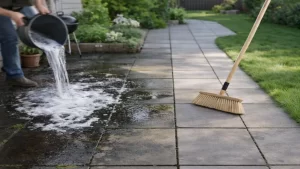
5 Easy Ways to Clean Blackened Patio and Garden Paths — Try Them This Weekend
Why Patios Turn Black Over Time
That dark layer rarely appears overnight. Instead, it forms gradually through everyday exposure.
Common contributors include:
Pollution and airborne dust
Grill grease and soot
Fallen leaves and plant debris
Algae and micro-fungi in damp areas
Rainwater carrying dirt into stone pores
Each rainfall can leave behind another thin layer of residue. Over time, especially on light-colored stone or concrete, these layers create a dull, dark appearance.
Even things you don’t immediately notice—like car exhaust, ash from fireplaces, or fine dust carried by wind—slowly settle onto patio surfaces.
The Hidden Cause of Stubborn Dark Stains
The biggest reason patios darken is trapped moisture combined with organic debris.
Algae and microscopic fungi thrive in places such as:
Shaded areas under trees
Corners behind planters
Spaces near gutters or drains
Once these organisms settle into the tiny pores of stone or concrete, ordinary soap often isn’t enough to remove them.
Scrubbing harder usually doesn’t solve the problem. The real solution is loosening the grime and breaking down the organic growth so it releases from the surface more easily.
Let Cleaning Solutions Do Most of the Work
Instead of relying on force, gentle chemical reactions can help lift dirt with minimal effort.
Allowing cleaning solutions time to soak and break down buildup means you won’t need to scrub for hours. Patience often makes the biggest difference.
4 Simple Ways to Clean a Dark Patio
1. Baking Soda and Vinegar Method
This easy household combination can help remove grime and refresh the surface.
Steps:
Choose a dry day.
Sprinkle baking soda over darker stains and joints.
Spray a solution of 1 part white vinegar and 2 parts water.
Let the mixture fizz and soak for 20–30 minutes.
Sweep lightly and rinse with water.
The fizzing reaction helps loosen dirt trapped in small pores.
2. Oxygen-Based Cleaner for Green Stains
For algae or green discoloration, an oxygen-based cleaner such as sodium percarbonate can be effective.
How it works:
Dissolve the powder in warm water according to the package instructions.
Spread it across the damp patio surface.
Allow it to sit for about one hour.
Rinse thoroughly with clean water.
The released oxygen helps break down organic growth without heavy scrubbing.
3. Gentle Brushing Instead of Hard Scrubbing
After soaking treatments, a light sweep with a soft or medium brush is often enough to remove loosened grime.
This reduces strain on your back and avoids damaging the surface.
4. Avoid Harsh Chemicals
Strong acids or undiluted chlorine may seem effective at first, but they can:
Damage stone surfaces
Weaken grout or joints
Harm nearby plants
Gentler solutions are safer for both your patio and your garden.
Helpful Comparison of Cleaning Methods
| Method | Best For | Advantages | Possible Limits |
|---|---|---|---|
| Baking soda + vinegar | General dark stains | Simple household ingredients | May need repeat treatments |
| Oxygen-based cleaner | Algae and green growth | Breaks down organic buildup | Requires soaking time |
| Light brushing | Loosened dirt | Low effort and safe | Not effective without soaking |
| Harsh chemicals | Fast stain removal | Strong short-term effect | Risk of damage to stone and plants |
Keeping Your Patio Clean with Less Effort
Once the surface is restored, regular light maintenance makes future cleaning easier.
Helpful habits include:
Rinsing the patio occasionally with water
Sweeping away leaves and debris
Cleaning small stains before they spread
Scheduling a quick seasonal refresh
Short cleaning sessions prevent grime from building up again.
Protecting Plants While Cleaning
Outdoor cleaning solutions can sometimes affect nearby plants.
To reduce risk:
Rinse plants with clean water before treatment
Rinse them again afterward
Avoid applying solutions directly to soil or leaves
These steps help keep the surrounding garden healthy.
Conclusion
A dark patio can make your outdoor space feel neglected, but restoring it doesn’t have to involve heavy machinery or exhausting work. In many cases, simple methods using baking soda, vinegar, or oxygen-based cleaners can break down grime and algae with minimal effort.
By allowing cleaning solutions time to work and adopting small seasonal maintenance habits, you can keep your terrace bright and welcoming throughout the year. A cleaner patio quickly transforms the space back into a relaxing place to enjoy coffee, fresh air, and warm evenings outdoors.
Frequently Asked Questions (FAQs)
1. Why does my patio turn black so quickly?
Darkening often occurs due to moisture, algae growth, pollution, and organic debris such as leaves or dust settling into porous surfaces.
2. Is pressure washing necessary to clean a patio?
Not always. Many stains can be removed using gentle cleaning solutions and light brushing, which require far less effort than pressure washing.
3. Can vinegar damage patio stones?
When diluted properly, vinegar is generally safe for many surfaces. However, it should be used cautiously on delicate natural stone.
4. How often should I clean my patio?
A light cleaning once each season can prevent buildup and keep the surface looking fresh.
5. What is the safest way to remove algae from patio slabs?
Oxygen-based cleaners or sodium percarbonate solutions are commonly used because they break down organic growth while being less harsh than strong chemicals.