Many people use Pyrex containers for meal prep, baking, and reheating food. While most Pyrex glass containers are oven-safe, only the glass base is designed for oven use. The plastic lids, silicone accessories, and steam inserts included in many sets should never be placed in the oven because they can melt or warp when exposed to high temperatures.
Before putting any Pyrex container in the oven, always remove the lid. Most Pyrex glass bases can typically handle temperatures between 425°F and 500°F (220°C–260°C) depending on the model.
Another important rule is avoiding sudden temperature changes. Placing a cold glass dish directly into a hot oven or setting a hot container on a wet surface can cause the glass to crack. Preheating the oven and allowing glassware to cool gradually helps reduce this risk.
This guide explains how Pyrex containers work in the oven, how to use them safely, and what to consider when buying oven-safe meal prep containers.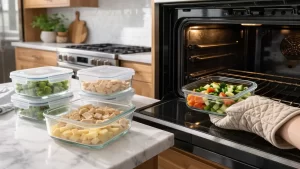
Using Pyrex Meal Prep Containers in the Oven — Meal Preppers — Safety Guide
What Are Oven-Safe Meal Prep Containers?
Oven-safe meal prep containers are storage dishes designed to move safely from the refrigerator or freezer into the oven. This eliminates the need to transfer food into another baking dish, saving time and reducing cleanup.
These containers are especially useful for people who:
Cook meals in advance for the week
Reheat leftovers frequently
Bake casseroles or other oven dishes
Store and cook in the same container
Pyrex has become a popular choice because its glass construction is durable, reusable, and suitable for multiple kitchen tasks.
However, many people mistakenly believe every component of a container set can go in the oven. In most Pyrex sets, only the glass container itself is oven-safe, while lids are intended for storage or microwave use.
Why Glass Meal Prep Containers Are Becoming More Popular
Glass containers have grown in popularity as consumers look for safer and more sustainable kitchen tools.
Unlike some plastic containers, glass:
Does not release chemicals when heated
Does not absorb stains or odors
Can be reused for years
Is easier to clean and maintain
Another advantage is convenience. A single glass container can be used to store food in the fridge, bake it in the oven, and serve it at the table.
Because of this versatility, many households rely on Pyrex sets for weekly meal preparation. However, confusion about oven use—especially regarding lids—still leads to accidental damage or melted accessories.
Common Types of Pyrex Meal Prep Containers
Not all Pyrex containers are designed the same way. Some sets focus on storage, while others support cooking and baking.
| Container Type | Glass Base Oven Safe | Lid Compatibility | Typical Use |
|---|---|---|---|
| Pyrex Hold Everything Set | Yes | Lid microwave-safe only | Baking, storing, reheating |
| Zwilling Glass Storage | Yes (borosilicate glass) | Lid not oven-safe | Vacuum storage + oven baking |
| Pyrex Ultimate Set | Yes | Lid not oven-safe | Everyday meal prep |
| Plastic Snap-Lid Containers | No | Not oven-safe | Cold storage only |
In nearly all cases, the glass base is the only component intended for oven use.
Key Features to Look for in Oven-Safe Containers
If you plan to use meal prep containers for baking or reheating, consider these important features:
Material type
Borosilicate or tempered glass offers better heat resistance than basic glass.
Temperature tolerance
Most Pyrex containers are safe between 425°F and 500°F. Always check the product label.
Thermal shock resistance
Glass can break if exposed to rapid temperature changes.
Lid material
Plastic or silicone lids are usually microwave-safe but not oven-safe.
Shape and size
Rectangular or square containers stack easily and fit well in ovens and refrigerators.
Clear labeling
Look for an “oven-safe” marking on the bottom of the glass container.
Advantages and Limitations
Benefits
Versatile use
You can cook, store, and reheat food using the same container.
Safe material
Glass does not release chemicals when heated.
Durability
Unlike plastic, glass resists stains and scratches.
Eco-friendly
Reusable containers reduce single-use packaging.
Limitations
Lids cannot go in the oven
Plastic or silicone lids must always be removed.
Heavier than plastic
Glass containers may be less convenient for transporting meals.
Breakable
Dropping or exposing glass to sudden temperature changes can cause cracking.
No direct heat
Glass containers should not be used on stovetops or under broilers.
How to Choose the Right Oven-Safe Meal Prep Container
Choosing a safe container involves more than picking a well-known brand. Follow these steps:
Check the label
Look for “oven-safe” printed on the product or packaging.Confirm the temperature rating
Avoid exceeding the recommended heat limit.Inspect the lid material
Ensure it is microwave-safe but not intended for oven use.Avoid sudden temperature changes
Let refrigerated containers warm slightly before baking.Preheat the oven first
This reduces stress on the glass.Use dry potholders
Moisture can cause uneven cooling or burns.Replace damaged containers
Cracked or chipped glass should not be used in the oven.
Price Range and Value
Pyrex meal prep sets are available at several price points depending on size and features.
| Product Line | Set Size | Average Price |
|---|---|---|
| Pyrex Hold Everything | 3–5 pieces | $20–$30 |
| Zwilling Glass Set | 4–6 pieces | $40–$60 |
| Pyrex Ultimate | 10 pieces | $35–$50 |
Higher-end sets may include improved seals or borosilicate glass, but even budget options perform well when used properly.
Alternatives to Pyrex
Several other brands offer similar glass containers.
| Brand | Oven-Safe Base | Lid Safety |
|---|---|---|
| Pyrex | Up to ~450°F | Lid microwave-safe only |
| Anchor Hocking | Up to ~425°F | Plastic lid not oven-safe |
| Glasslock | Up to ~400°F | Some lids oven-safe |
| OXO Glass | Up to ~450°F | Lid not oven-safe |
Pyrex remains popular due to its availability, affordability, and reliable glass design, though some premium brands may offer additional sealing features.
Common Customer Experiences
User feedback often highlights the same benefits and challenges.
Positive experiences
Convenient to bake and store food in the same dish
Tight-sealing lids help prevent leaks
Glass remains clean without staining
Common complaints
Some users mistakenly place lids in the oven
Rapid temperature changes can crack the glass
Containers are heavier than plastic options
These issues usually stem from misunderstanding the product instructions rather than defects.
Maintenance and Safety Tips
Proper care helps extend the life of glass containers.
Cleaning
Most are dishwasher-safe, but avoid abrasive scrubbers.
Storage
Stack containers carefully to prevent chips.
Heat safety
Do not use glass containers on stovetops or under broilers unless specified.
Warranty considerations
Manufacturers may not cover damage caused by misuse or thermal shock.
Conclusion
Pyrex glass meal prep containers are a reliable choice for cooking, storing, and reheating food. However, only the glass base should be placed in the oven. Plastic or silicone lids must always be removed before heating.
By following a few simple rules—respecting temperature limits, avoiding sudden temperature changes, and handling glassware carefully—you can safely use Pyrex containers for everyday meal preparation and baking.
When used properly, these containers help simplify cooking, reduce waste, and support a more organized kitchen routine.
Frequently Asked Questions (FAQs)
Can a Pyrex container go in the oven with the lid on?
No. Most Pyrex lids are made from plastic or silicone and are not oven-safe. Always remove them before baking.
What temperature can Pyrex handle in the oven?
Most Pyrex glass containers can withstand 425°F–500°F (220°C–260°C) depending on the model.
Why did my Pyrex dish crack?
Cracking usually occurs due to thermal shock, such as moving a container directly from the fridge into a hot oven.
Are all Pyrex containers oven-safe?
Not all models are. Always check the bottom of the container or the packaging for an “oven-safe” label.
Can Pyrex be used in convection ovens?
Yes, as long as the temperature remains within the recommended range and the lid is removed.
Can Pyrex go from freezer to oven?
It is safer to let the container warm slightly at room temperature first to avoid sudden temperature changes.