Blinds seem to collect dust faster than we can clean them. Yet the tool that makes the job quick and almost effortless is probably already in your drawer: a single old sock.
Across homes and social media, this low-tech trick keeps resurfacing for one reason — it works. No special gadgets, no expensive sprays, just a practical method that turns a dreaded chore into a two-minute routine.
The Sock Trick That Makes Cleaning Blinds Effortless
The idea is brilliantly simple: pull a sock over your hand and use it like a fitted cleaning glove.
Your fingers naturally wrap around each slat while your thumb supports the underside. Instead of awkwardly maneuvering a rigid duster, your hand becomes a flexible, precise tool. The fabric traps dust while your sense of touch tells you exactly where grime is thicker.
That control is why this trick has lasted for generations. It’s fast, intuitive, and costs nothing.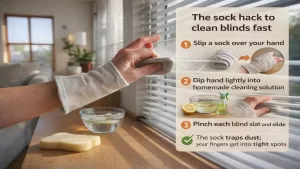
1 Sock Trick to Make Blinds Look Brand New
Step-by-Step: How to Clean Blinds With a Sock
Choose an old, clean sock (cotton works, microfiber is even better).
Open the blinds so the slats lie flat and horizontal.
Slip the sock over your hand like a glove.
Prepare a small bowl of cleaning solution (see below).
Lightly dip your socked hand, then wring it thoroughly so it’s just damp.
Pinch each slat between your fingers and thumb, sliding across its full length.
Flip slats if needed and repeat on the other side.
Rinse and wring the sock regularly as it becomes dirty.
Working section by section keeps it manageable. Many people can finish a standard window before the kettle boils.
Homemade Cleaning Solutions That Actually Work
The sock does the precision work — the solution does the lifting.
For light dust and everyday dirt
1 bowl warm water
3–4 drops mild dish soap or liquid black soap
Stir gently to create a light foam. This mixture lifts fingerprints and dust without leaving residue that attracts more grime.
For greasy kitchen blinds
½ warm water
½ white vinegar
White vinegar contains acetic acid, which helps break down grease and offers mild disinfecting properties. It’s especially helpful for blinds near ovens or sinks.
The key step in both cases: wring the sock thoroughly. Excess water can damage blinds or leave streaks.
Cleaning Based on Blind Material
Not all blinds tolerate moisture equally. A quick material check prevents damage.
PVC / Vinyl Blinds
Use a damp sock with soapy water or vinegar mix.
Wipe dry afterward to prevent limescale spots.
Avoid leaving droplets to air-dry.
Aluminium Blinds
A water–vinegar mix restores shine and removes grease.
Always dry after wiping.
Avoid abrasive powders or scouring pads that scratch.
Wooden Blinds
Prioritize dry dusting.
If necessary, use a barely damp sock and dry immediately.
Avoid soaking, ammonia sprays, bleach, or harsh detergents.
With wood, moisture is the enemy. Think: dust first, dab lightly, dry instantly.
How Often Should You Clean Your Blinds?
Frequency depends on pets, traffic pollution, and ventilation.
Every 2–3 weeks: Quick dry dust with a sock.
Every 2–3 months: Deeper clean with mild solution.
After heavy cooking: Extra wipe for kitchen blinds.
Once it becomes routine, even a large window rarely takes more than 10–15 minutes.
Why a Sock Often Works Better Than Gadgets
Special blind cleaners and microfiber tools can help, but they struggle with corners, cords, and warped slats. A socked hand bends, twists, and presses exactly where needed.
There’s also a psychological advantage. Grabbing a spare sock feels simple and immediate. No hunting for attachments or replacing disposable heads. That convenience makes you more likely to clean regularly — and prevents once-a-year deep-clean dread.
Extra Tips to Avoid Damage
Close windows while cleaning to prevent new dust settling.
Lay a towel on the sill to catch drips.
Test any new solution on a hidden area first.
Wash the sock at high temperature afterward (especially after grease).
Never oversaturate — repeated over-wetting can rust hardware or warp wood.
Light pressure and minimal moisture are key.
Beyond Blinds: Where This Hack Also Works
The sock-on-hand method is surprisingly versatile. It works well on:
Radiator fins
Vent covers
Ceiling fan blades
Slatted headboards
Balcony railings
For allergy sufferers, regularly removing dust from blinds and vents may help reduce airborne particles indoors. While it doesn’t replace proper ventilation or HEPA vacuuming, it removes a common dust trap where air circulates daily.
FAQs
Why is a sock better than a regular duster?
A sock fits snugly over your hand, allowing precise pressure and control. It reaches corners and grips slats more effectively than many rigid dusters.
Can I use any type of sock?
Yes, but microfiber works best because it traps dust rather than pushing it around. Cotton also works well for light cleaning.
Is vinegar safe for all blinds?
Vinegar is safe for PVC and aluminium when diluted, but use extreme caution with wood. Always test a hidden area first.
How do I avoid streaks after cleaning?
Wring the sock thoroughly and follow up with a dry wipe. Most streaks happen when too much water is left to air-dry.
Will this method help with allergies?
Regular dust removal can reduce accumulated particles on blinds and vents. While not a substitute for deep cleaning or air filtration, it helps lower everyday dust exposure.