For a brief, perfect moment, your coffee is everything you wanted: steaming, aromatic, deeply comforting. Then life intervenes. Emails stack up, notifications blink, someone calls your name — and when you return to your mug, the magic is gone. The heat has faded into lukewarm disappointment.
It feels personal. It isn’t.
The real reason your coffee loses heat so quickly
Your coffee isn’t cooling “too fast.” It’s simply losing a battle against physics.
The first culprit is your mug. A cold ceramic cup acts like a heat sponge. When hot coffee hits its surface, energy transfers immediately into the cooler material. In those first few minutes, the temperature can drop dramatically — especially if the mug came from a cold cupboard.
Then there’s the room itself. Hot liquids naturally release heat to cooler air and nearby surfaces. A wide, open mug exposes more surface area, allowing steam — and heat — to escape faster. A thin rim speeds up that process even more.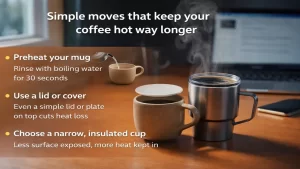
5 Ways to Keep Your Coffee Hot Longer
In colder environments, the effect is even stronger. Coffee poured at around 90°C can drop below 60°C surprisingly quickly. That 60°C range is roughly where most people stop describing coffee as “comfortably hot” and start calling it “meh.”
Your taste buds notice every degree.
The same coffee, poured into a narrow, insulated travel tumbler with a lid, can stay hot for an hour or more. Nothing about the drink changed — only the heat loss pattern did.
The problem isn’t your brew. It’s the conditions around it.
Simple ways to keep your coffee hot longer
You don’t need expensive equipment to fix this. A few small changes can extend your coffee’s “hot window” significantly.
1. Preheat your mug
This is the fastest and easiest improvement. Rinse your mug with very hot tap water or fill it with boiling water for about 30 seconds while your coffee brews. Empty it, then pour your drink in.
Starting with a warm mug means less heat is stolen in those critical first minutes.
2. Choose the right cup
Tall, narrow mugs lose less heat than wide, open ones. Double-walled glass and vacuum-insulated stainless steel are even better. Add a lid — even a simple silicone cover — and you dramatically slow heat escape.
3. Keep the rest insulated
If you brew more than one cup, store the extra in a thermal carafe instead of leaving it in a pot or French press. Open containers lose heat constantly.
4. Adjust to your rhythm
If you sip slowly, pour smaller amounts more often. If a meeting is coming, don’t fill the mug to the top. Align the size of your pour with the time you actually have.
5. Avoid cold zones
Drafty windows, air-conditioning vents, and cold desks quietly drain warmth from your cup. Even moving your mug to a warmer spot can make a difference.
Hot coffee isn’t just about temperature. It’s about timing — that brief stretch when aroma, comfort, and focus line up perfectly.
Small changes, better mornings
This isn’t about chasing laboratory precision. It’s about designing your coffee ritual around your real life.
When you understand how heat moves — from coffee to mug, from mug to air — you start making small, intentional adjustments. A preheated cup. An insulated tumbler on busy mornings. Smaller pours when interruptions are inevitable.
You don’t need barista-level gear. Just awareness and two or three smart tweaks.
And suddenly, your first sip and your last sip feel like they belong to the same cup.
Frequently Asked Questions (FAQs)
Why does coffee cool faster in ceramic than in a travel tumbler?
Ceramic mugs usually have a single wall and no insulation. They absorb heat quickly and release it into the air. Travel tumblers often use double walls and vacuum insulation, which dramatically slows heat transfer.
Does adding milk make coffee cool down faster?
Yes. Milk is typically colder than coffee, so it immediately lowers the drink’s overall temperature. The more milk you add, the faster your coffee reaches the lukewarm range.
Is reheating coffee in the microwave a bad idea?
It’s not unsafe, but it can affect flavor. Reheating may increase bitterness and flatten subtle aromas. Keeping coffee hot from the start usually preserves taste better than rehearming it.
What temperature is best for drinking coffee?
Many people enjoy coffee between about 57°C and 63°C. Below that, it starts to taste lukewarm. Above that, you risk burning your mouth and muting delicate flavors.
Do mug warmers and hot plates help?
They can slow cooling, but they sometimes overheat the base and alter flavor — especially in thin mugs or glass carafes. A quality insulated mug or thermal carafe generally preserves both heat and taste more gently.