The wooden dining table used to glow with a deep walnut tone. Over time, though, hot mugs, rushed breakfasts, and layers of polish reduced it to a flat, grey surface. It didn’t look damaged — just tired.
When a furniture restorer ran his hand across it one weekend, he didn’t suggest sanding or refinishing. Instead, he reached for a microfiber cloth and a small homemade solution. Ten quiet minutes later, the table looked brighter, clearer — almost awake.
The change didn’t come from stripping the wood. It came from removing what was suffocating it.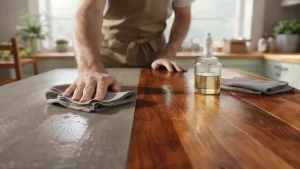
Homemade Microfiber Fix — Wood Furniture — Restores Shine
Why Wood Furniture Loses Its Shine
In many homes, wood furniture doesn’t fade from age — it dulls from buildup.
Silicone sprays, heavy polishes, cooking vapors, and everyday dust create thin layers that settle over varnish. Over months and years, those layers flatten how light reflects off the surface. The grain looks blurred. The finish feels slightly sticky, no matter how often it’s wiped.
Professionals call this a “choked finish.”
The wood isn’t ruined — it’s coated.
The good news: that film can often be lifted gently without sanding or harsh chemicals.
The Simple Homemade Solution Restorers Recommend
When speaking off the clock, many restorers suggest a balanced, low-risk mixture that refreshes sealed wood finishes without attacking them.
The Recipe
In a clean spray bottle, combine:
1 cup distilled water
1 tablespoon white vinegar
1 teaspoon olive or grapeseed oil
3–4 drops mild, fragrance-free dish soap
Shake gently until slightly cloudy.
This solution works because:
Vinegar helps dissolve greasy residue
Dish soap cuts buildup
A tiny amount of oil restores depth
Microfiber lifts particles instead of spreading them
The result is not a glossy coating — it’s a reset of the surface.
How to Use It Properly
Technique matters as much as the recipe.
1️⃣ Test first
Always try a hidden area before cleaning the entire piece.
2️⃣ Spray the cloth, not the furniture
Lightly mist a folded microfiber cloth — never soak the surface directly.
3️⃣ Work in small sections
Choose an area about notebook-sized. Clean in slow strokes following the grain.
4️⃣ Use light pressure
You’re lifting residue, not scrubbing a pan.
5️⃣ Buff dry
Finish with a second, clean microfiber cloth. This final dry pass restores clarity and shine.
Many people notice the cloth turning grey on the first pass — proof that it’s removing buildup rather than spreading it around.
What This Method Does (and Doesn’t Do)
This approach can:
Remove dull film and greasy residue
Restore depth and visible grain
Improve light reflection
Reduce that sticky feeling
It will not:
Repair deep scratches
Fix chipped varnish
Reverse water damage
But for furniture that simply looks lifeless, it can make a visible difference in minutes.
Mistakes to Avoid
Restorers often see the same errors:
Soaking the surface in product
Mixing multiple DIY hacks together
Scrubbing aggressively
Using silicone-heavy sprays repeatedly
Gentle, predictable cleaning is safer and more sustainable than dramatic “quick shine” fixes.
A Smarter Maintenance Rhythm
Instead of polishing once a year in a panic, experts suggest:
Dining tables: every 3–4 weeks
Sideboards or consoles: every 2–3 months
Occasional, mindful care prevents heavy buildup and reduces the need for costly restoration later.
Wood responds well to consistency, not intensity.
Quick Reference Guide
| Key Step | Detail | Why It Helps |
|---|---|---|
| Balanced homemade solution | Water, vinegar, small oil, mild soap | Lifts buildup without harming varnish |
| Microfiber technique | Spray cloth, light pressure, buff dry | Restores clarity without streaks |
| Regular light care | Every few weeks or months | Prevents heavy film accumulation |
FAQs
1. Can I use this solution on all wood furniture?
It’s generally safe for sealed or varnished wood. Always test first. Avoid raw, unfinished, or wax-only surfaces, as moisture can affect them differently.
2. How often should I clean a dining table this way?
For daily-use tables, once every three to four weeks is sufficient. Less-used pieces can be refreshed every two to three months.
3. Will this remove scratches or water rings?
No. It won’t repair physical damage. It may reduce the appearance of light marks by evening out the surface, but deeper issues require professional refinishing.
4. What type of microfiber cloth works best?
Choose a dense, lint-free cloth designed for glass or automotive detailing. Wash without fabric softener to maintain its electrostatic grip.
5. Can I add essential oils for fragrance?
A drop or two is usually safe, but avoid strong citrus oils on delicate finishes. The goal is gentle cleaning, not heavy scent or residue.