You open the cupboard and reach for your cast iron pan, hoping for that deep, glossy black finish you see in cooking videos.
Instead, you find a dull gray patch, a hint of orange rust near the rim, and a rough surface that clings to eggs like glue.
Most people respond the same way: aggressive scrubbing, a splash of oil, a quick bake. It works for a meal or two — then the sticking, flaking, and frustration return.
What’s missing isn’t more oil.
It’s a quiet reset step many kitchens once relied on — a controlled soak that restores the surface before reseasoning ever begins.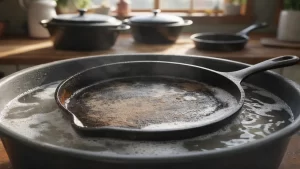
The Step Most Home Cooks Skip
The real turning point in cast iron care doesn’t happen over high heat.
It happens in still water.
Today, advice swings between extremes:
“Never let it touch water.”
“Strip it with oven cleaner.”
But there’s a balanced middle ground: a gentle alkaline soak that loosens old, uneven seasoning and light rust without damaging the iron.
This forgotten step makes reseasoning easier — and more durable.
Why the Baking Soda Soak Works
A mixture of very hot water and baking soda creates a mild alkaline solution. That alkalinity helps break down:
Gummy, polymerized oil buildup
Sticky residue from rushed seasoning
Light surface rust
Instead of grinding away the surface, the soak weakens the old layers so they release naturally.
The result?
A calm, clean base that’s ready for proper seasoning.
The Forgotten Soak: Step-by-Step
Here’s how to reset your pan the right way:
1️⃣ Prepare the soak
Fill a sink or plastic tub with very hot tap water.
Add ½ cup baking soda (1 full cup for larger pans).
Stir until slightly cloudy.
2️⃣ Submerge the pan
Fully immerse the cast iron.
Let it soak for 2–4 hours.
No scrubbing. No scraping. Let chemistry do the work.
3️⃣ Wipe gently
Remove the pan.
Use a soft sponge or nylon scrubber.
Old residue should smear away rather than cling.
Rust will look lighter and less crusted.
4️⃣ Dry immediately
Place the pan over low heat to evaporate all moisture.
At this stage, your skillet may look bare or slightly gray. That’s normal. It’s ready for reseasoning.
Reseasoning the Right Way (Less Is More)
Many people rush this step — and end up with sticky results.
Instead:
After drying, rub in about one teaspoon of neutral oil.
Wipe almost all of it off with a clean cloth. The pan should look nearly dry.
Place upside down in a 450°F (230°C) oven for 1 hour.
Let it cool inside the oven.
Repeat 2–3 thin layers over a couple of days.
Thin layers create a hard, slick finish.
Thick layers create tacky buildup.
Why This Reset Matters
Cast iron isn’t fragile. It’s durable — but it benefits from occasional maintenance cycles.
Instead of fighting sticking and rust month after month, think in rhythms:
Good seasoning
Regular cooking
Occasional reset soak
Fresh thin oil layers
That simple cycle turns a frustrating pan into a reliable kitchen tool again.
Key Takeaways
| Key Step | What It Does | Why It Helps |
|---|---|---|
| Baking soda soak | Loosens old seasoning & light rust | Restores base without harsh chemicals |
| Ultra-thin oil layers | Builds durable coating | Prevents sticky buildup |
| Occasional reset | Used every few months | Stops long-term frustration |
FAQs
1. Can I use this soak on a heavily rusted pan?
Yes, for light to moderate rust it works well. For thick, flaky rust, remove the worst buildup first with steel wool or a scraper, then use the soak to even out the surface before reseasoning.
2. Will the baking soda soak strip all my seasoning?
It mainly loosens uneven, damaged, or gummy layers. A well-built thin seasoning may remain mostly intact, but expect some resetting before reseasoning.
3. How often should I do this reset?
Most home cooks only need it every few months, or when food starts sticking, the surface looks patchy, or rust keeps returning.
4. Can I just use dish soap instead?
Dish soap removes grease but doesn’t break down polymerized oil and rust as effectively as baking soda’s mild alkalinity.
5. What oil works best after the soak?
Neutral, high smoke-point oils like grapeseed, canola, or refined sunflower oil work best. Apply very thin layers and bake them on for a hard, black finish.