At sunrise, some gardens are already gasping for water. Sprinklers tick, hoses hiss, and patches of grass fade from green to yellow despite daily soaking. Yet just a few houses away, another yard sits calm—no sprinkler running, soil cool and dark beneath a soft brown layer.
The difference isn’t an expensive irrigation system or rare drought-proof plants.
It’s mulch.
The Simple Garden Change That Saves Water
Mulch is a protective layer spread over soil—often made from shredded bark, straw, composted leaves, pine needles, or dried grass clippings.
This modest surface layer quietly transforms how water behaves in your garden.
Instead of evaporating quickly under sun and wind, moisture stays trapped in the soil longer. Roots remain cooler. Plants experience less stress. And watering frequency naturally drops.
Think of bare soil like an uncovered pot on the stove—water escapes fast. Mulch acts like the lid, slowing evaporation and protecting what’s underneath.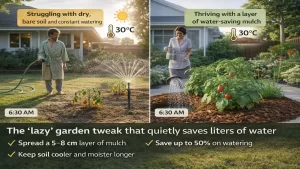
1 Easy Garden Fix — Save Water — This Season
Same Sun, Different Results
Picture two tomato beds during a heatwave.
In one bed, bare soil cracks by midday. Leaves droop. Evening watering becomes a daily emergency.
In the other, 5–7 cm of wood chips cover the ground. Push them aside and the soil beneath is still damp and cool.
Same sunlight. Same temperature. Same plants.
Different surface strategy.
Over time, organic mulch breaks down and improves soil structure. The soil becomes more sponge-like, capable of storing rainwater instead of losing it to runoff or evaporation. Roots grow deeper, which reduces dependence on shallow, daily watering.
The result? Healthier plants with fewer watering sessions.
How to Mulch So You Actually Use Less Water
The process is simple:
Remove weeds lightly.
Water the soil deeply once.
Spread 5–8 cm of mulch in garden beds (2–3 cm for pots).
Keep mulch a few centimeters away from stems and trunks.
Check soil moisture under the mulch before watering again.
Instead of watering on a fixed schedule, test the soil. If it’s dry about 3–4 cm down, it’s time to water. If it’s still moist, wait.
Many gardeners make one key mistake: they mulch—but continue watering daily out of habit. After a week or two, you’ll likely notice the soil remains damp longer than expected. Gradually reduce watering frequency and observe how plants respond.
Common Mulching Mistakes to Avoid
Piling mulch directly against stems (can cause rot)
Using excessively thick layers that block airflow
Mulching soggy soil without improving drainage first
Continuing daily shallow watering
Done properly, mulch reduces water waste and creates a buffer against heat stress.
Why Mulch Changes the Rhythm of Your Garden
Once you adopt mulching, your idea of a “well-maintained” garden shifts. Bare, raked soil that dries out quickly may look neat—but it loses water fast.
Mulched beds resemble a forest floor: protected, stable, and resilient.
Beyond water savings, gardeners often notice:
Fewer weeds
Softer soil
Better rain absorption
Reduced plant stress during heatwaves
Most importantly, mulch builds forgiveness into your routine. If you miss a watering day, plants are less likely to suffer immediate stress.
It’s a quiet adjustment with measurable impact.
Key Takeaways
| Key Point | Detail | Benefit |
|---|---|---|
| Mulch reduces evaporation | 5–8 cm layer shields soil from sun and wind | Fewer watering sessions |
| Organic mulch improves soil | Bark, straw, leaves break down naturally | Better water retention |
| Adjust watering rhythm | Water deeply but less often | Lower bills and stronger roots |
Frequently Asked Questions (FAQs)
What’s the best mulch for beginners?
Medium shredded bark or composted wood chips are reliable and easy to manage. They stay in place and last a full season.
Will mulch attract pests?
In damp climates, thick wet mulch can shelter slugs. Use moderate thickness and keep it away from stems to reduce risk.
Can I use stones or gravel instead?
Yes, especially in dry or Mediterranean-style gardens. However, stones don’t improve soil and can heat up, so they’re better for drought-tolerant plants.
How much can mulch reduce watering?
Many gardeners reduce watering by one-third to half, depending on climate and soil conditions.
When should I refresh mulch?
Top up once or twice a year—usually spring or autumn—when the layer thins below about 3 cm. Add new material on top without disturbing roots.