This winter in France, a simple savoury loaf is quietly replacing quiche on many dinner tables. Built around Fourme d’Ambert and walnuts, ready in under an hour, and requiring no pastry skills, this cake-style bake has become a dependable cold-weather staple for busy home cooks.
Why This Savoury Loaf Is Outpacing Quiche
For years, quiche has been the default French weeknight option: shortcrust pastry, creamy egg filling, perhaps some lardons or onions. Comforting, yes — but also time-consuming when energy is low and the fridge is nearly empty.
The blue cheese and walnut loaf skips the most demanding step: pastry. There’s no chilling, no blind-baking, and no juggling trays. Everything is mixed in one bowl, poured into a tin, and baked.
In about ten minutes of preparation, the batter is ready for the oven. While it turns golden, you can toss a salad, set the table, or simply unwind. The result still feels like proper, sit-down food — but with half the effort.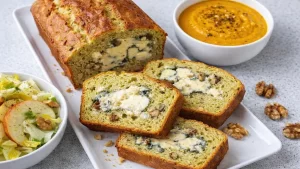
4 Ingredients — Creamy Blue Cheese Loaf — Ready Fast
The Simple Formula Behind This Winter Favourite
The recipe follows the classic French “cake salé” structure: a savoury batter enriched with cheese and nuts. Once you know the proportions, it’s easy to make from memory.
Typical Base Ingredients
150 g plain flour – gives structure
3 eggs – bind and enrich
100 ml milk – adds moisture
50 ml neutral oil – ensures softness
1 sachet (10–11 g) baking powder – provides lift
100 g Fourme d’Ambert – creamy, melting flavour
60 g walnuts – crunch and balance
Seasoning stays light. Fourme d’Ambert already carries natural saltiness, so freshly ground pepper is often enough.
What Makes Fourme d’Ambert and Walnuts So Effective
A Gentle Blue That Melts Beautifully
Produced in the Auvergne region, Fourme d’Ambert is one of France’s oldest cheeses. Unlike sharper blues, it melts softly and evenly, creating creamy pockets inside the loaf.
Instead of a firm custard texture like quiche, this bake offers contrast: fluffy crumb interrupted by gooey, flavour-rich streaks. Even once cooled, those pockets remain tender rather than rubbery.
Walnuts for Texture and Balance
Walnuts do more than add crunch. Their mild bitterness offsets the richness of the cheese and egg batter. Larger pieces work best — they stay distinct and provide satisfying bites throughout each slice.
How to Serve It as a Complete Winter Meal
This loaf adapts easily from appetiser to full dinner.
With a Crisp Salad
Many French households serve it warm with chicory or endive, thin apple slices, and a walnut oil vinaigrette. The bitterness and acidity cut through the richness of the cheese.
Endive or chicory for crunch
Apple or pear for brightness
Mustard and walnut oil dressing for depth
The contrast between warm loaf and cold greens keeps the plate balanced.
With Seasonal Soup
On colder evenings, pairing the loaf with roasted squash soup — pumpkin or butternut — turns it into a fireside supper. The sweetness of the vegetables complements the salty blue cheese, creating a surprisingly refined combination from minimal effort.
Storage and Reheating Tips
Once cooled completely, wrap the loaf tightly and refrigerate. It keeps well for two to three days, and the flavour often deepens by the second day.
For reheating, avoid the microwave if possible — it softens the crust. Instead, warm slices briefly in the oven until the edges crisp and the cheese softens again.
Smart Cheese Substitutions
If Fourme d’Ambert is unavailable, similar cheeses work well:
Gorgonzola (dolce style) – creamier and milder
Danish Blue – stronger, so reduce added salt
Stilton – crumbly with rich aroma
Choose a blue that melts smoothly without overpowering the batter. If using a stronger cheese, blending in a small amount of mild grated cheese can round the flavour.
Nutritional Considerations
While rich, this loaf offers more than indulgence. Walnuts provide fibre and omega-3 fats, while blue cheese supplies protein and calcium. The key is balance:
Pair with raw vegetables or light soups
Keep portions moderate
Consider swapping part of the white flour for wholemeal to increase fibre
For those watching sodium intake, taste carefully before adding extra salt — the cheese often provides enough.
Why This Recipe Fits Modern Cooking Habits
The popularity of this savoury loaf reflects a broader shift toward practical, flexible cooking. It’s fast, forgiving, and adaptable to leftovers — roasted vegetables, herbs, or stray leeks can all be folded in.
It works for Tuesday dinners, unexpected guests, lunchboxes, and make-ahead meals. In a season when comfort matters but time is limited, this blue cheese and walnut loaf delivers reliability without complication.
Conclusion
This winter, France’s modest blue cheese and walnut loaf is proving that convenience and flavour can coexist. By eliminating pastry while preserving richness and texture, it offers a faster, more adaptable alternative to quiche — one that fits seamlessly into busy households without sacrificing satisfaction.
Frequently Asked Questions (FAQs)
1. Can I make the blue cheese walnut loaf ahead of time?
Yes. It keeps well in the fridge for up to three days and reheats best in the oven.
2. Does the loaf taste very strong?
Not usually. Fourme d’Ambert is a mild blue cheese. Stronger blues can be used, but adjust seasoning carefully.
3. Can I freeze this savoury loaf?
Yes. Slice it first, wrap tightly, and freeze for up to one month. Reheat directly from frozen in the oven.
4. What can I serve instead of salad or soup?
Steamed green beans, roasted vegetables, or a simple tomato salad also pair well.
5. Is this healthier than quiche?
It removes pastry, which reduces some fat and calories, but it remains a rich dish. Balanced portions and lighter sides make the biggest difference.