Fresh flowers can instantly lift a space, but according to Feng Shui principles, where you place them may subtly influence how your home feels each day.
In Chinese-inspired Feng Shui, daisies are not just decorative. Their color, shape, and especially their location are believed to guide the flow of Chi — the life energy thought to circulate through a home. And many people unknowingly place them in spots where their positive impact is reduced.
The Ideal Place for Daisies in Feng Shui
Feng Shui treats the entrance of a home as a crucial energy gateway. It is considered the main point where Chi enters and spreads throughout the living space.
For this reason, the entrance or hallway — not the bedroom or living room — is seen as the best place for daisies.
Positioning daisies near the front door symbolically welcomes fresh energy into the home. As you step inside, the flowers are believed to “filter” the incoming energy, softening its tone and encouraging a lighter, more uplifting atmosphere throughout the house.
The soft, rounded petals of daisies are also associated with smooth energy flow. Unlike sharp or rigid shapes, their gentle form is thought to prevent emotional heaviness or energetic blockages.
White daisies are especially recommended for entrances. In Chinese symbolism, white often represents clarity, sincerity, and simplicity. Placed in a clean, minimal vase near the doorway, they reinforce a calm and uncluttered emotional environment.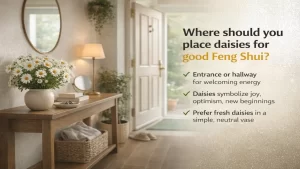
Daisies at Home — Ideal Placement — Chinese Wisdom
Why Bedrooms and Living Rooms Are Not the First Choice
Many people instinctively place flowers on a bedside table or coffee table. While this is aesthetically pleasing, Feng Shui views these locations differently.
Bedroom
The bedroom is linked to rest, intimacy, and relaxation. Bright or active flowers can introduce too much stimulation, particularly near the bed, which may disrupt the restful atmosphere the space is meant to support.
Living Room
The living room already contains dynamic, social energy. Adding daisies here enhances decoration, but it does not shape the initial flow of Chi entering the home. Their symbolic role becomes secondary rather than central.
This does not mean daisies are inappropriate in these rooms — only that their energetic influence is considered strongest at the entrance.
The Symbolism of Daisies in Home Energy
Daisies are widely associated with:
Joy
Innocence
Simplicity
Quiet optimism
New beginnings
In many cultural interpretations, they reflect honest affection and uncomplicated happiness. Placing them near the entrance serves as a visual reminder to mentally “reset” when arriving home, helping shift from outside stress to a calmer mindset.
Feng Shui also favors fresh or living daisies over artificial ones. Living plants change, grow, and carry natural scent and movement — qualities traditionally linked with healthy, active energy.
Artificial flowers may look tidy, but they lack this dynamic life element.
How to Keep Daisies Fresh and Energetically Uplifting
Wilted flowers can create the opposite effect of what you intend. Proper care helps maintain both their visual charm and symbolic vitality.
Light and Temperature
Daisies thrive in bright light or soft semi-shade. A well-lit entrance or nearby window is ideal.
If your hallway lacks natural light, place them close to a brighter area and rotate them regularly.
They prefer:
Bright light (direct or indirect)
Temperatures around 15–25°C
Fresh air without strong drafts
Position them slightly beside the doorway rather than directly in the path of cold gusts from frequent door openings.
Watering and Feeding
Daisies enjoy moisture but dislike soggy soil.
Summer: Water lightly every 2–3 days
Winter: Water once every 1–2 weeks, depending on dryness
Allow the top soil layer to dry slightly between watering
Overwatering can damage roots and, symbolically, represents stagnant energy at the entrance.
A balanced flower fertilizer once a month during the growing season can support healthy blooms. Avoid overfeeding, as it encourages leaves rather than flowers.
Pruning and Maintenance
Removing faded blooms (deadheading) helps keep the plant lively and encourages new flowers. From a symbolic perspective, fresh blooms suggest renewal, while wilted ones may reflect fatigue or stagnation.
Regularly:
Trim dry stems
Remove spent flowers
Keep the plant compact and vibrant
This simple routine aligns with the Feng Shui idea of releasing old energy to welcome new experiences.
Styling Tips for Entrance Placement
Small design choices can strengthen both the visual and symbolic impact:
Keep the area uncluttered (avoid shoes and piles around the flowers)
Use simple glass or ceramic containers
Ensure easy movement through the entrance
Pair with soft lighting or a mirror for balance
Combine with gentle plants like lavender or bamboo for harmony
The key rule: the daisies should be visible, welcoming, and never in the way of daily movement.
What If Your Entrance Is Small or Dark?
Not every home has a spacious, sunlit hallway. In compact apartments or homes where the door opens directly into the living area, adaptation is encouraged.
You can:
Place daisies on the first table or surface you naturally pass
Create a “symbolic entrance zone” just inside the door
Rotate plants between a window and the entrance for light exposure
This approach preserves both plant health and the intended Feng Shui balance.
The Psychological Effect of Flowers at the Door
Beyond tradition, there is a practical psychological benefit. Seeing flowers when you arrive home can help reduce stress and signal a mental transition from work mode to rest mode.
Daisies, with their bright centers and simple form, are often linked to carefree outdoor scenes. Over time, consistently seeing them at the entrance can create a subtle daily ritual — one that encourages relaxation and emotional reset.
Replacing them when they fade also reinforces a sense of renewal and ongoing care within the home environment.
Conclusion: A Small Shift With a Big Atmosphere Impact
According to Feng Shui, daisies are most effective when placed at the entrance, where they symbolically welcome fresh energy and set the emotional tone of the home. While they still look beautiful in bedrooms or living rooms, their deeper influence is believed to diminish outside this key transitional space.
With proper placement, simple care, and a clutter-free setting, daisies can become more than decoration — they become a gentle daily cue for calm, clarity, and optimism right as you walk through the door.
Frequently Asked Questions (FAQs)
1. Where should daisies be placed in the house according to Feng Shui?
The entrance or hallway is considered the best location because it is where energy enters the home and spreads to other rooms.
2. Is it bad to put daisies in the bedroom?
Not necessarily. However, Feng Shui suggests that bedrooms benefit from calmer elements, and bright flowers may feel slightly too stimulating in a rest-focused space.
3. Why are white daisies recommended for the entrance?
White symbolizes clarity, sincerity, and simplicity in many Feng Shui traditions, making it ideal for creating a peaceful and welcoming atmosphere.
4. Can artificial daisies be used instead of fresh ones?
They can be used for decoration, but Feng Shui typically favors fresh or living plants because they represent growth, movement, and active energy.
5. What if my entryway has no natural light?
You can place daisies near the brightest nearby area or rotate them between a sunny window and the entrance to maintain plant health while keeping the symbolic placement.