The first time you notice them, they almost look like a prank. Small brown wine corks dangling from lemon branches, swaying gently like tiny ornaments left behind after a celebration. Between ripening yellow fruit and glossy green leaves, they hang quietly, clicking against one another in the breeze.
But this isn’t decoration. It’s a growing garden habit with a surprisingly practical purpose.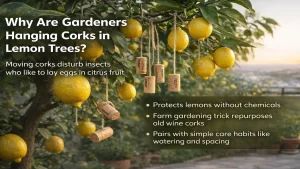
Cork Stoppers on Lemon Trees — Gardeners — Fewer Pests
Why Are People Hanging Corks in Lemon Trees?
Across balconies, courtyards, and backyard gardens, more lemon growers are tying used wine corks to their trees. Some hang two or three. Others scatter a dozen throughout the canopy. At first glance, it looks like a rustic craft idea. In reality, it’s a low-cost pest control method that many gardeners say makes a visible difference.
Trees with corks often show:
Fewer bite marks on lemons
Less leaf damage
Smoother fruit skin
Reduced reliance on chemical sprays
While it’s not a miracle solution, the pattern is hard to ignore.
The Logic Behind the Cork Trick
The idea is simple and surprisingly sensible.
Natural cork is lightweight and easy to pierce. When threaded with twine or fishing line and hung from a branch, it moves constantly in even the slightest wind. That steady swaying and faint clicking create a subtle disturbance around the fruit.
Certain small moths and flying insects prefer calm, still areas to land and lay eggs. The moving corks disrupt that comfort zone. Instead of a quiet landing spot, pests encounter motion and vibration.
Some gardeners enhance the effect by adding:
A drop of citrus or eucalyptus essential oil
A touch of garlic extract
A small amount of sulfur-based garden product
Others rely purely on movement alone. Either way, the goal is prevention — not total eradication.
How to Hang Wine Corks on Lemon Branches
The setup is refreshingly low-tech.
Step-by-step method:
Take a clean, natural wine cork.
Pierce it through the center using a thin nail or skewer.
Thread garden twine or fishing line through the hole.
Tie a knot so the cork hangs freely and can move easily.
Attach it loosely to a sturdy branch — never tightly around growing bark.
Placement Tips
Avoid very young, fragile shoots.
Focus on branches carrying leaves and developing lemons.
Space corks evenly around the canopy.
Use 6–10 corks for a small potted tree.
Add more gradually for larger, mature trees.
The biggest mistake? Overloading the tree. Too many corks can weigh branches down or restrict growth if tied too tightly.
Light and balanced placement works best.
Why Gardeners Prefer This Approach
Many people are rethinking how they protect fruit trees. Chemical sprays can leave strong smells, residue concerns, and environmental guilt. Corks offer a reusable, waste-reducing alternative that fits naturally into organic gardening habits.
They’re often combined with:
Monthly branch checks
Gentle pruning
Rainwater use when possible
Soil enrichment with compost or eggshells
Sticky traps during heavy pest seasons
It’s rarely just about the corks. It’s about creating a healthier micro-environment for the tree.
More Than a Trick — A Mindset Shift
Once you understand why corks hang there, they stop looking random. They become part of a quiet gardening philosophy: protect without overwhelming nature.
Instead of turning the garden into a chemical battlefield, growers use subtle disturbances, airflow, scent, and observation. The corks are small guardians — constantly moving, quietly disruptive to insects, yet harmless to fruit and leaves.
They symbolize something larger: low-cost solutions, reused materials, and hands-on care.
FAQs
Do wine corks really protect lemon trees from pests?
They can reduce activity from certain flying insects that dislike constant motion. While not a complete solution, they function well as part of a broader preventive strategy.
How many corks should I hang on a small lemon tree?
For a balcony-sized or potted tree, 6 to 10 corks spaced evenly around fruit-bearing branches is typically sufficient.
Are natural corks better than synthetic ones?
Yes. Natural cork is lighter and rougher, which helps it move more easily in the wind. Synthetic corks are often heavier and less responsive.
Should I treat the corks before hanging them?
It’s optional. Some gardeners add a drop of neem, citrus, garlic, or eucalyptus oil. If you do, use only mild, plant-safe products and avoid excess liquid that could drip on leaves.
Will corks fix a severe infestation?
No. If your tree is already heavily infested, corks alone won’t solve the problem. They work best as prevention, alongside pruning, leaf washing with mild soap and water, and targeted organic treatments if necessary.