Many home gardeners praise baking soda as a cheap helper for indoor plants—and research supports some of those claims. When used sparingly, sodium bicarbonate can help manage surface moisture, slow certain fungal issues and keep pots fresher. Used too heavily, however, it can stress plants and disrupt soil balance.
Why baking soda can help houseplants
Baking soda (sodium bicarbonate) is mildly alkaline. In the tight environment of a plant pot—where moisture, microbes and fertiliser constantly interact—that small pH shift can matter.
Indoors, soil often dries on top while remaining damp underneath. This creates ideal conditions for mould and fungus gnats. A light, well-controlled use of baking soda can make the surface environment less friendly to some fungi and bacteria.
It’s important to understand what baking soda does not do. It does not feed plants or act as fertiliser. Instead, it influences the environment around leaves and soil surfaces.
Studies and garden trials have shown sodium bicarbonate can slow the spread of common powdery mildew and certain leaf spots when applied correctly, making it useful on crowded indoor plant shelves with limited airflow.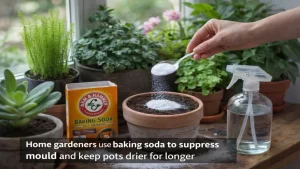
Baking Soda Trick — Indoor Gardeners — Better Growth Ahead
What it does inside the pot
Managing moisture and surface mould
Overwatering is the most common reason houseplants decline. When soil stays too wet, a thin white or grey mould often forms on the surface. While not always dangerous, it signals overly damp conditions.
A very light dusting of baking soda can help discourage surface mould from returning after removal. It should always support—not replace—good watering habits, proper drainage and adequate light.
Think of baking soda as a helper, not a cure.
Making pots less attractive to pests
Moist, fungus-rich soil attracts fungus gnats and other tiny soil dwellers. Baking soda is not an insecticide, but by making the surface less fungal-friendly, it may reduce how appealing the pot is to pests that rely on decaying organic matter.
Some indoor gardeners apply a thin ring of baking soda near the pot edge after watering. The goal is a faint dusting, never a thick white crust.
Slowing powdery mildew on leaves
Indoor roses, geraniums, begonias and herbs sometimes develop powdery mildew—the chalky white coating on leaves.
A diluted baking soda spray can help slow its spread. The slightly alkaline film it leaves on foliage makes conditions less favourable for fungal spores that prefer mild acidity.
Practical ways to use baking soda
1. Mild antifungal leaf spray
A commonly used gentle mix:
1 litre (about 1 quart) room-temperature water
1 teaspoon baking soda
A few drops of mild liquid soap
Shake well and lightly mist affected leaves once weekly during active mildew. Apply in the morning under bright, indirect light.
Tips:
Wipe heavy mildew off first
Avoid spraying in strong direct sun
Do not drench the plant
The soap helps the solution stick; the baking soda adjusts surface pH.
2. Light surface dusting for mould
If fuzzy mould keeps returning:
Gently loosen the top soil layer
Water appropriately
Apply a very thin visible dusting of baking soda
Use restraint. Too much powder can upset soil chemistry and structure.
3. Cleaning old pots
Before reusing containers:
Wash with warm water plus 1–2 spoonfuls of baking soda
Scrub away mineral crusts or algae
Rinse thoroughly and dry
This helps remove lingering fungal spores and residues.
Rules that prevent plant damage
Know the safe frequency
Sodium can accumulate over time. Overuse may burn leaves or disturb potting mix chemistry.
| Use | Recommended frequency | Risk if overused |
|---|---|---|
| Leaf spray | Once weekly, short term | Leaf burn, spotting |
| Soil dusting | Only when mould appears | Soil imbalance |
| Pot cleaning | At repotting | Low if rinsed well |
Always patch-test first
Delicate plants—such as African violets, ferns and calatheas—can react poorly.
Before full treatment:
Spray one leaf
Wait 48 hours
Check for browning, spotting or curling
Waxy, tougher leaves usually tolerate the spray better than soft foliage.
Avoid pouring into soil
Repeatedly drenching soil with baking soda solution can harm roots by pushing pH too high. Many houseplants prefer slightly acidic conditions.
Use baking soda mainly on leaf surfaces or lightly on topsoil, not as a routine soil additive.
When baking soda works—and when it won’t
Baking soda works best as part of better plant care. If a plant sits in a dark, constantly damp bathroom, powder alone will not fix the problem.
It is most helpful when:
Watering is already controlled
Light is adequate
Airflow is improved
Infections are caught early
Habits that make it more effective
For stronger results, combine with:
Letting the top few centimetres of soil dry between waterings
Using pots with drainage holes
Emptying saucers after watering
Spacing plants so leaves don’t touch
Trimming dead foliage promptly
Running a small fan in crowded plant areas
These steps reduce humidity and stagnant air—the real drivers of fungal problems.
Understanding pH and plant health
Many people assume baking soda nourishes plants. It does not.
Plants primarily need nutrients like nitrogen, phosphorus, potassium and magnesium. Baking soda mainly raises pH slightly.
Most houseplants prefer mildly acidic to near-neutral soil. If the pot becomes too alkaline, plants can struggle to absorb iron and micronutrients, leading to pale leaves and weak growth.
Moderation is essential:
Light alkaline film on leaves: may slow mildew
Over-alkaline soil: can stress roots
Real-world examples
On a sunny kitchen shelf, herbs like basil and mint sometimes develop powdery mildew. After pruning affected leaves, improving airflow and applying a mild weekly spray, many gardeners see the spread slow and new growth stay clean.
In another case, a heavily watered tropical plant develops grey surface mould. After repotting into better-draining soil, reducing watering and adding a tiny dusting of baking soda, the mould often stops returning—mainly because the overall care improved.
Used this way, baking soda earns a place as a cautious, low-cost support tool for indoor plant care.
FAQs
Does baking soda fertilize houseplants?
No. Baking soda does not provide essential plant nutrients. It mainly alters surface pH and fungal conditions.
How often should I spray baking soda on leaves?
Usually no more than once per week during an active fungal problem, and stop once the issue improves.
Can baking soda kill fungus gnats?
Not directly. It may make soil less attractive to them, but it is not an insecticide.
Is baking soda safe for all houseplants?
No. Sensitive plants may develop leaf spotting or burn. Always test one leaf first and monitor for 48 hours.
What is the biggest risk of overusing baking soda?
Excess sodium and higher soil pH can stress roots, cause leaf burn and interfere with nutrient uptake.