You open a kitchen cabinet and immediately notice the problem. The door feels sticky, the handle leaves a greasy film on your fingers, and a dull yellow halo surrounds the edges.
You grab a damp cloth and wipe. Nothing changes.
Next comes dish soap. The cloth gets dirty, but the cabinet still looks tired and dull. For many homeowners, this is the moment when sanding, repainting, or simply ignoring the problem seems like the only option.
But there’s a simple solution hiding in plain sight — a liquid most people already have in their kitchen.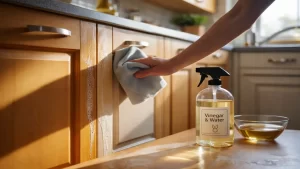
1 Simple Kitchen Liquid — What Homeowners Use to Restore Greasy Cabinets Fast
The pantry ingredient that cuts through grease
The surprisingly effective cleaner is white vinegar.
This inexpensive pantry staple, usually used in cooking or salad dressings, can also dissolve grease buildup on kitchen cabinets when diluted properly.
Unlike many chemical cleaners, vinegar works quietly:
It loosens grease and cooking residue
It removes mineral traces from water splashes
It lifts the sticky film left by cooking oils
When used carefully, it can restore cabinets to a smooth, clean surface without harsh scrubbing.
Why vinegar works so well on cabinets
Kitchen cabinets accumulate a mix of grease, cooking fumes, dust and fingerprints over time.
Grease is slightly alkaline and tends to cling tightly to surfaces such as:
wood grain
painted cabinets
laminate finishes
Vinegar is mildly acidic, which helps break down this buildup. Instead of masking grime with fragrances or thick chemicals, it dissolves the residue so it can be wiped away easily.
Many people only realize the difference after the first wipe reveals the cabinet’s original color underneath.
How to clean cabinets with vinegar
The cleaning method is simple and requires only a few household items.
Step-by-step method
1. Prepare the solution
Mix in a spray bottle:
50% white vinegar
50% warm water
1 drop of mild dish soap
Shake gently to combine.
2. Test a hidden area
Before cleaning the entire cabinet, spray a small area on the inside edge or back of a door to ensure the finish reacts well.
3. Spray lightly
Mist the surface lightly. Avoid soaking the cabinet.
4. Wipe with a microfiber cloth
Clean in small circular motions, working from bottom to top to avoid dirty streaks.
5. Dry immediately
Use a second clean cloth to dry the surface. This step helps restore a natural shine and prevents streaking.
Common mistakes to avoid
Although vinegar cleaning is simple, a few mistakes can reduce its effectiveness.
Using vinegar undiluted
Pure vinegar may be too strong for delicate finishes.
Skipping the drying step
Leaving moisture on cabinets can dull the surface.
Over-soaking the wood
Cabinets should feel slightly damp, not wet.
Cleaning the whole kitchen at once
Work one door or drawer at a time for the best results.
The surprising result after a proper clean
Once the grease layer disappears, cabinets often look noticeably brighter.
Homeowners frequently report:
smoother cabinet surfaces
revived wood grain or color
a fresher smell in the kitchen
The shine isn’t a synthetic polish — it’s the cabinet’s original finish finally visible again.
Even better, the same bottle of vinegar can serve multiple cleaning purposes around the home, from removing limescale in kettles to refreshing cutting boards.
Key benefits of using vinegar on cabinets
| Key point | Detail | Value for homeowners |
|---|---|---|
| Simple cleaning solution | Vinegar mixed with water and a drop of soap | Affordable and easy to prepare |
| Gentle cleaning method | Light spray and microfiber cloth | Removes grease without damaging finishes |
| Visible improvement | Cabinets feel smoother and look brighter | Kitchen appears cleaner with minimal effort |
FAQ
Can vinegar be used on all kitchen cabinets?
Diluted vinegar works well on most sealed wood, laminate, and painted cabinets. Always test a hidden area first. Avoid using it on raw or waxed wood.
Will vinegar damage cabinet finishes?
When diluted and wiped dry promptly, vinegar usually does not harm finishes. Problems occur when it is used undiluted or left sitting on the surface.
How often should cabinets be cleaned this way?
For most homes, a deep cleaning every three to four months is sufficient. Areas near the stove or handles may need more frequent wiping.
What if the vinegar smell is too strong?
Opening a window during cleaning helps. You can also add a few drops of lemon or lavender essential oil to the mixture. The smell usually fades quickly after drying.
Can vinegar remove very old grease buildup?
Yes, but stubborn buildup may require several passes. Spray lightly, wipe, dry, and repeat if necessary. For corners or grooves, a soft toothbrush can help loosen residue.