That faint, sour smell from the kitchen sink. The slow swirl of water that hesitates before disappearing. Most homeowners have faced that uneasy moment and wondered if a costly plumbing repair is next.
Water damage is more common than many realize. It often begins with something minor — a slow drain, trapped grease, or hidden buildup inside pipes. Left unchecked, small plumbing issues can lead to mold growth, rotting wood, and expensive repairs. Insurance data consistently shows water-related claims among the most frequent and costly for households.
The good news? Many slow-drain problems can be addressed early with simple maintenance — before they turn into emergencies.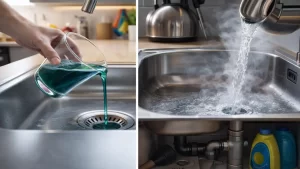
1 Simple Ingredient — A Quick Way to Unclog Drains at Home
Why Vinegar and Baking Soda Often Fall Short
The popular baking soda and vinegar trick creates dramatic fizzing, but plumbers explain that the bubbling reaction is mostly surface-level. It releases gas quickly but doesn’t stay in contact with grease and debris long enough to break them down effectively.
Slow drains are usually caused by:
Grease and cooking oils
Soap residue
Hair buildup
Food scraps
Coffee grounds
Over time, these materials form a sticky layer inside pipes, trapping more debris and narrowing water flow.
When water is still draining — just slowly — that’s the best time to act.
The Half-Glass Method Explained
Instead of relying on a foamy reaction, many homeowners use a simple degreasing approach.
What You’ll Need:
About half a glass of concentrated dish soap or drain-safe degreaser
Boiling or near-boiling water
How It Works:
Dish soap contains surfactants — molecules designed to attach to grease on one end and water on the other. This allows fats and residue to loosen and rinse away more effectively.
Steps:
Ensure the sink is mostly dry.
Pour roughly half a glass of concentrated dish soap directly into the drain.
Let it sit for 10–15 minutes.
Carefully flush with a large amount of very hot water.
The key is contact time. Unlike quick fizzing reactions, the soap coats pipe walls and softens buildup before being flushed out.
When This Method Works Best
The half-glass method is most effective when:
Water is draining slowly, not fully blocked.
You’ve cooked greasy meals during the week.
You want monthly maintenance for older plumbing.
There’s mild odor but no standing water.
If water is completely backed up or overflowing, mechanical tools like plungers or drain snakes — or a licensed plumber — are safer options.
Avoid Overusing Harsh Chemical Cleaners
Strong chemical drain cleaners can solve urgent clogs, but repeated use may corrode pipes and weaken joints over time. Professionals often compare them to antibiotics — helpful during emergencies, but not meant for constant use.
Instead, focus on prevention:
Scrape food into the trash before washing dishes.
Never pour cooking oil down the sink.
Use drain screens to catch hair.
Run hot water after heavy kitchen use.
Clean shower drain traps regularly.
Consistent, gentle maintenance helps extend the life of your plumbing system and reduces the risk of major water damage.
Why Early Action Matters
A slow drain may seem minor, but small plumbing issues can escalate quickly. Water damage can affect walls, flooring, cabinetry, and even structural components if leaks develop behind surfaces.
Responding early:
Reduces repair costs
Minimizes mold risk
Protects property value
Prevents emergency service calls
A half-glass of concentrated degreaser used correctly can be a simple reset before problems grow.
Frequently Asked Questions (FAQs)
1. Can I use any dish soap for this method?
Concentrated dish soap works best. Very diluted or ultra-gentle formulas may not cut through heavy grease effectively.
2. Is this safe for all types of pipes?
Dish soap is generally safe for modern plumbing systems in good condition. If your home has very old or damaged pipes, consult a licensed plumber before trying any drain treatment.
3. Should I combine this with baking soda and vinegar?
It’s better to try one method at a time. Combining multiple treatments doesn’t always improve results and may reduce effectiveness.
4. How often should I use the half-glass method?
For maintenance, once a month is usually sufficient. You may use it after a week of heavy cooking or when you notice slower drainage.
5. What if the drain is completely blocked?
If water is not draining at all, try a plunger or drain snake first. If the blockage remains, contact a professional plumber. Avoid pouring strong chemical cleaners into a fully blocked drain without expert guidance.