As homes stay closed and heating runs longer, sofas quietly absorb everyday smells. What feels like a cosy space can slowly turn into a mix of food, pet and damp odours—often without you noticing.
Why sofas trap smells so easily
Your sofa is one of the most used items at home. It collects invisible residues from daily life:
Sweat and body oils
Food crumbs and cooking vapours
Pet hair and moisture
Smoke and dust
Thick fabrics like velvet, chenille and cotton act like sponges, trapping particles deep inside the fibres. When windows stay shut and air circulation drops, these smells linger and intensify.
Cooking is a major source. Greasy particles from frying or roasting settle into upholstery. Pets also contribute—especially when damp. Over time, all these elements combine into a persistent odour.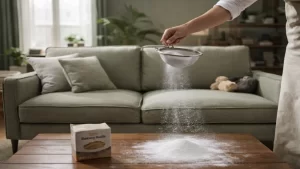
1 Easy Move — Eliminate Sofa Smells — Freshen Your Living Room Today
Why air fresheners don’t solve the issue
Many people rely on scented sprays for a quick fix. However, these products only mask smells rather than remove them.
Odours remain trapped in the fabric
Fragrance mixes with existing smells
Some sprays release irritants into the air
Instead of eliminating the source, sprays often create a heavier, more artificial scent.
Why baking soda works better
Baking soda (sodium bicarbonate) is a simple, effective solution. Its fine, porous texture helps:
Absorb moisture from fabrics
Neutralise odour-causing compounds
Rather than covering smells, it interacts with them, reducing their presence in the air.
It’s also non-toxic, making it safe for homes with children and pets.
The 3-step sofa refresh method
You can refresh your sofa in about 30 minutes using basic household items.
What you need:
200–300 g baking soda
A sieve or strainer
A vacuum cleaner with upholstery attachment
(Optional) soft brush
Step 1: Apply evenly
Sprinkle a thin, even layer of baking soda across the entire sofa, including cushions and gaps.
For thicker fabrics, gently press or brush it in to reach deeper fibres.
Step 2: Let it sit
Leave the baking soda for 15–30 minutes.
For stronger odours, extend the time to a few hours or overnight. Opening a window can improve results.
Step 3: Vacuum thoroughly
Vacuum every surface slowly and carefully.
This removes the baking soda along with trapped dust and odour particles. Pay attention to seams and crevices.
After cleaning, your sofa should smell neutral—not perfumed.
Where else this trick works
This method is effective on other fabric surfaces:
Carpets and rugs
Mattresses
Fabric headboards
Cushions and pillows
Car seats
The same process applies—just adjust the amount of baking soda.
How often should you do it?
Regular maintenance prevents smells from building up:
Busy households: every 2–3 months
Homes with pets or indoor smoking: monthly (key areas)
Occasional use: every few months
Think of it as a quick reset rather than a deep clean.
Tips to avoid residue or damage
Test on a hidden area first
Use a light layer on delicate fabrics
Vacuum thoroughly to prevent powder buildup
Avoid mixing with liquids like vinegar on upholstery
If you have allergies, consider wearing a mask while vacuuming.
Why “no smell” is the cleanest result
A truly clean home doesn’t need strong fragrances. Neutral air means fewer trapped particles and less reliance on artificial scents.
Using baking soda helps remove odours at the source, leaving your space fresher and more comfortable without overpowering smells.
FAQs
1. Can baking soda damage my sofa?
No, it’s generally safe, but always test on a hidden area first—especially for delicate fabrics.
2. How long should I leave baking soda on the sofa?
At least 15–30 minutes. For strong odours, leave it for several hours or overnight.
3. Will baking soda remove pet smells completely?
It significantly reduces them, especially with regular use, but deep odours may need repeated treatments.
4. Can I mix baking soda with vinegar for better results?
Not on upholstery. The reaction creates moisture, which may damage fabric.
5. Why does my sofa still smell after cleaning?
The odour may be deeply embedded or coming from cushions inside. Repeat the process or clean inner padding if possible.