The kettle clicks off with its familiar sigh, and for a moment the kitchen feels calm. You pour the water—then notice the pale flakes drifting through your mug. Inside the kettle, a chalky white ring clings stubbornly to the base.
Many people immediately think of vinegar, then remember the lingering smell. Soap isn’t appealing either, especially for an appliance that heats drinking water. The good news is that dealing with limescale can be much simpler than most of us expect.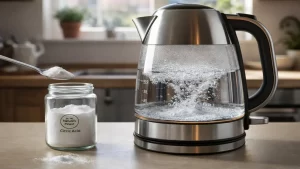
1 Easy Method to Remove Kettle Limescale — Works in Minutes
Why limescale keeps returning in electric kettles
Limescale is one of those quiet household nuisances that builds slowly until it becomes impossible to ignore. Even a sleek new kettle can start looking worn within months, especially in hard-water areas.
Because the buildup happens gradually, it’s easy to postpone cleaning. Many households only descale their kettle a few times a year—even when it’s used daily.
The science is straightforward. Hard water contains minerals, mainly calcium carbonate. Each time water boils, tiny deposits settle on the heating element and interior walls. Over time, this forms the familiar rough, white crust.
Besides looking unpleasant, heavy limescale can:
Increase boiling time
Waste energy
Affect the taste of drinks
Cause flakes to appear in cups
The encouraging part is that these mineral deposits dissolve easily with the right approach.
The simple kitchen solution many people overlook
Instead of vinegar or soap, many cleaning enthusiasts now rely on food-grade citric acid powder.
This common pantry ingredient is:
Odorless
Inexpensive
Highly effective against mineral deposits
Easy to rinse away
Because citric acid directly dissolves calcium carbonate, it removes buildup efficiently without filling the kitchen with strong smells.
Step-by-step: how to descale your kettle safely
Follow this gentle routine:
Start with an empty, unplugged kettle.
Fill it halfway to three-quarters with fresh water.
Add 1 tablespoon citric acid (use 2 tablespoons for heavy buildup).
Bring the kettle to a full boil.
Switch off and let the solution sit for 20–30 minutes.
Pour out the liquid carefully.
Wipe inside with a soft sponge or cloth.
Rinse well, then boil once with clean water and discard.
In many cases, the limescale wipes away with minimal effort.
Why citric acid works better than soap
Soap doesn’t actually dissolve limescale—it mainly sits on the surface and can leave residue behind. Citric acid, however, reacts chemically with the mineral deposits and breaks them down so they rinse away cleanly.
Compared with vinegar, citric acid offers:
Much milder smell
More controlled strength
Less lingering odor in the kitchen
For routine maintenance, many households find it the most comfortable option.
How often you should descale
Consistency matters more than intensity.
Hard-water areas: every 4–6 weeks
Soft-water areas: every 2–3 months
Heavy daily use: check monthly
Regular light cleaning helps kettles stay efficient and keeps drinks tasting fresh.
Living with hard water without the hassle
Small maintenance habits can make everyday appliances last longer and work better. A quick citric-acid treatment takes less than half an hour but can restore a kettle’s appearance and performance dramatically.
Instead of battling stubborn buildup once or twice a year, gentle routine care keeps the problem from getting out of hand. For many busy households, that simple shift makes all the difference.
FAQs
Is citric acid safe for all electric kettles?
For most stainless steel and standard electric kettles, food-grade citric acid in small kitchen amounts is considered safe. Check your kettle’s manual if it has special coatings or materials.
How often should I descale my kettle?
In hard-water regions, every 4–6 weeks works well. With softer water, every 2–3 months is usually sufficient unless you boil water very frequently.
Can lemon juice replace citric acid powder?
Lemon juice contains citric acid but in a weaker, less consistent concentration. It may help with very light buildup, but pure citric acid powder is typically more effective and cleaner.
Do I need to scrub hard after soaking?
Usually not. A gentle wipe with a soft sponge is enough. For very old deposits, repeat the process rather than scrubbing aggressively.
Will citric acid affect the taste of my drinks?
No. After rinsing and boiling once with clean water, there should be no remaining taste. Many people notice their tea or coffee tastes fresher afterward.